TL;DR:
- Choosing the right channels and connecting customer touchpoints creates a coherent marketing strategy.
- Key channels include email, social media, SMS, paid ads, marketplaces, and your website.
- Successful tactics involve coordinated campaigns, data integration, and prioritizing high-impact channels.
Adding more marketing channels to your mix doesn’t automatically mean more sales. Many ecommerce brands learn this the hard way, spending budget across six platforms and seeing scattered results with no clear winner. The real advantage comes from choosing the right channels, coordinating your messaging, and building a strategy that connects every touchpoint into a coherent customer journey. This guide covers what multi-channel marketing actually is, which channels matter most for ecommerce, how to build a strategy that works, and how to avoid the pitfalls that derail most brands.
Table of Contents
- Defining multi-channel marketing and why it matters
- The main channels in multi-channel marketing
- How to build an effective multi-channel marketing strategy
- Common obstacles and how to overcome them
- Real-world examples: Multi-channel marketing in action
- Why most multi-channel strategies fail and how to succeed
- Take your multi-channel marketing to the next level
- Frequently asked questions
Key Takeaways
| Point | Details |
|---|---|
| Multi-channel defined | Multi-channel marketing means using several platforms to reach and engage customers—not just relying on one. |
| Channel choice matters | Choosing the right mix of channels for your customers is far more valuable than simply increasing your channel count. |
| Integration drives results | Coordinated messaging and seamless customer experience across channels lead to better engagement and growth. |
| Start small, scale smart | Begin with your strongest channels and expand as you see what works best for your business. |
| Overcome common hurdles | Address integration, resource, and measurement challenges early to make multi-channel marketing sustainable. |
Defining multi-channel marketing and why it matters
Multi-channel marketing means using several different platforms and touchpoints to reach your customers, including email, social media, paid ads, SMS, and your website. Each channel operates as a separate path to your audience, giving shoppers the flexibility to discover and buy from you wherever they spend their time.
It’s worth separating this from omnichannel marketing, which is a related but distinct concept. The difference between multi-channel and omnichannel is that multi-channel focuses on presence across multiple platforms, while omnichannel prioritizes fully integrating those channels so the customer experience is seamless regardless of where they interact with your brand. Think of multi-channel as covering the bases and omnichannel as connecting them.
For ecommerce brands, a multi-channel approach is no longer optional. Customers rarely discover a brand and buy in a single session. They might see a product on Instagram, search for reviews on Google, receive an email offer, and finally convert through a retargeted ad. Covering those touchpoints is what makes the difference between a brand that gets noticed and one that gets purchased.
Here’s a quick look at what multi-channel marketing delivers for ecommerce businesses:
| Benefit | What it means in practice |
|---|---|
| Increased brand reach | Your brand appears where your audience already spends time |
| Better customer engagement | Multiple touchpoints create more opportunities for interaction |
| Data-driven sales | Cross-channel data reveals what actually drives conversions |
| Reduced dependency risk | No single channel failure can collapse your revenue |
The key ecommerce marketing strategies that consistently drive growth all share one thing: they meet customers in multiple places rather than betting everything on one channel.
“The brands winning in ecommerce aren’t the ones with the biggest ad budgets. They’re the ones who show up consistently across the channels their customers actually use.”
The main channels in multi-channel marketing
With the basics defined, it’s time to look at the main channels you can harness in your own multi-channel marketing efforts. Understanding each channel’s strengths helps you build a smarter mix rather than a scattered one.
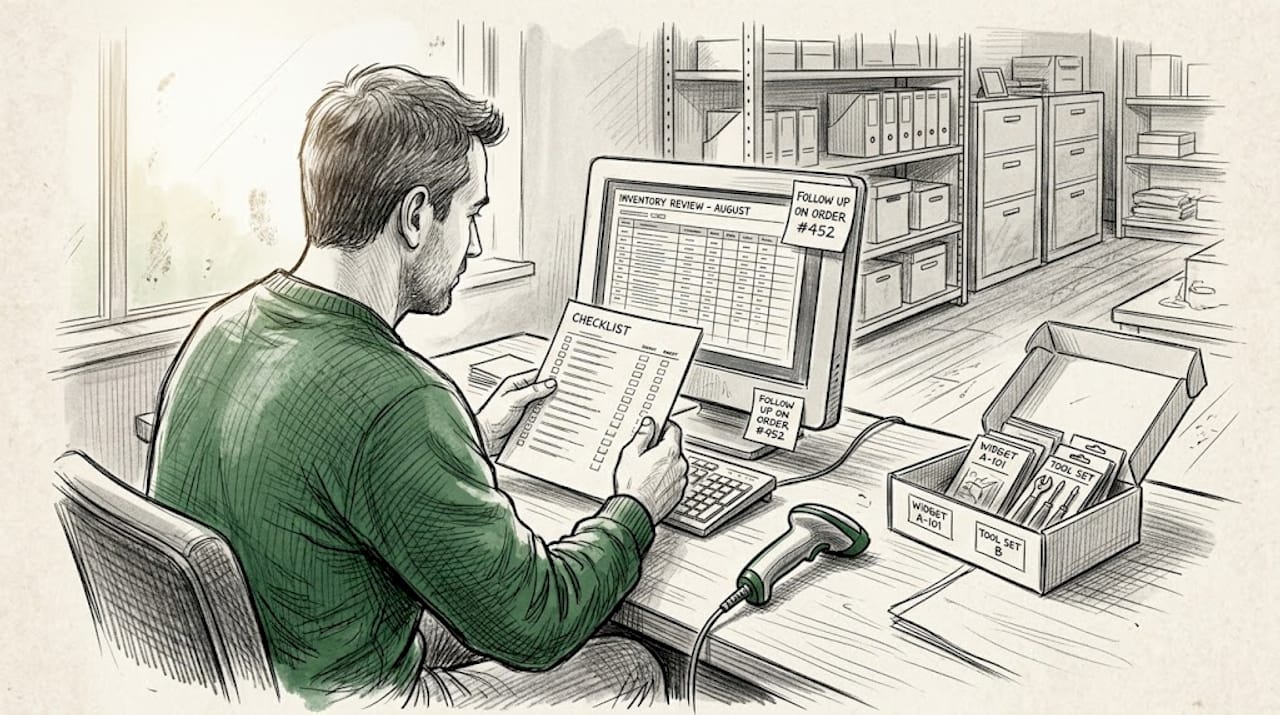
The engagement metrics for ecommerce vary significantly by channel, which is why knowing what each one does well is essential before committing budget. Here’s how the core channels stack up:
| Channel | Strengths | Weaknesses | Best use case |
|---|---|---|---|
| High ROI, owned audience, automation-ready | Requires list building | Retention, cart recovery, loyalty | |
| Social media | Brand awareness, community building | Algorithm-dependent reach | Discovery, engagement, UGC |
| SMS | Immediate reach, high open rates | Opt-in friction, limited content | Flash sales, urgent updates |
| PPC (paid ads) | Scalable, precise targeting | Ongoing spend required | Acquisition, retargeting |
| Marketplaces | Built-in traffic, trust signals | Margin pressure, limited branding | Volume sales, new audiences |
| Website | Full control, conversion hub | Requires traffic from other channels | Conversion, content, SEO |
The most effective best marketing platforms for your brand depend entirely on where your customers are and what stage of the buying journey you’re targeting.
- Email remains the highest-ROI channel for most ecommerce brands. It’s the one channel you own outright, meaning no algorithm changes can cut your reach overnight.
- Social media excels at building awareness and trust, especially for visually driven products. It’s where discovery happens.
- SMS is powerful for time-sensitive offers but should be used sparingly to avoid opt-out fatigue.
- PPC scales acquisition fast but requires constant budget and testing to stay profitable.
- Marketplaces like Amazon bring traffic you didn’t have to earn, but they come with thin margins and limited customer data.
- Your website is the conversion hub that everything else feeds into. Its performance directly affects the return on every other channel.
Pro Tip: Don’t try to master all six channels at once. Start with the two or three where your audience is most active, get those working well, then expand. Spreading your team and budget too thin produces mediocre results everywhere.
How to build an effective multi-channel marketing strategy
Understanding the available channels is only the beginning. Success hinges on building a well-orchestrated strategy that ties everything together. The multi-channel marketing approach that retail brands use most effectively follows a clear framework.
Here’s a step-by-step process to get you started:
- Research your audience deeply. Know where your customers spend time, what content they engage with, and what triggers their purchase decisions. Surveys, analytics data, and customer interviews all help here.
- Select your priority channels. Based on your audience research, pick two or three channels that align with your product type, budget, and team capacity.
- Plan cohesive campaigns. Design campaigns where each channel plays a specific role. Email might nurture, social might create awareness, and paid ads might close the sale.
- Coordinate your messaging. Your brand voice, visual identity, and core offer should be consistent across every channel. A customer who sees your Instagram ad and then opens your email should feel like they’re interacting with the same brand.
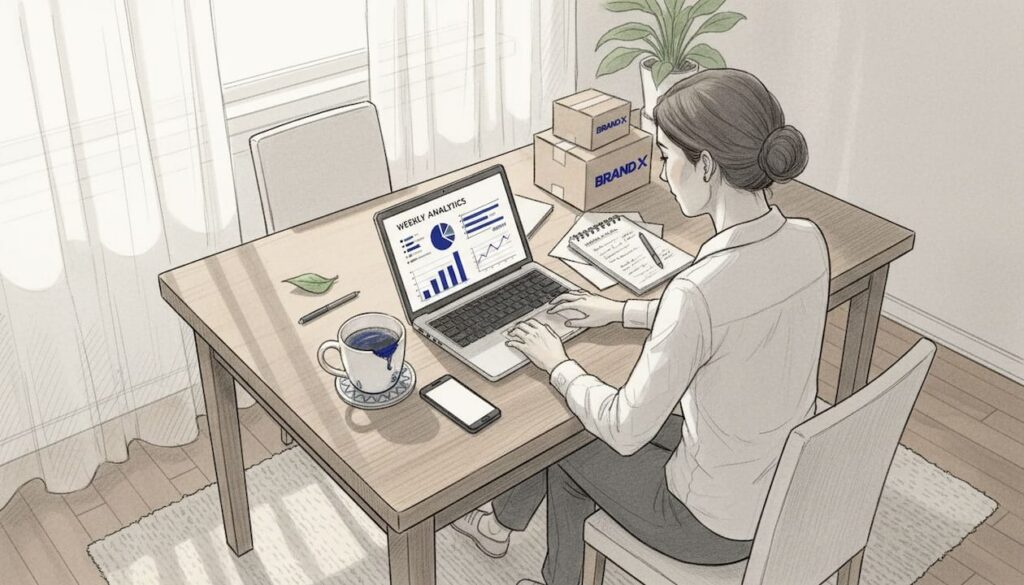
- Measure and adapt continuously. Set clear KPIs for each channel and review performance weekly. Cut what isn’t working and double down on what is.
The growth strategies for ecommerce that scale fastest are built on this kind of disciplined, iterative process rather than guesswork.
Common pitfalls to avoid:
- Lack of coordination: Running promotions on email that don’t match what’s live on your website creates confusion and kills trust.
- Scattered data: If your channel analytics live in separate tools with no integration, you can’t see the full customer journey.
- Overextending resources: A team of two cannot effectively manage six active channels. Prioritize ruthlessly.
- Ignoring retargeting: Retargeting strategies for growth are one of the highest-leverage tactics available, yet many brands skip them entirely.
For brands managing payments and checkout across platforms, a multi-channel payment process that handles transactions consistently is just as important as the marketing itself.
Pro Tip: Before launching any new channel, map out exactly how it connects to your existing channels. If you can’t explain how it fits the customer journey, it’s not ready to launch.
Common obstacles and how to overcome them
Even the best-planned strategies can hit roadblocks, but being prepared makes all the difference. The challenges in omnichannel retail mirror many of the same issues ecommerce brands face with multi-channel marketing, and the solutions are often similar.
Here are the most frequent barriers and how to tackle each one:
- Unintegrated systems: When your email platform, ad manager, and CRM don’t talk to each other, you lose visibility into what’s actually driving revenue. Invest in integrations or choose platforms that connect natively.
- Data silos: Each channel produces its own data, but the real insight comes from combining it. Use a single dashboard or analytics layer to view cross-channel performance together.
- Inconsistent brand voice: When different team members manage different channels without a shared style guide, your brand starts to feel fragmented. Create a brand guidelines document and enforce it across every channel.
- Budget and resource drains: Multi-channel marketing can get expensive fast. Prioritize channels by ROI and cut underperformers quarterly rather than letting them drain budget indefinitely.
- Tech overwhelm: Too many tools create complexity without adding value. Audit your tech stack every six months and eliminate anything that duplicates functionality.
Personalized marketing tactics are one of the most effective ways to make each channel feel relevant rather than generic. When customers receive messaging that reflects their browsing history, purchase behavior, or preferences, engagement rates climb significantly.
“The brands that struggle most with multi-channel marketing aren’t the ones with too few resources. They’re the ones trying to do too much without a clear system for measuring what’s working.”
Pro Tip: Audit your customer journey touchpoints across all channels at least once per quarter. Look for gaps where customers drop off and friction points where the experience breaks down. These audits reveal more actionable insight than most analytics dashboards.
Real-world examples: Multi-channel marketing in action
To ground these concepts, let’s look at how real ecommerce brands leverage multi-channel marketing for impactful results. The multi-channel marketing campaign examples that consistently perform best share a few key traits: tight channel coordination, clear audience segmentation, and precise timing.
Here are four scenarios that illustrate what effective multi-channel execution looks like:
- Cart abandonment recovery: A fashion brand triggers an automated email within one hour of cart abandonment, follows up with a retargeted Facebook ad the next day, and sends an SMS reminder with a 10% discount on day three. Each touchpoint escalates urgency without feeling repetitive because the messaging evolves across channels.
- Seasonal promotions: A home goods brand launches a holiday campaign that starts with organic social posts building anticipation two weeks out, shifts to paid ads targeting warm audiences in week two, and closes with email campaigns to their subscriber list in the final days. The result is a coordinated push that maximizes reach without relying on any single channel.
- Loyalty reactivation: A beauty brand identifies customers who haven’t purchased in 90 days and runs a reactivation sequence combining a personalized email with a loyalty points reminder, followed by a social media retargeting ad featuring the products they previously viewed. Win-back rates improve significantly compared to email-only campaigns.
- Post-purchase upsell: After a customer completes a purchase, a supplement brand sends a thank-you email with a cross-sell recommendation, follows up with an SMS survey, and serves a retargeted ad for a complementary product 10 days later. This sequence increases average order value without feeling pushy.
Well-designed email campaign strategies are the backbone of most of these examples because email is the one channel where you control the timing, content, and audience with precision. Pairing email with post-purchase campaigns that extend the customer relationship is one of the most underused growth levers in ecommerce.
Pro Tip: Prioritize campaigns where you have strong audience data and clear timing signals. Cart abandonment, post-purchase, and seasonal windows are ideal starting points because the customer intent is already established.
Why most multi-channel strategies fail and how to succeed
Here’s the uncomfortable truth most marketing content won’t tell you: the majority of multi-channel strategies fail not because of budget or technology, but because brands confuse activity with impact.
Adding a new channel feels like progress. Posting on TikTok, launching SMS, running Google Shopping ads simultaneously, it all looks like momentum. But if each channel operates in isolation with its own messaging, its own goals, and no shared data layer, you’re not running a multi-channel strategy. You’re running several disconnected single-channel strategies at the same time. That’s expensive and exhausting.
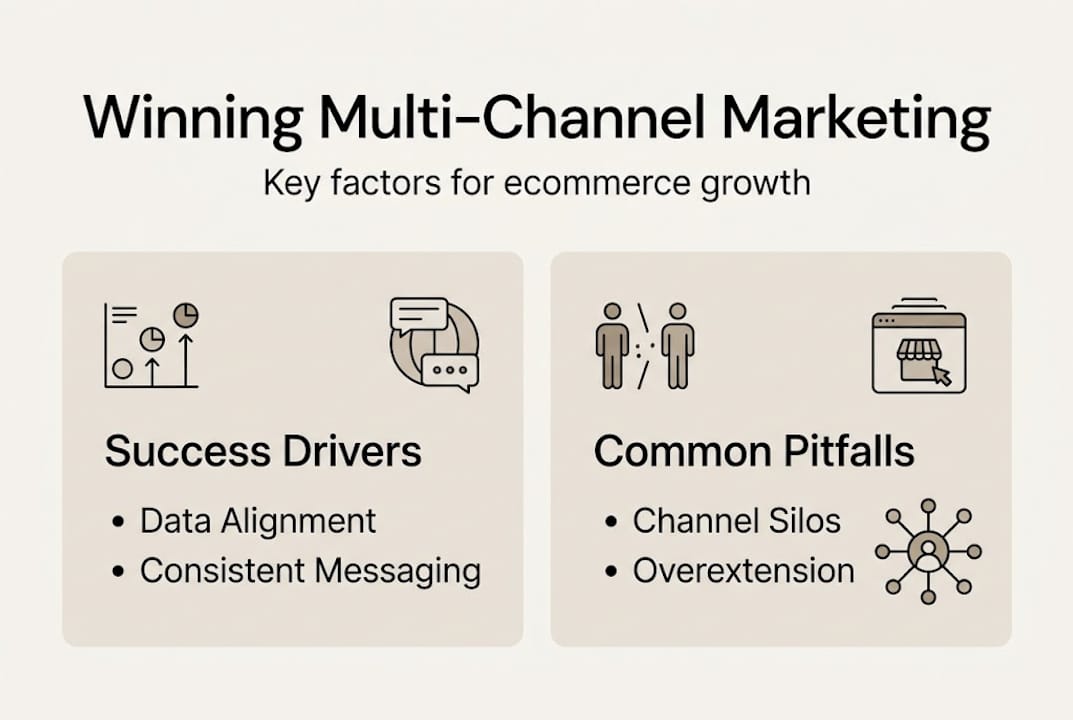
The brands that actually win with multi-channel marketing obsess over three things: data alignment, customer experience consistency, and ruthless prioritization. They know which channel drives first-touch awareness, which one closes sales, and which one retains customers. They track the full journey, not just the last click. And they’re willing to cut channels that don’t contribute to that journey, even if those channels feel like they “should” be working.
We’ve seen ecommerce brands double their email revenue simply by connecting their Klaviyo flows to their paid ad audiences, creating a feedback loop where email data informs ad targeting and vice versa. That kind of integration is what separates brands that grow from brands that just stay busy.
The successful ecommerce marketing strategies we’ve seen work consistently share one trait: they treat channels as parts of a system, not independent campaigns. If your channels aren’t talking to each other, your customers can feel it, even if they can’t articulate why.
Start smaller than you think you need to. Two channels executed with precision will outperform five channels managed with divided attention every single time.
Take your multi-channel marketing to the next level
Multi-channel marketing is one of the highest-leverage growth systems available to ecommerce brands, but the gap between knowing the strategy and executing it well is significant. Most brands have the ambition but lack the infrastructure to tie channels together effectively.
At Swyft Interactive, we specialize in building the systems that make multi-channel marketing actually work: high-converting websites, Klaviyo email automation, paid ads integration, and analytics that connect the full customer journey. Whether you’re starting with step-by-step email automation, building out a complete growth strategy with automation, or evaluating the best marketing platforms for retailers, we can help you move from scattered channels to a coordinated growth engine. Let’s build something that compounds.
Frequently asked questions
What is the difference between multi-channel and omnichannel marketing?
Multi-channel marketing uses several channels to reach customers independently, while omnichannel integrates those channels so the customer experience is seamless and connected across every touchpoint.
Which channels are most effective for ecommerce multi-channel marketing?
Email, social media, and your website are typically the strongest starting points, but the right channel mix depends on your specific audience, product category, and available resources.
Is multi-channel marketing expensive for small businesses?
It can be very cost-effective when you start with two or three well-chosen channels and scale investment based on what the data shows is working, rather than trying to be everywhere at once.
How do I know if my multi-channel strategy is working?
Track engagement and conversion metrics across each channel consistently, and look for patterns in how customers move between channels before they purchase, not just last-click attribution.