

Data-driven ecommerce companies are 19x more likely to be profitable, yet many brand managers barely scratch the surface of what analytics can reveal. This guide shows ecommerce professionals how to leverage analytics strategically for measurable growth. You’ll learn which metrics matter most, how to implement a practical analytics framework, and proven tactics to optimize conversions and customer engagement through data intelligence.
Table of Contents
- Introduction To Ecommerce Analytics
- Core Metrics And KPIs In Ecommerce Analytics
- How Analytics Powers Ecommerce Strategy And Growth
- Implementing An Ecommerce Analytics Framework
- Optimizing Ecommerce Performance Using Analytics
- Common Misconceptions About Ecommerce Analytics
- Conclusion: Bridging Analytics To Actionable Ecommerce Success
- Drive Ecommerce Growth With Expert Analytics Solutions
Key takeaways
| Point | Details |
|---|---|
| Analytics reveals deep customer insights | Beyond sales numbers, analytics uncovers behavior patterns, attribution, and lifetime value for strategic decisions. |
| Core metrics guide optimization | Conversion rates, average order value, customer lifetime value, and cart abandonment directly impact revenue growth. |
| Advanced techniques boost engagement | AI personalization and predictive analytics enable targeted campaigns that increase conversions and order values. |
| Framework ensures continuous improvement | Structured implementation with clear KPIs, monitoring, and iteration drives measurable performance gains. |
| Correcting misconceptions unlocks potential | Moving beyond vanity metrics and integrating cross-channel data maximizes analytics effectiveness. |
Introduction to ecommerce analytics
Ecommerce analytics is the systematic collection and analysis of data from your online store to drive performance improvements and revenue growth. Unlike general business analytics that covers all operations, ecommerce analytics focuses specifically on customer behavior, marketing attribution, product performance, and operational efficiency tied directly to your digital storefront.
This specialized approach helps you understand not just what happened, but why customers behave certain ways and how to influence future actions. When you track the right data points and interpret them correctly, you transform raw numbers into strategic advantages that competitors miss.
Ecommerce analytics encompasses multiple data streams that together paint a complete picture:
- Customer acquisition sources and costs across all marketing channels
- On-site behavior including page views, time spent, and navigation patterns
- Conversion funnel performance from landing to checkout completion
- Post-purchase engagement including repeat rates and referral behavior
- Product performance metrics showing bestsellers and underperformers
The distinction matters because ecommerce-specific analytics tools capture nuances that general platforms overlook. You need visibility into cart abandonment triggers, email campaign performance, and cross-device shopping journeys. These insights enable you to make informed decisions about inventory, marketing spend, website optimization, and customer retention strategies that directly impact your bottom line.
Core metrics and KPIs in ecommerce analytics
You can’t improve what you don’t measure. The most successful ecommerce brands obsessively track specific metrics that reveal business health and guide strategic decisions. Understanding which KPIs matter most helps you allocate resources effectively and spot opportunities before competitors do.
Tracking conversion rates, average order value, and customer lifetime value forms the foundation of smart ecommerce management. These metrics directly connect to revenue and profitability, making them essential for anyone managing an online store or marketing campaigns.
Focus your analytics attention on these critical performance indicators:
- Conversion rate measures the percentage of visitors who complete purchases
- Average order value tracks the typical transaction size
- Customer acquisition cost reveals how much you spend to gain each buyer
- Customer lifetime value calculates total revenue per customer relationship
- Cart abandonment rate shows how many shoppers leave without buying
- Return customer rate indicates loyalty and satisfaction levels
| Metric | Definition | Strategic Impact |
|---|---|---|
| Conversion Rate | Purchases divided by total visitors | Reveals website effectiveness and user experience quality |
| Average Order Value | Total revenue divided by number of orders | Guides upsell strategies and pricing optimization |
| Customer Lifetime Value | Total revenue per customer over relationship | Informs acquisition spend limits and retention priorities |
| Cart Abandonment Rate | Abandoned carts divided by initiated carts | Identifies checkout friction and recovery opportunities |
| Customer Acquisition Cost | Marketing spend divided by new customers | Determines profitability and channel efficiency |
These metrics work together to tell a complete story. A high conversion rate with low average order value might signal you’re attracting bargain hunters rather than premium customers. Strong customer lifetime value justifies higher acquisition costs because you’ll recoup the investment over time.
Pro Tip: Monitor these metrics weekly rather than monthly. Weekly tracking helps you spot trends faster and respond to problems before they compound. Set up automated dashboards that surface anomalies so you can investigate drops in performance immediately.
The key is connecting metrics to actionable decisions. When you see cart abandonment spike, investigate checkout flow changes or shipping cost displays. If customer lifetime value drops, examine your post-purchase email sequences and retention campaigns for gaps.

How analytics powers ecommerce strategy and growth
Analytics transforms guesswork into precision. When you base marketing decisions on actual customer behavior data rather than assumptions, you systematically improve results across every channel and touchpoint.
Data-driven marketing campaigns deliver measurably higher ROI because they target the right people with relevant messages at optimal times. Instead of broadcasting generic promotions, you segment audiences based on purchase history, browsing patterns, and engagement levels to create personalized experiences that convert.
Predictive analytics takes this further by forecasting future behavior from historical patterns. You can identify customers likely to churn and intervene with retention offers before they leave. Models predict which products individual shoppers will want next, enabling targeted recommendations that increase average order values.
Key strategic applications of analytics include:
- Segmenting customers by lifetime value to allocate marketing spend efficiently
- Timing campaigns based on individual purchase cycles and seasonal patterns
- Personalizing product recommendations using collaborative filtering algorithms
- Optimizing email send times based on individual engagement history
- Adjusting inventory levels using demand forecasting models
Integrating analytics across your omnichannel marketing creates a unified view of customer journeys. When you connect website behavior with email engagement and purchase data, you understand how touchpoints work together to drive conversions. This holistic perspective reveals that a customer might browse on mobile, research via email, and purchase on desktop days later.
Email marketing automation platforms leverage analytics to trigger messages based on specific behaviors. Abandoned cart sequences, browse abandonment reminders, and post-purchase follow-ups all rely on behavioral data to deliver timely, relevant content that moves customers through your funnel.
Pro Tip: Implement A/B testing as a standard practice for every campaign element. Test subject lines, creative variations, offers, and landing pages systematically. Let data determine winners rather than opinions. Even small improvements compound over time into significant revenue gains.
The best marketing automation tools combine analytics capabilities with execution features, allowing you to both understand customer behavior and act on those insights automatically. This closed loop of measurement, learning, and optimization accelerates growth faster than manual campaign management ever could.
Implementing an ecommerce analytics framework
Successful analytics implementation requires structure. Without a systematic framework, you’ll collect mountains of data but struggle to extract actionable insights that improve performance.
Follow these five iterative steps to build an effective analytics practice:
-
Data Collection: Implement tracking across all customer touchpoints including website, email, ads, and social media. Ensure pixels and tags capture every interaction.
-
Integration: Connect data sources into a unified platform where you can analyze cross-channel behavior. Break down silos between tools.
-
KPI Alignment: Define specific metrics tied to business objectives. Ensure everyone understands which numbers matter and why.
-
Monitoring: Set up dashboards and alerts that surface performance changes immediately. Automate reporting to save time.
-
Optimization: Use insights to test improvements continuously. Iterate based on results rather than assumptions.
Structured analytics frameworks with clear KPIs significantly improve ecommerce performance by creating accountability and focus. When teams know exactly what they’re optimizing for, they make better decisions faster.
Common failure points undermine even well-intentioned analytics efforts. Avoid these pitfalls:
| Implementation Step | Common Error | Corrective Action |
|---|---|---|
| Data Collection | Tracking only vanity metrics like page views | Focus on conversion funnel and revenue-driving behaviors |
| Integration | Keeping data in isolated tools | Use CDP or data warehouse to unify customer records |
| KPI Alignment | Measuring everything without priorities | Limit to 5-7 core metrics tied to revenue goals |
| Monitoring | Checking metrics sporadically | Automate daily/weekly reports with threshold alerts |
| Optimization | Making changes based on gut feel | Run controlled A/B tests and wait for statistical significance |
Data quality issues sabotage analytics programs more than any other factor. Implement validation rules to catch tracking errors, remove bot traffic from reports, and audit data accuracy monthly. Bad data leads to bad decisions that waste resources and miss opportunities.
Pro Tip: Create a single source of truth for metrics definitions. When marketing and finance calculate conversion rates differently, nobody trusts the numbers. Document how each KPI is calculated, which data sources feed it, and who owns maintaining accuracy. This clarity prevents confusion and builds confidence in your analytics.
Integrate ecommerce metrics tracking into regular team workflows rather than treating it as a separate initiative. When performance reviews, budget decisions, and strategic planning all reference the same analytics framework, data becomes central to your culture.
Optimizing ecommerce performance using analytics
Analytics reveals exactly where customers struggle and where opportunities hide. Smart brands use these insights to systematically improve every aspect of their online store and marketing.
Conversion rate optimization starts with funnel analysis. Track where visitors drop off between landing and purchase, then investigate why. Slow load times, confusing navigation, hidden costs at checkout, and unclear value propositions all kill conversions. Analytics pinpoints which issues cost you the most revenue so you prioritize fixes correctly.
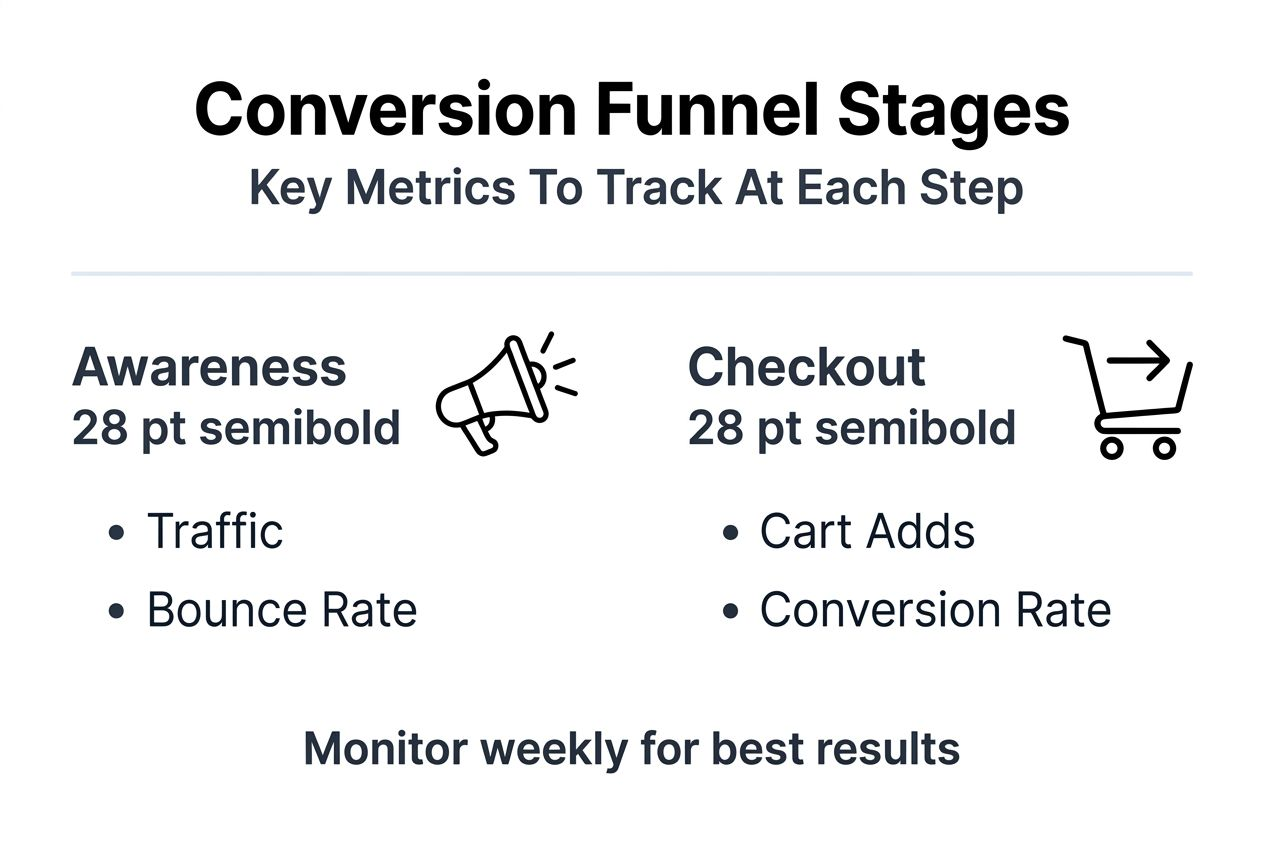
Applying funnel analytics and customer journey data reduces abandonment and increases conversions by revealing friction points you’d otherwise miss. Heat mapping shows where users click, scroll depth indicates engagement, and session recordings expose usability problems that survey data never captures.
Cart abandonment deserves special attention because shoppers who add items show high purchase intent. Analytics helps you understand abandonment triggers:
- Unexpected shipping costs revealed late in checkout
- Complicated registration requirements before purchase
- Limited payment options that exclude preferred methods
- Security concerns about payment information safety
- Comparison shopping before final decision
Once you know why people abandon, you can address root causes and deploy recovery campaigns. Automated emails reminding shoppers about abandoned carts convert 10% to 15% of recipients when timed within 24 hours and personalized with product images.
Customer journey mapping using analytics data shows how buyers move through awareness, consideration, and decision stages. You discover that customers might visit your site five times over two weeks before purchasing, touching email, social ads, and organic search along the way. This insight changes attribution models and budget allocation.
Email engagement metrics guide message optimization. Track open rates, click rates, and conversion rates by segment, campaign type, and send time. Learn which subject lines resonate, what content drives clicks, and which offers generate purchases. Apply these lessons to refine email marketing strategies continuously.
Actionable optimization tactics powered by analytics:
- Implement exit-intent popups for high-value visitors showing abandonment signals
- Simplify checkout to single page flow when data shows multi-step process causes drops
- Add customer reviews to product pages where analytics reveals low conversion despite high traffic
- Create urgency with inventory counters on items where data shows price sensitivity
- Optimize mobile experience for product categories where mobile traffic converts poorly
The most successful optimization programs test relentlessly. Every hypothesis gets validated with A/B tests that measure impact on core KPIs. Small wins accumulate into significant performance gains when you iterate consistently.
Common misconceptions about ecommerce analytics
Misunderstanding analytics limits how effectively you leverage data. Several persistent misconceptions prevent ecommerce teams from realizing analytics’ full potential.
The biggest mistake is treating analytics as just sales reporting. Revenue and order counts matter, but they’re lagging indicators that reveal results after the fact. Leading indicators like email engagement, site search behavior, and repeat visit patterns predict future performance and enable proactive optimization.
Misconceptions include focusing just on sales data rather than lifetime value and cross-channel insights that reveal customer relationships over time. A single transaction tells you little about profitability. Customer lifetime value accounting for acquisition costs and repeat purchase rates determines which segments deserve retention investment.
Traffic volume obsession blinds brands to more important metrics. Driving visitors means nothing if they don’t convert. A smaller audience of qualified prospects who buy repeatedly generates more profit than masses of casual browsers. Focus on attracting your ideal customer profile rather than maximizing raw traffic numbers.
Other damaging misconceptions include:
- Believing analytics is too complex for non-technical teams when modern tools democratize data access
- Assuming past performance guarantees future results without accounting for market changes
- Treating data as absolute truth rather than recognizing measurement limitations and biases
- Expecting instant insights without investing time in proper setup and interpretation skills
- Ignoring qualitative feedback that explains the “why” behind quantitative patterns
Channel attribution misconceptions cause budget misallocation. Last-click attribution credits only the final touchpoint before purchase, undervaluing awareness and consideration channels. Multi-touch attribution models reveal how channels work together throughout customer journeys, leading to smarter spending decisions.
Some marketers avoid analytics because they fear data will prove their campaigns underperform. This backwards thinking prevents improvement. Analytics should inform decisions, not threaten jobs. When you embrace measurement, you gain ammunition to optimize and demonstrate value rather than operating on faith.
The solution is education and culture change. Train teams to interpret data confidently, celebrate learning from failures, and make analytics accessible through clear dashboards. When everyone understands key metrics and trusts the data, your organization becomes genuinely data-driven.
Conclusion: bridging analytics to actionable ecommerce success
Ecommerce analytics transforms how you understand customers, optimize marketing, and drive growth. The brands winning in 2026 don’t just collect data; they systematically apply insights to improve every touchpoint and transaction.
Success requires moving beyond vanity metrics to focus on revenue-driving KPIs. Implement a structured framework that connects data collection through integration, monitoring, and continuous optimization. Leverage predictive analytics and personalization to engage customers with relevant experiences that convert.
Avoid common pitfalls like data silos, quality issues, and misconceptions that limit analytics effectiveness. Instead, build a culture where decisions flow from evidence rather than opinions. When you combine comprehensive analytics with marketing automation and iterative testing, you create a competitive advantage that compounds over time. Start applying these principles today to unlock measurable performance improvements and sustainable ecommerce growth.
Drive ecommerce growth with expert analytics solutions
Ready to transform your ecommerce analytics into a growth engine? Swyft Interactive specializes in building data-driven strategies that optimize every aspect of your online store and marketing. Our ecommerce growth strategy automation services integrate analytics with high-converting website development and sophisticated email campaigns.
We implement email marketing automation powered by analytics insights that boost engagement and revenue. Our team helps you optimize ecommerce website conversions using data to identify and fix friction points systematically. Stop guessing and start growing with expert guidance tailored to your unique business needs and customer behaviors.
Frequently asked questions
What is ecommerce analytics and why is it important?
Ecommerce analytics is the collection and analysis of data from online stores to optimize performance and drive growth. It enables informed decisions that improve customer engagement, increase conversion rates, and boost revenue. Without analytics, you’re managing your store blindly and missing opportunities competitors capitalize on.
Which ecommerce metrics should I focus on to improve my online store?
Focus on conversion rates, average order value, customer lifetime value, and cart abandonment rates as your core metrics. These indicators directly relate to revenue and customer retention. Track them weekly to spot trends quickly and prioritize optimizations that generate the biggest impact on profitability.
How can predictive analytics enhance ecommerce marketing?
Predictive analytics uses historical data to forecast customer behavior and buying patterns. It enables personalized campaigns that target the right customers with relevant products at optimal times. This precision increases conversion rates, average order values, and customer lifetime value by delivering experiences that match individual preferences and purchase cycles.
What common mistakes should I avoid when using ecommerce analytics?
Avoid focusing only on vanity metrics like traffic or page views that don’t connect to revenue. Ensure data quality by implementing proper tracking and validation. Integrate analytics across all marketing channels for a complete customer view rather than analyzing channels in isolation. Test changes systematically instead of making decisions based on assumptions or incomplete data.