

Finding truly valuable ecommerce leads often feels like searching in the dark when you don’t know exactly who you want to reach. For many American marketing managers, the key to driving real growth is a deeper understanding of their ideal customer backed by clear data. This guide highlights how audience segmentation and Klaviyo automation work together to transform lead acquisition, turning raw information into actionable strategies that attract and convert your best prospects.
Table of Contents
- Step 1: Identify Target Audiences for Lead Acquisition
- Step 2: Configure Website Elements for Lead Capture
- Step 3: Integrate Klaviyo Automation for Email Collection
- Step 4: Develop Segmented Lead Nurture Campaigns
- Step 5: Verify Workflow Performance and Optimize Results
Quick Summary
| Key Point | Explanation |
|---|---|
| 1. Identify Target Audiences | Analyze demographic and behavioral data to pinpoint high-potential customer segments for targeted marketing strategies. |
| 2. Optimize Website for Lead Capture | Implement engaging web elements like simplified forms and strategic CTAs to encourage visitor sign-ups effectively. |
| 3. Use Klaviyo for Email Automation | Integrate Klaviyo to automate data collection and segmentation, enhancing your email marketing efficiency. |
| 4. Develop Segmented Nurture Campaigns | Create tailored marketing communications based on specific customer segments to foster engagement and conversions. |
| 5. Continuously Monitor Performance | Regularly review performance metrics to refine your lead generation strategies and optimize conversion rates. |
Step 1: Identify Target Audiences for Lead Acquisition
Building an effective ecommerce lead generation workflow starts with pinpointing the right audience segments that will drive meaningful growth for your online business. By understanding who your most promising potential customers are, you can design targeted strategies that convert more effectively.
To identify your target audiences, begin by analyzing demographic and behavioral data. This process involves examining key characteristics that reveal your ideal customer profile:
- Age range and generational characteristics
- Income levels and purchasing power
- Geographic location and regional preferences
- Online browsing and purchasing behaviors
- Previous interaction history with similar products
Audience segmentation allows you to prioritize marketing efforts toward groups most likely to engage with your offerings. Understanding audience motivations helps create precise targeting strategies that speak directly to specific customer needs and interests.
The goal is developing a nuanced understanding of your potential customers beyond basic demographics. Look for patterns in customer data that reveal deeper insights about purchasing motivations, pain points, and preferences.
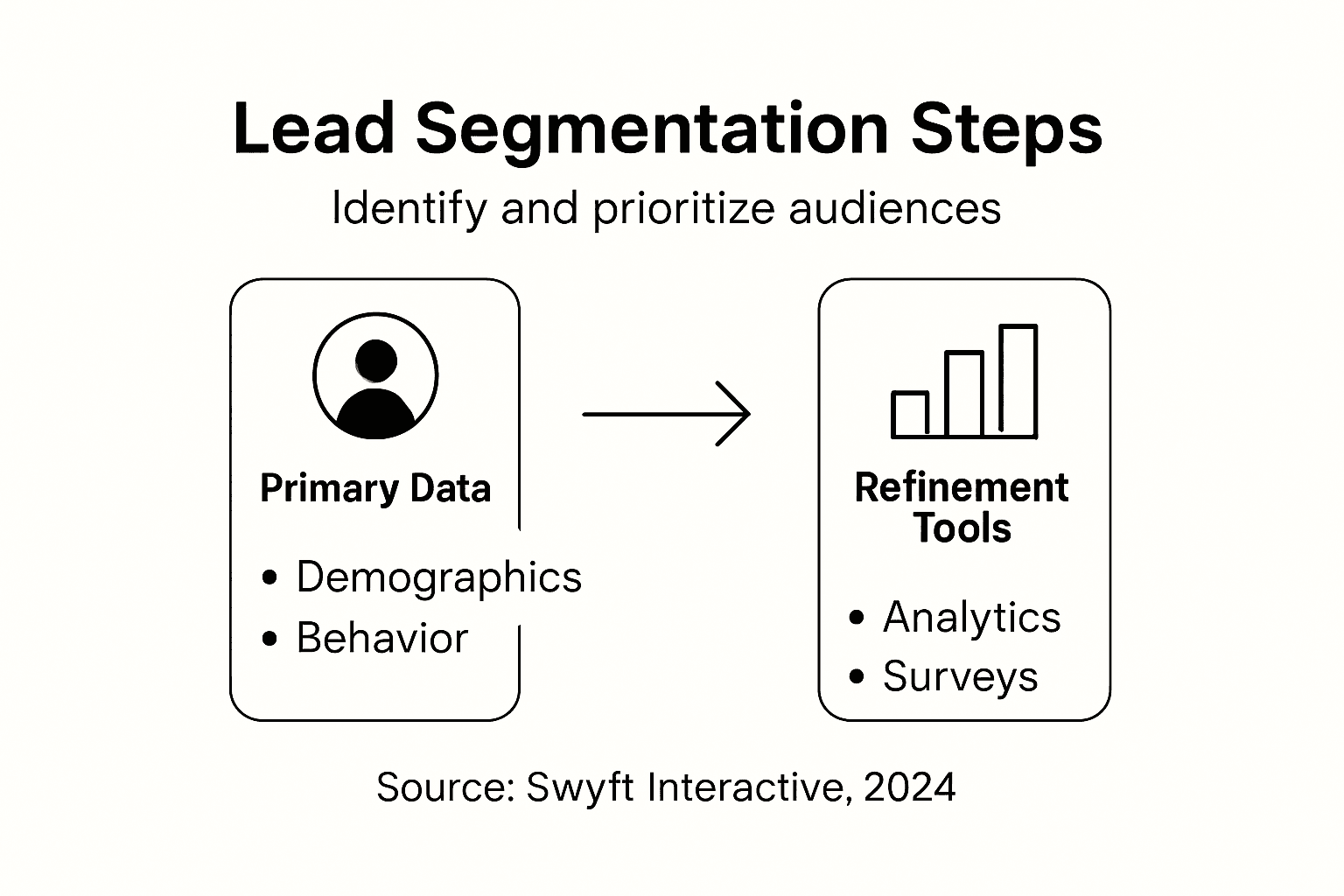
Pro tip: Leverage analytics tools and customer surveys to continuously refine your audience segments and improve lead acquisition strategies.
Step 2: Configure Website Elements for Lead Capture
Configuring your website for effective lead capture requires strategic design and thoughtful implementation of interactive elements that encourage visitor engagement. Your goal is to create seamless pathways that transform casual browsers into potential customers.
Custom web elements play a crucial role in designing compelling lead capture mechanisms. Here are key website components to optimize:
- Contact forms with minimal required fields
- Strategically placed call-to-action buttons
- Pop-up lead magnets offering value
- Interactive quizzes or assessment tools
- Email signup widgets with clear value propositions
Responsive design principles ensure your lead capture elements work smoothly across all devices. This means creating mobile-friendly forms, using adaptive layouts, and maintaining consistent user experience whether visitors are on smartphones, tablets, or desktop computers.
Each website element should be intuitive, visually appealing, and aligned with your brand’s aesthetic. Focus on reducing friction in the lead capture process by keeping forms simple, providing clear instructions, and offering immediate value to potential leads.

Pro tip: Implement A/B testing on your lead capture elements to continuously optimize conversion rates and understand what design approaches resonate most with your audience.
Here’s a summary of website elements and how each boosts ecommerce lead capture:
| Website Element | Primary Purpose | Impact on Lead Generation |
|---|---|---|
| Contact Form | Collect user information | Increases contact conversion rates |
| Call-to-Action Button | Direct user engagement | Guides visitors toward key actions |
| Lead Magnet Pop-up | Offer immediate value | Captures emails via incentives |
| Quiz/Assessment Tool | Interactive engagement | Qualifies leads by preferences |
| Email Signup Widget | Encourage subscriptions | Grows opt-in email list efficiently |
Step 3: Integrate Klaviyo Automation for Email Collection
Configuring Klaviyo automation transforms your ecommerce lead generation strategy by creating intelligent, data-driven email collection systems that capture and nurture potential customer information. Your mission is to set up sophisticated workflows that seamlessly gather email addresses while providing value to website visitors.
Email marketing automation enables powerful data collection and segmentation strategies. To effectively integrate Klaviyo, focus on these key implementation steps:
- Connect your ecommerce platform with Klaviyo
- Create custom signup forms across your website
- Design automated email capture workflows
- Implement dynamic list segmentation
- Set up triggered email sequences
Programmatic API integration allows for advanced customization of your email collection processes. This means you can develop sophisticated triggers that automatically capture lead information based on specific user interactions, website behaviors, and purchase patterns.
Successful Klaviyo automation requires strategic planning and continuous optimization. Develop multiple capture points, offer compelling lead magnets, and ensure your signup processes feel seamless and valuable to potential customers.
Pro tip: Regularly audit your Klaviyo workflows and test different signup form designs to maximize email collection rates and improve overall conversion performance.
Step 4: Develop Segmented Lead Nurture Campaigns
Creating effective segmented lead nurture campaigns transforms generic marketing into personalized customer experiences that drive meaningful engagement and conversions. Your goal is to craft targeted messaging that speaks directly to each unique audience segment’s specific needs and interests.
Customer segmentation strategies provide the foundation for developing precise marketing approaches. Break down your potential leads into distinct groups based on key characteristics:
- Demographic segments (age, income, location)
- Behavioral patterns (purchase history, website interactions)
- Engagement levels (new subscribers, active customers)
- Product interest categories
- Previous conversion experiences
Market segmentation techniques enable you to design nuanced campaigns that resonate with specific audience subgroups. This means developing unique email sequences, content offers, and communication strategies tailored to each segment’s particular motivations and pain points.
Successful nurture campaigns require continuous refinement. Monitor performance metrics, track engagement rates, and be prepared to adjust your segmentation approach based on real-world customer responses and evolving market dynamics.
Pro tip: Implement progressive profiling in your signup forms to gradually collect more detailed customer information, allowing for increasingly sophisticated segmentation over time.
Step 5: Verify Workflow Performance and Optimize Results
Evaluating and refining your ecommerce lead generation workflow is crucial for sustained growth and improved conversion rates. Your objective is to transform raw performance data into actionable insights that continuously enhance your marketing strategy.
Sales workflow optimization requires a systematic approach to performance monitoring and strategic refinement. Key metrics to track include:
- Conversion rates for each customer segment
- Lead acquisition costs
- Email engagement percentages
- Time to first purchase
- Customer lifetime value
Web performance monitoring helps identify potential bottlenecks in your lead capture process. Analyze technical elements like page load times, form interaction speeds, and user experience metrics to ensure your workflow operates at peak efficiency.
Successful optimization is an ongoing process. Develop a routine of monthly performance reviews, where you critically examine each workflow component and make data-driven adjustments to improve overall lead generation effectiveness.
Pro tip: Create a dashboard that consolidates key performance indicators, allowing you to quickly visualize trends and identify areas requiring immediate optimization.
This table compares key performance metrics for lead generation workflows:
| Metric | What It Measures | Typical Optimization Focus |
|---|---|---|
| Conversion Rate | Lead to customer ratio | Improve website CTAs and forms |
| Lead Acquisition Cost | Cost per new lead | Lower budget waste, refine targeting |
| Email Engagement | Open/click rates | Enhance email content and timing |
| Time to First Purchase | Speed to conversion | Streamline checkout, follow-ups |
| Customer Lifetime Value | Revenue per customer | Enhance retention, upsell efforts |
Unlock Scalable Ecommerce Growth Through Expert Lead Generation
Building an effective ecommerce lead generation workflow is essential to solving challenges like low conversion rates and inefficient email capture. If your goals include capturing high-quality leads through smart segmentation, optimizing website elements for seamless visitor engagement, and harnessing Klaviyo automation to nurture customers, you’re addressing critical pain points featured in this guide.
At Swyft Interactive, we specialize in creating fast-loading, high-converting ecommerce websites paired with sophisticated email marketing automation. Our proven strategies combine full-funnel growth solutions designed to increase your lead acquisition and email engagement while driving revenue growth. Discover how we can help you implement targeted segmentation and automated workflows by exploring our Email Marketing Archives – Swyft Interactive and dive deeper into maximizing Klaviyo with our expert insights in the You Suck At Klaviyo Archives – Swyft Interactive.
Take the next step toward transforming your ecommerce lead generation strategy with data-driven, tailored solutions. Visit Swyft Interactive today to learn how our digital strategy experts deliver measurable results that turn browsers into loyal customers. Start growing your business now by partnering with a team that understands your unique challenges and goals. Also, explore our Digital Strategy Archives – Swyft Interactive for more ways to optimize your marketing efforts.
Frequently Asked Questions
How do I identify my target audiences for ecommerce lead generation?
Building a clear picture of your target audiences starts with analyzing demographic and behavioral data such as age, income levels, and browsing behaviors. Utilize analytics tools and customer surveys to segment these audiences and prioritize those most likely to engage with your offerings.
What website elements should I optimize for lead capture?
Focus on creating effective lead capture mechanisms by optimizing website elements like contact forms, call-to-action buttons, and lead magnet pop-ups. Ensure these elements are easy to interact with and provide immediate value to visitors, helping turn them into leads.
How can I set up email automation for lead collection?
Integrate email automation by connecting your ecommerce platform with a suitable tool, then create custom signup forms and design automated workflows for email capture. Aim to set up at least three dynamic list segments based on user behavior to enhance the effectiveness of your email collection efforts.
What should I include in my segmented lead nurture campaigns?
Segmented lead nurture campaigns should include personalized content tailored to each group’s specific interests, such as demographic information or purchase behavior. Develop unique email sequences for different audience segments to foster engagement and increase conversion rates.
How can I measure the performance of my lead generation workflow?
Track key performance metrics like conversion rates, lead acquisition costs, and email engagement percentages to evaluate your lead generation workflow. Regularly audit these metrics and make data-driven adjustments to improve efficiency, ideally conducting reviews monthly to stay on track.