

Every Ecommerce manager knows that sifting through customer data can feel overwhelming when building advanced segmentation strategies. With predictive audience segmentation powered by real-time behavior and purchase patterns from platforms like Klaviyo, you can transform scattered insights into actionable email campaigns. Integrating diverse data sources helps you pinpoint exactly what drives engagement and conversions for your American audience, setting the foundation for smarter marketing decisions.
Table of Contents
- Step 1: Assess Customer Data Sources For Segmentation
- Step 2: Define Audience Segments By Purchase Behavior
- Step 3: Create Dynamic Segments In Klaviyo
- Step 4: Tailor Email Content For Each Segment
- Step 5: Test And Optimize Segmentation Effectiveness
Quick Summary
| Key Point | Explanation |
|---|---|
| 1. Centralize Customer Data Sources | Aggregate data from various platforms to build comprehensive customer profiles for effective segmentation. |
| 2. Segment by Purchase Behavior | Analyze customer buying patterns to create targeted segments like high-value and at-risk customers for personalized marketing. |
| 3. Develop Dynamic Segments in Klaviyo | Utilize Klaviyo’s tools to create and automate audience groups that update based on customer interactions and behaviors. |
| 4. Tailor Email Content for Each Segment | Customize email strategies for different segments to align with their unique characteristics, maximizing engagement. |
| 5. Test and Optimize Segmentation Strategies | Regularly evaluate segment performance using A/B testing and metrics to refine and enhance marketing efforts. |
Step 1: Assess customer data sources for segmentation
To develop powerful email segmentation strategies, you need a comprehensive understanding of your customer data sources. Predictive audience segmentation requires gathering insights from multiple channels and platforms to create meaningful customer profiles.
Start by collecting data from key sources like your eCommerce platform, customer relationship management (CRM) system, website analytics, email marketing platform, and direct customer interactions. Look for information such as purchase history, browsing behavior, demographic details, geographic location, and engagement metrics. Each data point helps you build a more nuanced understanding of your customer segments. Marketing segmentation research emphasizes the importance of integrating diverse data types to create targeted marketing efforts.
Organize your data collection process systematically by creating a centralized database or dashboard that aggregates information from different sources. This allows you to cross reference data points and develop more sophisticated segmentation strategies that go beyond basic demographic information.
The following table summarizes key customer data sources and the unique insights each provides for email segmentation:
| Data Source | Main Insight Provided | Example Use in Segmentation |
|---|---|---|
| eCommerce Platform | Purchase history & order value | Identify high spenders |
| CRM System | Customer profiles & preferences | Segment by loyalty program status |
| Website Analytics | Browsing behavior | Target cart abandoners |
| Email Marketing Platform | Engagement & open rates | Isolate highly engaged readers |
| Direct Customer Interactions | Feedback & support history | Re-engage dissatisfied customers |
Pro tip: Invest in a robust customer data platform that can automatically integrate and update information from multiple sources to streamline your segmentation process.
Step 2: Define audience segments by purchase behavior
Creating meaningful audience segments requires a strategic approach to analyzing customer purchase patterns. Market segmentation techniques help you break down your customer base into distinct groups based on their buying behaviors and characteristics.
Start by categorizing customers into key segments such as first-time buyers, frequent purchasers, high value customers, and at-risk customers. Examine critical metrics like purchase frequency, average order value, product preferences, and time between purchases. Look for patterns that reveal customer lifecycle stages and potential opportunities for targeted marketing. By understanding customer purchase behavior insights, you can develop more personalized email campaigns that speak directly to each segment’s unique needs and preferences.

Utilize your eCommerce platform and email marketing tools to generate detailed reports that highlight these behavioral segments. Group customers based on quantifiable data points like total spend, number of orders, most purchased product categories, and engagement levels. This granular approach allows you to craft highly targeted marketing strategies that resonate with specific customer groups and drive more meaningful interactions.
Pro tip: Create dynamic segments that automatically update as customer behaviors change, ensuring your marketing efforts remain relevant and responsive to shifting purchase patterns.
Step 3: Create dynamic segments in Klaviyo
Designing powerful dynamic segments in Klaviyo requires a strategic approach to leveraging customer data and behavioral insights. Real-time customer segmentation enables you to build sophisticated audience groups that automatically update based on specific criteria and customer interactions.
Begin by exploring Klaviyo’s segmentation tools and selecting the most relevant conditions for your specific business needs. Create segments based on multiple dimensions such as purchase frequency, total customer value, specific product interactions, and predictive analytics. AI powered segmentation features allow you to build complex audience groups through intuitive prompts that capture nuanced customer behaviors and potential future actions.
Focus on developing segments that go beyond basic demographic information. Consider creating dynamic groups like recent purchasers, potential churners, high value customers, and customers likely to make repeat purchases. Utilize Klaviyo’s advanced filtering options to set up conditions that automatically move customers between segments as their behaviors change, ensuring your marketing efforts remain precisely targeted and relevant.
Pro tip: Test and refine your segments regularly by monitoring performance metrics and adjusting your segmentation criteria to maintain maximum marketing effectiveness.
Step 4: Tailor email content for each segment
Crafting personalized email content requires a nuanced understanding of each customer segment’s unique characteristics and preferences. Effective business email communication demands strategic content customization that speaks directly to each audience group’s specific needs and motivations.
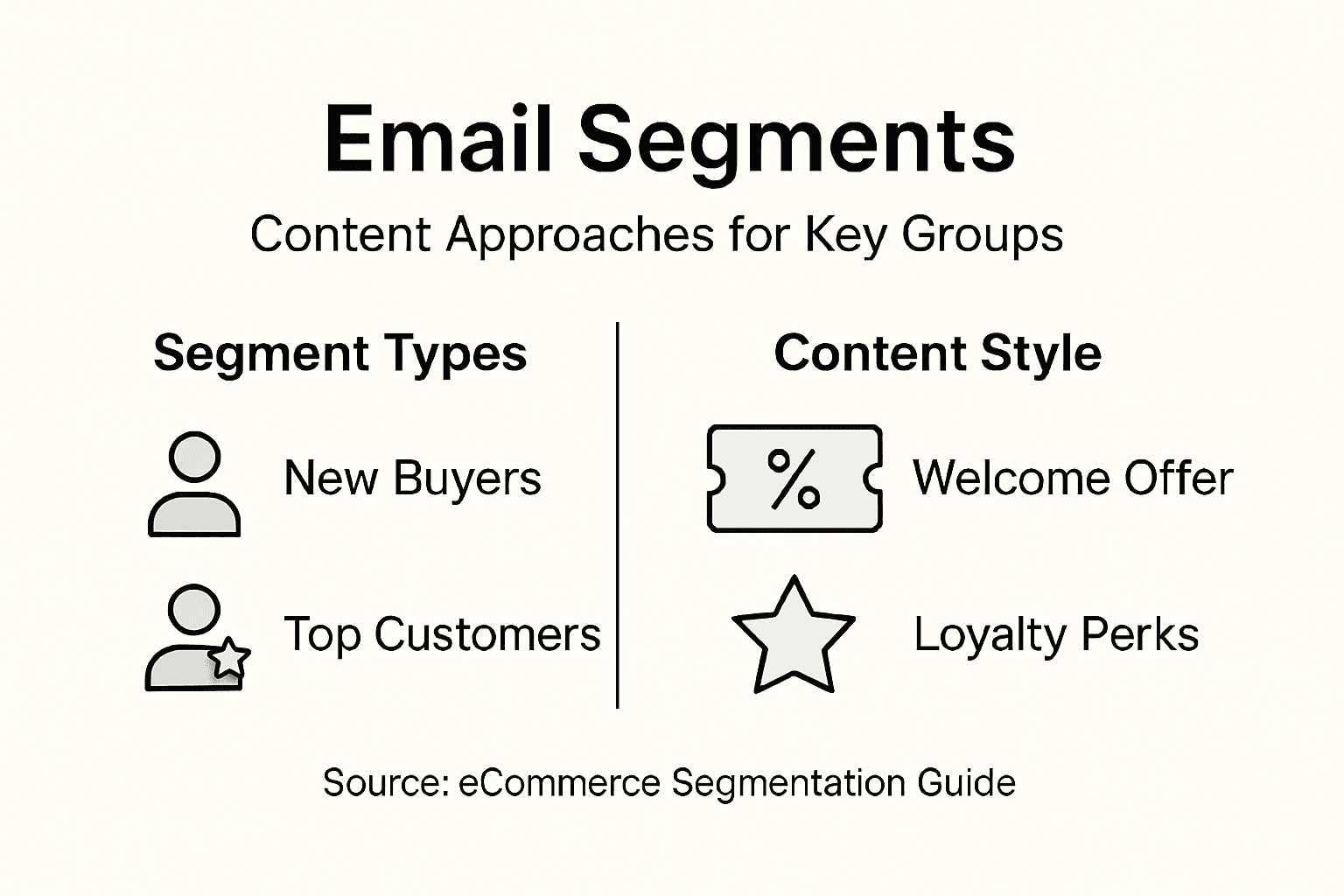
Start by developing distinct content strategies for different segments. For high-value customers, create premium language that emphasizes exclusivity and personalized recommendations. Recent purchasers might receive follow-up content about complementary products, while potential churners need re-engagement messaging that reignites their interest. Professional email writing techniques suggest using clear, concise language with targeted subject lines that immediately capture each segment’s attention.
Utilize dynamic content blocks in your email templates that automatically adjust based on customer segment characteristics. This approach allows you to create one email template with multiple personalized variations, ensuring each recipient receives content that feels specifically crafted for their unique customer journey. Focus on matching tone, product recommendations, and calls to action to each segment’s specific behavioral patterns and purchasing history.
Here’s a comparison of segment types and personalized email strategies to maximize engagement:
| Segment Type | Tailored Content Approach | Likely Business Impact |
|---|---|---|
| High-Value Customers | Exclusive offers, loyalty rewards | Higher retention and referrals |
| Recent Purchasers | Product recommendations, how-tos | Increased repeat purchase rate |
| At-Risk Customers | Win-back incentives, surveys | Reduced churn and feedback gained |
| Frequent Buyers | Early access to new products | Strengthened brand loyalty |
Pro tip: Implement A/B testing for your segmented emails to continuously refine your content strategy and improve engagement rates across different customer groups.
Step 5: Test and optimize segmentation effectiveness
Optimizing your email segmentation strategy requires a systematic approach to measurement and continuous improvement. Segmentation impact analysis demands rigorous evaluation of how different customer segments perform across key marketing metrics.
Implement a comprehensive testing framework that includes A/B testing for email content, subject lines, and send times specific to each segment. Track critical performance indicators like open rates, click through rates, conversion rates, and revenue per recipient. Qualitative segmentation research suggests combining quantitative data with customer feedback to understand the nuanced effectiveness of your segmentation strategy. Look for patterns that reveal which segments respond most positively to specific messaging approaches and identify opportunities for refinement.
Create a regular optimization cycle where you review segment performance monthly or quarterly. Be prepared to adjust segment criteria, merge underperforming segments, or develop more granular subdivisions based on emerging data insights. Remember that effective segmentation is an ongoing process of testing, learning, and adapting to changing customer behaviors and preferences.
Pro tip: Develop a standardized reporting dashboard that automatically tracks segment performance metrics to streamline your optimization process.
Unlock the Full Potential of Your Email Segmentation for eCommerce Growth
Struggling to turn complex customer data into clear, actionable email segments that boost conversions? This tutorial highlights the critical challenges of gathering diverse customer insights and creating dynamic segments tailored to purchase behavior. If your goal is to elevate engagement with personalized content and improve ROI through real-time Klaviyo automation, you need a trusted partner who understands these nuances deeply.
At Swyft Interactive, we specialize in building fast-loading eCommerce websites combined with sophisticated email marketing strategies that harness the power of dynamic segmentation and automation. Explore our Email Marketing Archives – Swyft Interactive to see how we turn segmentation insights into revenue-driving campaigns.
Take control of your customer data and watch your email engagement and sales soar. Visit Swyft Interactive now to discover tailored Klaviyo automation solutions and comprehensive digital strategies that keep your customers connected and coming back. Learn more about our approach in the Digital Strategy Archives – Swyft Interactive and refine your segmentation with expert insights from You Suck At Klaviyo Archives – Swyft Interactive.
Start transforming data into growth today with a team that delivers measurable results.
Frequently Asked Questions
How can I assess my customer data sources for email segmentation?
Start by identifying key sources of customer data, such as your eCommerce platform, CRM system, and website analytics. Collect insights like purchase history and engagement metrics to build a detailed profile of your customer segments.
What are some effective audience segments I can create based on purchase behavior?
You can segment customers into categories such as first-time buyers, frequent purchasers, and high-value customers. Analyze key metrics like purchase frequency and average order value to tailor your marketing efforts effectively.
How do I create dynamic segments in my email marketing platform?
Utilize the segmentation tools available in your email marketing platform to define criteria such as purchase frequency and customer behavior. This allows you to automatically group customers based on their evolving data, ensuring your marketing remains relevant.
What strategies should I use to tailor email content for different segments?
Develop distinct content strategies for each segment, focusing on their unique characteristics and needs. For example, send exclusive offers to high-value customers while providing follow-up recommendations to recent buyers for improved engagement.
How can I test and optimize the effectiveness of my email segmentation?
Implement regular A/B testing for email content, subject lines, and send times to measure performance across segments. Track key performance indicators and adjust your segmentation strategies based on insights gathered to increase conversions effectively.