
Growing your ecommerce business with email marketing can feel overwhelming when every campaign competes for your customers’ attention. Getting the right emails to land, resonate, and drive real results is no easy feat in a crowded inbox. Without a focused strategy, it is all too easy for your efforts to fizzle out rather than fuel growth.
You deserve practical guidance that delivers measurable impact. This step by step list will show you how to use proven methods, like using clear key performance indicators and personalizing content, to move the needle on sales and engagement. Each strategy offers an actionable way to turn email marketing from a guessing game into a powerful engine for consistent ecommerce growth.
Get ready to discover tested techniques and industry-backed insights that can help you win attention, drive sales, and keep customers coming back for more.
Table of Contents
- 1. Define Clear Campaign Goals And KPIs
- 2. Segment Your Audience For Personalization
- 3. Set Up Automated Klaviyo Flows
- 4. Craft Engaging And Branded Email Content
- 5. Test And Optimize Email Deliverability
- 6. Analyze Campaign Performance Metrics
- 7. Implement Post-Purchase And Loyalty Programs
Quick Summary
| Takeaway | Explanation |
|---|---|
| 1. Define SMART Goals and KPIs | Establish specific, measurable, achievable, relevant, and time-bound objectives for your campaigns to ensure effectiveness and clarity. |
| 2. Segment Your Audience for Personalization | Divide customers into distinct groups based on behavior and preferences for more targeted and relevant email communication. |
| 3. Set Up Automated Email Flows | Implement strategic automated email sequences to maintain ongoing engagement based on customer actions and behaviors. |
| 4. Craft Engaging and Branded Content | Ensure your email messaging is compelling and visually appealing, reflecting your brand identity to resonate with your audience. |
| 5. Track and Analyze Performance Metrics | Regularly assess key performance indicators like open and click rates to gain insights and optimize your email marketing strategies. |
1. Define Clear Campaign Goals and KPIs
Successful ecommerce email marketing starts with crystal clear campaign goals and key performance indicators (KPIs). Without precise objectives, your marketing efforts can quickly become scattered and ineffective.
Understanding your KPIs is crucial because they serve as your strategic roadmap, helping you measure the true impact of your email campaigns. Digital marketing ROI metrics provide a comprehensive view of your campaign’s performance by tracking revenue generated against marketing expenditures.
Effective KPIs for ecommerce email marketing typically include conversion rates, click through rates, revenue per email, and list growth rate. These metrics help you understand not just how many people open your emails, but how those emails translate into actual sales and customer engagement.
To define your goals, start by asking specific questions: Are you looking to increase first time purchases? Boost average order value? Re-engage dormant customers? Each goal requires a different email strategy and corresponding measurement approach.
When setting KPIs, ensure they are SMART: Specific, Measurable, Achievable, Relevant, and Time-bound. For instance, instead of a vague goal like “increase sales,” aim for “generate $50,000 in revenue from email campaigns within the next 90 days.”
Pro tip: Create a tracking dashboard in your email marketing platform that automatically compiles your key metrics, allowing you to monitor campaign performance in real time.
2. Segment Your Audience for Personalization
Audience segmentation is a powerful strategy that transforms generic email marketing into targeted communication. By dividing your customer base into specific groups, you create opportunities for hyper relevant messaging that dramatically improves engagement.
Effective segmentation goes beyond basic demographics. Modern ecommerce marketers can leverage customer segmentation strategies using data points like purchase history, browsing behavior, average order value, and customer lifecycle stage.
Common segmentation approaches include geographic location, purchase frequency, product preferences, and customer lifetime value. By understanding these distinct customer groups, you can craft personalized email campaigns that speak directly to their unique needs and interests.
Personalization techniques can significantly boost marketing performance. Research shows that adding consumer specific information can increase open rates by 20% and generate 31% more sales leads.
To implement effective segmentation, start by analyzing your existing customer data. Look for patterns in purchasing behavior, engagement levels, and product interactions. Identify key characteristics that distinguish different customer groups and create targeted email campaigns that address their specific motivations.
Pro tip: Create at least 3 to 5 distinct customer segments and develop tailored email content that addresses the unique needs and preferences of each group.
3. Set Up Automated Klaviyo Flows
Automated email flows are the backbone of intelligent ecommerce marketing, enabling you to deliver personalized messages precisely when customers are most likely to engage. By implementing strategic automated flows in Klaviyo, you can transform one time interactions into ongoing customer relationships.
Workflow automation technology empowers marketers to create intelligent communication systems that respond automatically to specific customer behaviors. These automated flows can include welcome series, abandoned cart reminders, post purchase follow ups, and winback campaigns.
Klaviyo flows are triggered by specific customer actions or data points. Key automated flows every ecommerce brand should implement include:
- Welcome Series: Greet new subscribers with a multi email introduction
- Abandoned Cart: Remind customers about products left in their cart
- Post Purchase: Thank customers and encourage repeat purchases
- Browse Abandonment: Re engage customers who viewed products
- Winback Campaign: Reconnect with customers who haven’t purchased recently
Each flow should be carefully crafted with personalized messaging that speaks directly to the customer’s specific stage in their buying journey. Thoughtful automation means delivering the right message at the right moment.
Pro tip: Test and adjust your automated flows regularly by monitoring key performance metrics like open rates, click rates, and conversion rates to continuously optimize your customer communication strategy.
4. Craft Engaging and Branded Email Content
Email content is the heartbeat of your ecommerce marketing strategy, serving as a direct communication channel with your customers. Your emails must not only inform but also inspire and reflect your brand’s unique personality.
Effective business email communication requires a strategic approach that combines clear messaging with compelling design. Your goal is to create emails that recipients actually want to read and engage with.
Key components of engaging email content include:
- Compelling Subject Lines: Create curiosity without being misleading
- Consistent Brand Voice: Maintain your unique tone across all communications
- Visual Hierarchy: Use design to guide readers through your content
- Clear Value Proposition: Communicate benefits immediately
- Authentic Storytelling: Connect emotionally with your audience
Successful email content strikes a balance between informative and entertaining. Your design should be clean and professional while maintaining enough personality to stand out in crowded inboxes. Use high quality images, concise copy, and strategic formatting to capture and maintain reader attention.
Remember that each email is an opportunity to reinforce your brand identity. Consistent color schemes, typography, and messaging help build recognition and trust with your audience.
Pro tip: Create a brand style guide for your email marketing that outlines visual and tonal guidelines to ensure every email feels authentically connected to your brand experience.
5. Test and Optimize Email Deliverability
Email deliverability determines whether your marketing messages successfully reach your customers inboxes or vanish into spam folders. Understanding and improving your email delivery rates is crucial for maintaining effective communication with your audience.
Email authentication protocols play a critical role in ensuring your messages bypass spam filters and reach intended recipients. These technical safeguards help establish your sender credibility and improve overall email performance.
Key factors affecting email deliverability include:
- Sender Reputation: Maintain a positive sending history
- Email Authentication: Implement SPF, DKIM, and DMARC records
- Content Quality: Avoid spam trigger words and excessive promotional language
- List Hygiene: Regularly clean and update your subscriber list
- Engagement Metrics: Monitor open rates, click rates, and subscriber interactions
Practical steps to optimize deliverability involve technical configuration and strategic content management. Start by verifying your domain authentication, using dedicated IP addresses, and implementing robust email validation processes.
Regularly test your emails using tools that simulate delivery across different email clients and providers. This helps identify potential issues before they impact your overall marketing performance.
Pro tip: Create a seed list of test email addresses across multiple email providers to monitor deliverability and catch potential issues before launching full campaigns.
6. Analyze Campaign Performance Metrics
Successful email marketing demands more than sending messages tracking what actually happens after you hit send. Performance metrics transform raw data into actionable insights that drive strategic improvements in your ecommerce email campaigns.
Measuring marketing effectiveness requires understanding key performance indicators across different stages of your marketing funnel. These metrics reveal the true impact of your email strategies and guide future optimizations.
Critical Email Marketing Metrics to Track:
- Open Rates: Measure subject line effectiveness and audience interest
- Click Through Rates: Assess content relevance and engagement
- Conversion Rates: Track actual revenue generated from email campaigns
- Unsubscribe Rates: Monitor audience satisfaction and content quality
- Revenue Per Subscriber: Calculate the financial value of your email list
Effective metric analysis involves looking beyond surface level numbers. Context matters more than raw data. For instance, a low open rate might indicate poor subject lines while a high unsubscribe rate could signal misaligned content or audience expectations.
Utilize your email marketing platform analytics dashboard to generate comprehensive reports. Compare performance across different campaigns, segments, and time periods to identify trends and opportunities for improvement.
Pro tip: Create a monthly performance scorecard that tracks your key metrics, allowing you to quickly visualize progress and identify areas needing strategic adjustment.
7. Implement Post-Purchase and Loyalty Programs
Post-purchase engagement transforms one time buyers into repeat customers and brand advocates. Loyalty programs are strategic tools that reward customer behavior and create lasting relationships beyond the initial transaction.
Loyalty programs strategically increase purchase frequency by providing meaningful incentives that encourage customers to return and engage with your brand repeatedly.
Key Components of Effective Loyalty Programs:
- Points Based Rewards: Earn points for purchases redeemable for discounts
- Tiered Membership Levels: Create exclusive experiences for top customers
- Birthday and Anniversary Rewards: Personal touches that build emotional connection
- Referral Bonuses: Incentivize customers to bring new business
- Early Access to Sales: Make loyal customers feel special and valued
Successful loyalty programs go beyond transactional rewards. They create a sense of community and make customers feel genuinely appreciated. Consider implementing personalized rewards that align with individual customer preferences and purchase histories.
Use email marketing to communicate loyalty program benefits, track customer progress, and create excitement around earning and redeeming rewards. Integrate your loyalty program seamlessly into your existing email automation flows.
Pro tip: Design your loyalty program with clear, achievable milestones that provide immediate value and create a sense of progress for your customers.
Below is a comprehensive table summarizing the key strategies and insights for effective ecommerce email marketing as discussed in the article.
| Key Topic | Description | Actionable Insight |
|---|---|---|
| Define Campaign Goals and KPIs | Establish clear objectives and measurable indicators tailored to desired outcomes like sales growth or engagement. | Set SMART goals and utilize a tracking dashboard for monitoring metrics in real time. |
| Segment Your Audience | Divide customers into categories based on data such as behavior and preferences for personalized communications. | Identify 3-5 distinct segments and craft customized content for each group. |
| Automate Email Flows | Implement predefined email sequences triggered by customer actions like purchases or website activity. | Set up flows for welcome series, cart recovery, and re-engagement campaigns. |
| Create Engaging Content | Develop emails using compelling subject lines, consistent voice, and high-quality visuals. | Use a brand style guide for maintaining design consistency across campaigns. |
| Optimize Deliverability | Ensure emails successfully reach recipients by complying with authentication protocols and maintaining list hygiene. | Monitor sender reputation and utilize test tools to precheck email deliverability. |
| Analyze Performance Metrics | Collect and evaluate data on open rates, clicks, and conversions to improve effectiveness. | Regularly compare campaigns and refine strategies based on insights gained. |
| Initiate Loyalty Programs | Promote repeated purchasing through rewards such as points, tiers, and exclusive offers. | Communicate benefits and progress transparently through email updates. |
Unlock Your Ecommerce Growth with Expert Email Marketing and Website Solutions
Struggling to implement the 7 essential steps for your ecommerce email marketing checklist can feel overwhelming. From defining clear KPIs to setting up effective Klaviyo automated flows and crafting branded content, these challenges demand a tailored strategy focused on measurable results. Whether your goal is to boost conversion rates, enhance customer engagement, or optimize post-purchase loyalty programs, it is critical to have a reliable partner who understands how to connect these pieces into a full-funnel growth system.
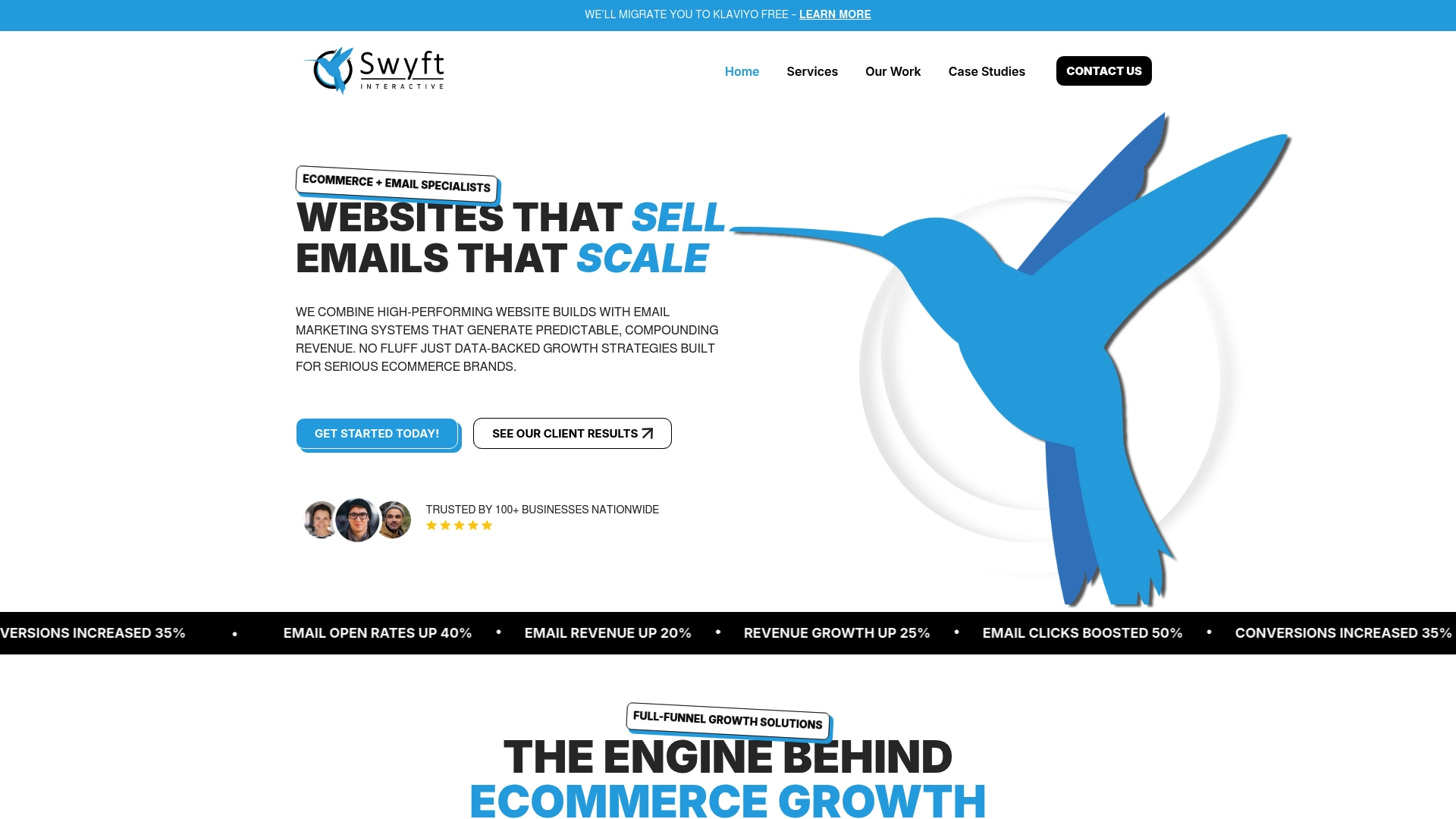
At Swyft Interactive, we specialize in creating high-converting ecommerce websites seamlessly integrated with sophisticated Klaviyo email automation. Explore our Email Marketing Archives – Swyft Interactive to learn how our data-driven strategies put your audience segmentation and automated flows into action. Dive into our Digital Strategy Archives – Swyft Interactive for insights on optimizing your entire ecommerce funnel. Ready to elevate your email campaigns and website performance? Visit https://swyftinteractive.com now to start crafting scalable online sales engines that deliver higher revenue and lasting customer loyalty.
Frequently Asked Questions
What are the key campaign goals to focus on in ecommerce email marketing?
Successful ecommerce email marketing requires setting clear campaign goals like increasing first-time purchases or boosting average order value. To define these goals, ask specific questions about what you want to achieve and ensure they are SMART: Specific, Measurable, Achievable, Relevant, and Time-bound.
How can I effectively segment my audience for email marketing?
Effectively segment your audience by analyzing data such as purchase history and customer preferences. Start by creating at least 3 to 5 distinct customer segments to tailor your email content to their specific needs and interests, improving engagement significantly.
What are the essential automated flows I should set up in Klaviyo?
Key automated flows to implement in Klaviyo include a welcome series, abandoned cart reminders, and post-purchase follow-ups. Set up these flows to trigger based on customer actions, ensuring you deliver relevant messages at the right moments.
How can I improve my ecommerce email content?
To enhance your email content, focus on crafting compelling subject lines and maintaining a consistent brand voice. Utilize visual hierarchy, provide a clear value proposition, and incorporate authentic storytelling to engage your audience better.
What steps can I take to ensure better email deliverability?
Improve email deliverability by maintaining a positive sender reputation and implementing email authentication protocols like SPF and DKIM. Regularly clean your subscriber list and monitor engagement metrics to enhance your chances of reaching your audience’s inbox effectively.
How can I analyze the performance of my email campaigns?
Analyze your email campaign performance by tracking key metrics such as open rates, click-through rates, and conversion rates. Create a monthly performance scorecard to visualize these metrics and identify areas for improvement within your email strategy.