
Nearly eighty percent of American shoppers expect personalized communication from brands the moment they subscribe. Meeting this demand means your welcome email must deliver instant value while capturing attention in a crowded inbox. For ecommerce marketing managers focused on American retail, perfecting this first interaction sets the stage for deeper customer engagement and lasting sales growth.
Table of Contents
- 1. Welcome Emails That Build Strong First Impressions
- 2. Abandoned Cart Emails to Recover Lost Sales
- 3. Order Confirmation Emails That Reassure Customers
- 4. Shipping and Delivery Updates for Real-Time Tracking
- 5. Post-Purchase Emails to Drive Repeat Business
- 6. Win-Back Emails to Re-Engage Inactive Customers
- 7. Personalized Product Recommendations for Higher Conversions
Quick Summary
| Key Message | Explanation |
|---|---|
| 1. Craft impactful welcome emails | Use sincere greetings and clear brand stories to engage new subscribers and establish trust. |
| 2. Optimize abandoned cart strategies | Send timely reminders and incentives to encourage customers to complete their purchases. |
| 3. Provide reassuring order confirmations | Clearly outline order details and shipping information to reduce buyer anxiety and foster trust. |
| 4. Keep customers informed with shipping updates | Send regular tracking information to enhance customer satisfaction and engagement during delivery. |
| 5. Engage inactive customers with win-back emails | Acknowledge their absence and offer incentives to rekindle their interest and loyalty to your brand. |
1. Welcome Emails That Build Strong First Impressions
Welcome emails represent your first digital handshake with potential customers. These critical messages are your brand’s initial opportunity to make a memorable impression and set the tone for future interactions.
In the competitive world of ecommerce, your welcome email must do more than simply acknowledge a signup. It needs to immediately communicate your brand’s unique value proposition and create an emotional connection with new subscribers. Initiating customer engagement requires a strategic approach that combines warmth, clarity, and compelling content.
Successful welcome emails typically include several key elements: a sincere thank you message, a brief brand introduction, clear expectations about future communications, and an incentive that encourages the first purchase. The goal is to transform a casual website visitor into an engaged potential customer by demonstrating the value your brand provides.
Designing an effective welcome email involves understanding psychological triggers that motivate new subscribers. This means crafting a message that feels personal, authentic, and immediately valuable. Include specific details about what subscribers can expect moving forward – whether that’s exclusive discounts, product insights, or insider information about your brand.
Key Components of a Powerful Welcome Email:
• Personalized greeting
• Brand story or mission statement
• Clear value proposition
• First-time purchase incentive
• Simple, actionable next steps
Pro tip: Design your welcome email template with mobile responsiveness in mind, ensuring a seamless experience across all devices and making it easy for new subscribers to engage with your brand.
2. Abandoned Cart Emails to Recover Lost Sales
Abandoned cart emails represent a powerful strategy for recovering potential lost revenue in ecommerce. These targeted messages help reconnect with customers who have added products to their cart but did not complete their purchase.
Understanding why customers abandon their carts is crucial. Common reasons include unexpected shipping costs, complex checkout processes, or simply getting distracted during the purchasing journey. Automated email recovery strategies can help businesses recapture sales that might otherwise be lost.
Key Elements of Effective Abandoned Cart Emails:
• Personalized product reminders
• Clear and compelling messaging
• Simple return to cart mechanism
• Optional incentive or discount
• Sense of urgency
The most successful abandoned cart emails strike a balance between being helpful and not appearing too aggressive. They should remind customers about their selected items while offering a smooth path back to completing their purchase. Timing is critical timing is everything. Research suggests sending the first reminder within 24 hours of cart abandonment yields the highest conversion rates.
Best Practices for Abandoned Cart Email Campaigns:
• Segment your audience based on past purchase behavior
• Use dynamic product imagery
• Create mobile responsive designs
• Test different subject lines and messaging
• Track and analyze performance metrics
Pro tip: Configure multiple abandoned cart email sequences with escalating incentives, starting with a gentle reminder and potentially offering a small discount in subsequent messages to encourage purchase completion.
3. Order Confirmation Emails That Reassure Customers
Order confirmation emails are the digital equivalent of a receipt handed to you after a purchase. These critical communications represent the first moment of trust building between your brand and a customer who has just made a purchase.
Confirming transaction details helps reduce customer anxiety and provides immediate transparency about their purchase. A well crafted order confirmation email does more than simply acknowledge a transaction it transforms a potentially anonymous interaction into a personalized customer experience.
Critical Elements of Effective Order Confirmation Emails:
• Order number and purchase details
• Estimated shipping and delivery dates
• Product images and descriptions
• Total cost breakdown
• Customer support contact information
The most successful order confirmation emails go beyond basic transactional information. They create an opportunity to reinforce your brand personality, express gratitude, and set positive expectations for the upcoming delivery. This means writing in a warm, conversational tone that makes customers feel valued and reassured.
Best Practices for Order Confirmation Messaging:
• Use clear and friendly language
• Include a sincere thank you message
• Provide immediate next steps for order tracking
• Offer additional product recommendations
• Design for mobile responsiveness
Pro tip: Implement a dynamic email template that automatically populates specific order details and allows for personalized touches like the customer’s first name to create a more engaging confirmation experience.
4. Shipping and Delivery Updates for Real-Time Tracking
Shipping and delivery update emails represent a critical communication touchpoint between businesses and customers in the ecommerce ecosystem. These notifications transform the purchase experience from a transaction to an interactive journey that keeps customers informed and engaged.
Automated delivery notifications have become an essential component of modern online shopping. They reduce customer anxiety by providing transparent, real-time information about package location and expected arrival times. When customers feel consistently updated, they experience greater trust and satisfaction with the purchasing process.
Key Components of Effective Shipping Update Emails:
• Precise tracking number
• Current package location
• Estimated delivery date
• Shipping carrier information
• Option for delivery instructions
Successful shipping update communications go beyond basic tracking. They anticipate customer needs by proactively addressing potential delivery challenges and providing clear instructions for package retrieval or rerouting. The goal is to create a sense of control and predictability in the shipping experience.
Best Practices for Delivery Notifications:
• Send updates at critical shipping milestones
• Use mobile responsive design
• Include tracking link for easy access
• Offer customer support contact information
• Personalize messaging with customer name
Pro tip: Implement a multichannel notification system that allows customers to receive shipping updates via email, SMS, and mobile app notifications to maximize communication flexibility.
5. Post-Purchase Emails to Drive Repeat Business
Post-purchase emails represent a strategic opportunity to transform a single transaction into an ongoing customer relationship. These carefully crafted communications serve as a bridge between the initial purchase and potential future interactions.
Consumer behavior research demonstrates that thoughtful post-purchase engagement can significantly influence repeat purchase intentions. By creating meaningful touchpoints after the sale, businesses can reduce buyer uncertainty and reinforce the value of their products.
Key Objectives of Post-Purchase Emails:
• Confirm customer satisfaction
• Provide additional product value
• Encourage future purchases
• Collect valuable feedback
• Build long term brand loyalty
Successful post-purchase communication goes beyond simple transaction confirmation. It involves creating a narrative that makes customers feel valued and supported throughout their entire product experience. This means developing email sequences that offer genuine assistance, product tips, complementary recommendations, and opportunities for deeper brand connection.
Strategic Post-Purchase Email Approaches:
• Send personalized product usage guides
• Offer exclusive follow-up discounts
• Request honest customer reviews
• Share related product recommendations
• Provide responsive customer support channels
Pro tip: Design a progressive email sequence that evolves based on customer interactions, using dynamic content that adapts to individual purchase history and engagement levels.
6. Win-Back Emails to Re-Engage Inactive Customers
Win-back emails represent a strategic lifeline for reconnecting with customers who have drifted away from your brand. These targeted communications offer a second chance to rekindle interest and rebuild a relationship that might otherwise be lost forever.
Customer reacquisition strategies demonstrate that thoughtful win-back campaigns can transform seemingly dormant customer relationships into valuable opportunities for renewed engagement. The key is understanding why customers disengaged and addressing their underlying concerns.
Essential Elements of Effective Win-Back Emails:
• Personalized acknowledgment of absence
• Compelling reengagement incentive
• Clear value proposition
• Minimal friction to return
• Empathetic communication tone
Successful win-back strategies require a nuanced approach that balances genuine care with strategic motivation. This means crafting messages that feel personal, not desperate. Your email should recognize the customer’s previous relationship with your brand while offering a fresh reason to return.
Strategic Approaches to Win-Back Campaigns:
• Segment inactive customers by purchase history
• Create graduated incentive levels
• Use time sensitive offers
• Highlight product improvements
• Demonstrate understanding of customer needs
Pro tip: Design a progressive win-back sequence with incrementally more attractive offers, starting with a soft reengagement approach and escalating to more compelling incentives if initial attempts do not generate response.
7. Personalized Product Recommendations for Higher Conversions
Personalized product recommendations are the digital equivalent of a skilled sales associate who intuitively understands a customer’s unique preferences. These intelligent suggestions transform generic shopping experiences into tailored, highly engaging journeys that dramatically improve conversion rates.
Advanced recommendation systems leverage sophisticated artificial intelligence to analyze customer behavior, purchase history, and product attributes. By understanding complex patterns and individual preferences, these systems create remarkably precise product suggestions that feel almost magically relevant.
Key Components of Effective Product Recommendations:
• Behavioral tracking data
• Purchase history analysis
• Real-time personalization
• Contextual product matching
• Continuous learning algorithms
Successful recommendation strategies go beyond simple category matching. They create a nuanced understanding of customer intent by examining multiple data points such as browsing patterns, previous purchases, time spent on product pages, and even seasonal trends. The goal is to present products that feel like they were handpicked specifically for each individual shopper.
Strategic Recommendation Implementation Techniques:
• Utilize machine learning algorithms
• Create dynamic recommendation zones
• Implement cross category suggestions
• Test and refine recommendation models
• Respect customer privacy preferences
Pro tip: Develop a multi-layered recommendation approach that combines collaborative filtering, content based suggestions, and predictive analytics to create a more comprehensive and accurate personalization strategy.
Below is a comprehensive table summarizing the essential strategies and best practices discussed within the article regarding email marketing methods to enhance customer engagement and drive business results.
| Email Type | Purpose | Key Elements | Best Practices |
|---|---|---|---|
| Welcome Emails | Create a strong first impression and initiate connection. | Personalized greeting, brand story, clear value proposition, first-time incentive, actionable steps. | Design mobile responsive templates to ensure a seamless experience across all devices. |
| Abandoned Cart Emails | Recover revenue from abandoned purchases. | Product reminders, clear messaging, return to cart option, incentives/discounts, urgency cues. | Segment audience based on behavior. Test different messages and track performance metrics. |
| Order Confirmation Emails | Provide reassurance and transaction transparency. | Order details, shipping dates, product info, cost breakdown, contact support options. | Thank customers, offer tracking info, and provide additional recommendations suited to the purchase. |
| Shipping Updates | Engage customers during product delivery process. | Tracking number, package location, estimated delivery date, carrier info, delivery instructions. | Send updates at milestones, include tracking links, and personalize with customer details. |
| Post-Purchase Emails | Foster repeat business and ensure satisfaction post-sale. | Confirm satisfaction, offer product tips, incentivize further purchases, provide support channels. | Use tailored follow-ups with value-adding content, build loyalty through feedback and exclusive offers. |
| Win-Back Campaign Emails | Re-engage inactive customers and rebuild connections. | Acknowledge inactivity, use reengagement incentive, offer value propositions, use empathetic tone. | Gradually escalate offers in a sequence, emphasizing past connections and new opportunities. |
| Personalized Recommendations | Increase conversions through tailored suggestions. | Behavioral tracking insights, real-time personalized matches, alternative products based on behavior. | Implement adaptive systems utilizing advanced artificial intelligence for accurate and engaging suggestions. |
Unlock the Full Potential of Your Ecommerce Email Strategy
Navigating the complex world of ecommerce emails is essential to turning casual visitors into loyal customers and maximizing your sales growth. This article highlights the critical challenges you face like crafting impactful welcome emails, recovering abandoned carts, and personalizing product recommendations. You want an actionable plan that combines creative messaging with precise automation. By mastering key email types such as post-purchase follow-ups and win-back campaigns, you can build stronger customer relationships and drive repeat sales.
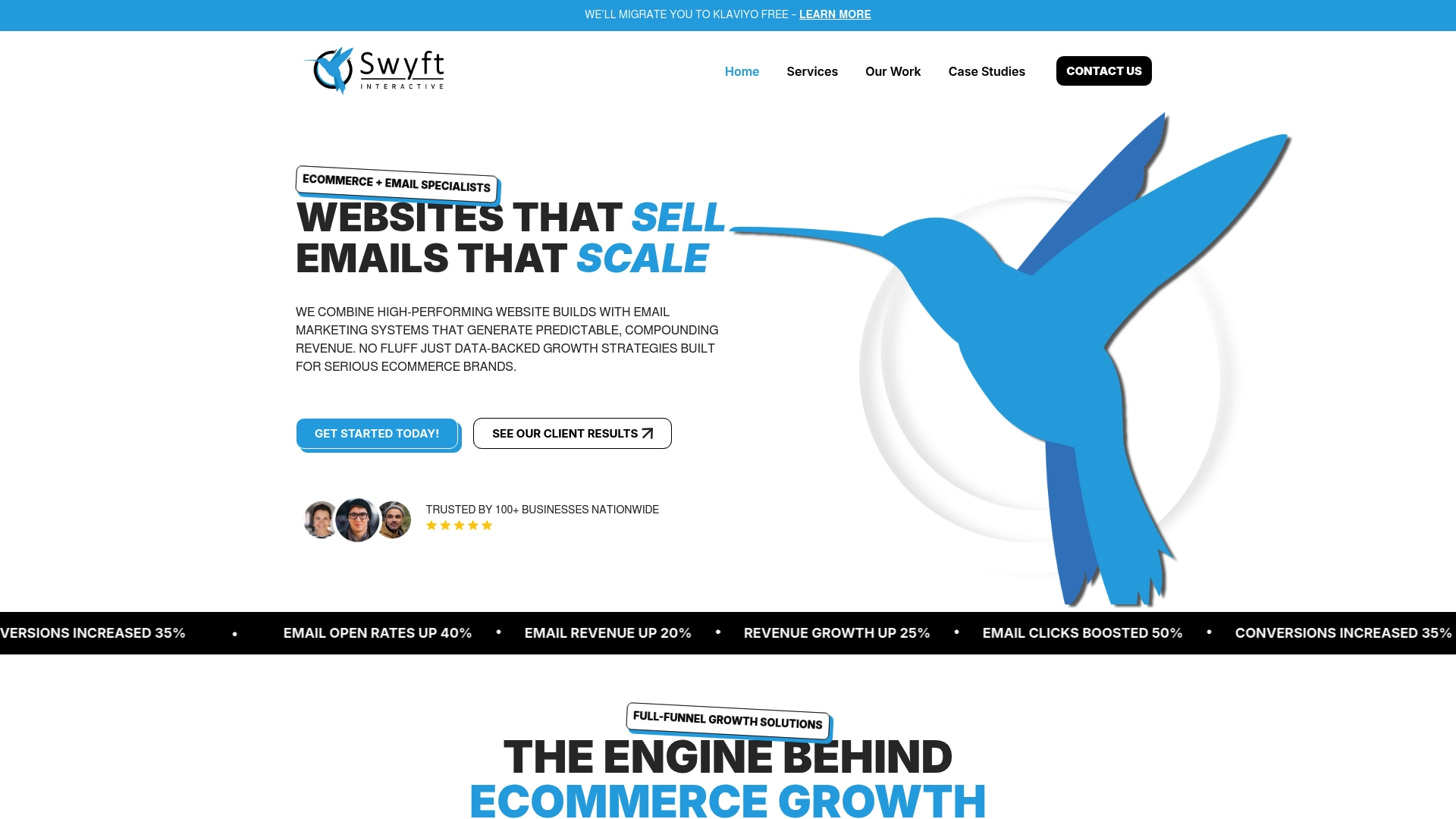
At Swyft Interactive, we understand these pain points and goals deeply. Our team specializes in creating fast-loading, high-converting ecommerce websites paired with sophisticated Klaviyo email marketing automation. Whether you need to streamline your abandoned cart recovery or develop dynamic, personalized recommendation engines, we craft strategies that engage customers at every stage of their journey.
Experience measurable improvements in conversion rates, customer engagement, and revenue through our full-funnel approach. Visit our Email Marketing Archives – Swyft Interactive to explore insights that align perfectly with your growth ambitions.
Ready to transform your ecommerce email campaigns into a powerful growth engine? Connect with us at Swyft Interactive and explore proven strategies in our Digital Strategy Archives – Swyft Interactive. Take the first step today to automate success and maximize your brand’s lifetime value.
Frequently Asked Questions
What are the key types of ecommerce emails I should be using for customer engagement?
Successful ecommerce emails include welcome emails, abandoned cart emails, order confirmation emails, shipping updates, post-purchase emails, win-back emails, and personalized product recommendations. To grow your business, implement these email types to effectively connect with customers at various stages of their journey.
How can I optimize my welcome email to make a strong first impression?
To create a powerful welcome email, include a personalized greeting, a brief brand introduction, a clear value proposition, and an incentive for first-time purchases. Design your email to be mobile responsive, ensuring that it is easy to read and engage with on any device.
What steps can I take to improve my abandoned cart email campaigns?
Enhance your abandoned cart emails by using personalized product reminders, a clear call-to-action, and a sense of urgency. Send the first reminder within 24 hours of abandonment and consider offering a small discount in follow-up messages to encourage the customer to complete their purchase.
How do I create effective post-purchase emails to drive customer loyalty?
Craft post-purchase emails that confirm customer satisfaction, provide product tips, and encourage future purchases. To build loyalty, include personalized follow-up discounts and opportunities for customer feedback to enhance their overall experience.
What should I include in my shipping update emails?
Shipping update emails should contain precise tracking information, the current location of the package, estimated delivery dates, and customer support contact details. Ensure your emails are designed for mobile devices to keep customers informed and engaged throughout the shipping process.
How can I re-engage inactive customers with win-back emails?
To effectively re-engage inactive customers, personalize your win-back emails by acknowledging their absence and offering compelling incentives to return. Use empathetic language and provide clear value propositions, gradually increasing offers to encourage re-engagement.