
TL;DR:
- SEO in 2026 emphasizes AI citation visibility over traditional page rankings, requiring new content strategies.
- Answer Engine Optimization focuses on structuring content to be cited in AI-generated responses, not just ranking high on search results.
- Brands must monitor AI citation metrics, ensure technical machine-readability, and build trust signals like verified authors and schema markup.
SEO in 2026 is defined by AI citation visibility, where appearing in synthesized answers from tools like Google AI Overviews and Perplexity matters more than holding a top-10 ranking. The shift is structural. Search engines no longer just retrieve pages. They generate answers, and they select which brands to cite. For digital marketers, SEO professionals, and business owners, this means the rules of visibility have fundamentally changed. Understanding the SEO trends in 2026 requires learning a new discipline called Answer Engine Optimization (AEO), alongside updated technical standards and content formats built for AI extraction.
What is Answer Engine Optimization (AEO) and why is it critical in 2026?
Answer Engine Optimization is the practice of structuring content so AI-powered search systems cite your brand in synthesized responses. Traditional SEO targets a ranked position on a results page. AEO targets inclusion in the answer itself. That is a fundamentally different goal, and it requires a different approach.
AI visibility metrics now sit alongside clicks, impressions, and CTR as standard SEO measurements. That means your reporting dashboards need to track whether your brand appears in AI Overviews, Perplexity responses, and ChatGPT answers, not just where you rank on page one. Brands that ignore this layer are flying blind on a growing share of their search exposure.
The mechanics of AEO work like this: AI systems synthesize multiple sources to generate a single answer, then attribute credit to a small number of cited sources. Getting cited depends on content clarity, topical authority, and structured formatting. A brand with a strong Wikipedia presence, verified schema markup, and claim-first content has a measurably better chance of being selected.
- Track AI citation frequency across Google AI Overviews, Perplexity, and Bing Copilot as a primary KPI.
- Measure brand mention rate in AI-generated answers, separate from organic click data.
- Audit content for extractability: can an AI pull a clean, accurate answer from your page in under three sentences?
- Build topical clusters that signal deep authority on a subject, not just individual keyword pages.
Pro Tip: Run a monthly test by querying your core topics in ChatGPT, Perplexity, and Google AI Mode. Note which competitors get cited and reverse-engineer their content structure.
How have technical SEO standards evolved to support AI-driven search in 2026?
Technical SEO in 2026 is no longer just about crawlability and page speed. It is about machine readability at a deeper level. AI systems need to understand what your content means, not just that it exists.
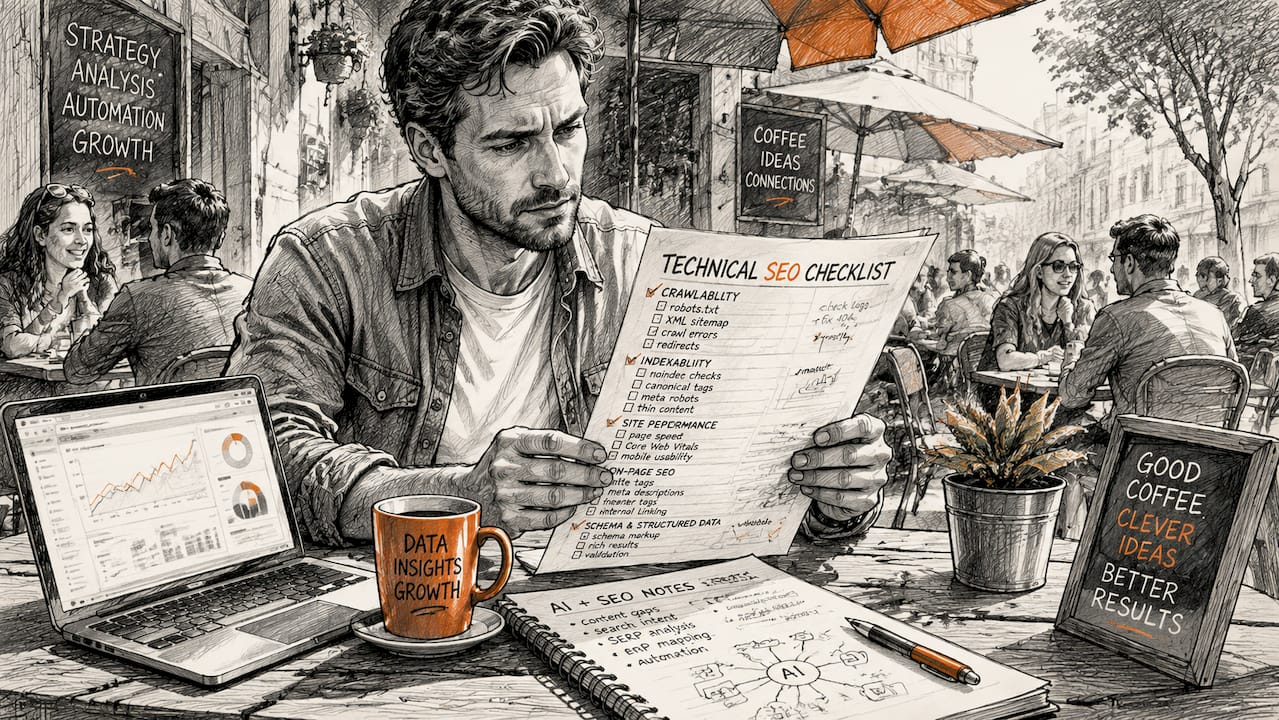
HTTPS adoption now exceeds 91%, and canonical tag adoption has reached 67%. Those are strong baselines, but they represent the floor, not the ceiling. Sites that stop at HTTPS and canonicals are meeting minimum standards while their competitors build AI-readable infrastructure on top.
The most significant new development is the adoption of llms.txt, a plain-text file that tells AI retrieval systems which parts of your site they can use for training and citation. Think of it as robots.txt for large language models. Robots.txt itself has evolved from a simple crawl control file into a policy document that governs how AI bots interact with your content. Managing both files is now a standard technical SEO responsibility.
Here is the technical checklist every site should complete in 2026:
- Confirm HTTPS sitewide with no mixed-content errors and valid SSL certificates.
- Audit canonical tags to eliminate duplicate content signals across product and category pages.
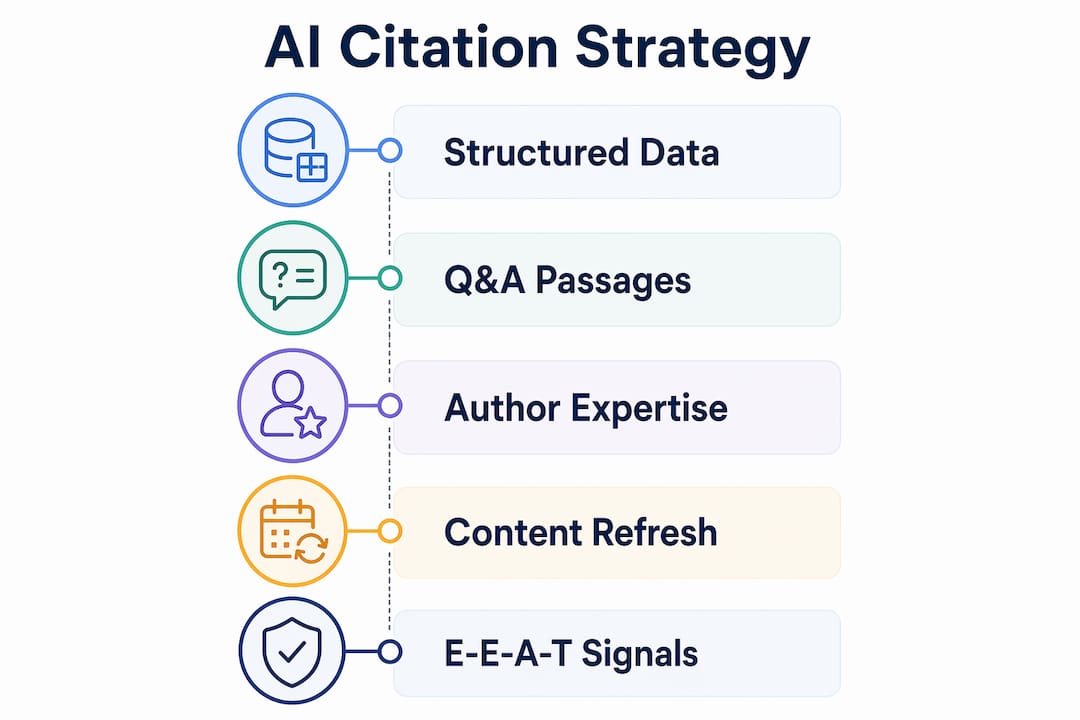
- Implement structured data for Product, Organization, FAQPage, and Review schema using Schema.org markup.
- Deploy
llms.txtin your root directory with clear permissions for AI retrieval systems. - Validate HTML using W3C tools to reduce parsing errors that confuse AI crawlers.
| Technical element | 2025 adoption rate | 2026 priority level |
|---|---|---|
| HTTPS | 91%+ | Baseline requirement |
| Canonical tags | 67% | High |
| Structured data (schema) | Growing | Critical |
| llms.txt | Emerging | High |
| robots.txt policy management | Improving | High |
Pro Tip: Use Google’s Rich Results Test and Schema Markup Validator together. Rich Results Test checks eligibility for SERP features. Schema Markup Validator checks raw accuracy. You need both.
Which content strategies effectively capture AI citations in 2026?
Content that wins AI citations is structured for extraction, not just for reading. AI systems scan for discrete, verifiable claims. They favor content that answers a specific question in the first sentence of a paragraph, then supports it with evidence. That is the opposite of how most blog content is written.
Search demand for generative engine optimization reached 12,000 searches per month in 2026, up 161% year over year. Related terms like “AI overview optimization” grew 625% in the same period. That growth signals a real budget shift. Marketers are moving spend from traditional rank-chasing toward AI visibility, and the content strategies that support both goals are converging.
Zero-click searches now account for 68% of Google searches. That number reframes the entire content strategy conversation. If most searches never produce a click, then ranking alone does not deliver traffic. Being cited in the AI answer that replaces the click is the new goal.
Effective content formats for AI citation include:
- Q&A passages: Write a question as a subheading, then answer it in two to three sentences directly below. AI systems extract these reliably.
- Comparison tables: Side-by-side tables with clear labels are among the most frequently cited content formats in AI-generated answers.
- Numbered lists with context: Lists work, but only when each item includes a brief explanation. Bare bullet points without context are rarely cited.
- Claim-first paragraphs: Lead every paragraph with the conclusion, then support it. AI systems read the first sentence of a paragraph most heavily.
| Content format | AI citation likelihood | Best use case |
|---|---|---|
| Q&A passages | High | FAQ pages, how-to guides |
| Comparison tables | High | Product comparisons, tool reviews |
| Claim-first paragraphs | High | All body content |
| Long narrative prose | Low | Brand storytelling only |
E-E-A-T signals, which stand for Experience, Expertise, Authoritativeness, and Trustworthiness, now directly influence which sources AI systems select for citation. Bylines with verifiable credentials, first-person experience claims, and accurate sourcing all increase the probability of being cited. Generic, unattributed content is increasingly filtered out.
Pro Tip: Add a short author bio with specific credentials to every article. One sentence like “Leon has managed SEO for eCommerce brands since 2018” signals real experience to both Google’s quality raters and AI citation systems.
For eCommerce brands specifically, adapting content for AI-cited visibility in product and category pages is now a direct revenue lever, not just a traffic play.
What new metrics should SEO professionals track in 2026?
The standard SEO dashboard of rankings, clicks, and impressions is incomplete in 2026. Those metrics measure visibility in the traditional blue-link results. They do not capture whether your brand appears in AI-generated answers, which now intercept a growing share of high-intent queries.
AI-driven SEO requires continuous, iterative optimization because AI models update frequently, which causes citation volatility. A brand cited in Google AI Overviews this month may not appear next month if the model updates its source preferences. That volatility makes one-time optimization useless. SEO must function as an ongoing operating model with regular content and structured data refreshes.
The metrics framework for 2026 looks like this:
- AI citation rate: How often does your brand appear in AI-generated answers for your core topics?
- AI mention share: What percentage of AI answers in your category cite you versus competitors?
- Structured data coverage: What share of your pages have valid, indexed schema markup?
- Content freshness score: How recently were your key pages updated with new claims and data?
- Zero-click impression share: How often does your content appear in featured snippets or AI Overviews, even without generating a click?
Tools like Google Search Console, Semrush, and Ahrefs cover traditional metrics well. For AI-specific visibility, platforms like Profound and Otterly.ai are built to track brand mentions across AI answer engines. Integrating both layers into a single reporting workflow is the operational standard for 2026.
Pro Tip: Set a quarterly content refresh calendar. Identify your top 20 pages by organic traffic, then update each one with new data, a refreshed FAQ section, and current structured data. Freshness is a direct citation signal.
How do brand trust and user experience influence AI-powered SEO?
Brand authority is the single most durable SEO asset in an AI-driven search environment. AI systems are trained to prefer sources that are consistently accurate, widely cited, and verifiable. A brand that has built genuine authority over years is harder to displace from AI citations than a brand that optimized a single page for a single query.
Credible, verifiable content is more rewarded for AI citations than generic content. That means accurate bylines, real author credentials, and sourced claims are not optional extras. They are ranking and citation factors. A page that says “our team of experts” without naming anyone is weaker than a page with a named author, a linked bio, and a publication date.
User experience signals also feed into AI citation eligibility indirectly. Google’s core ranking systems still underpin which pages AI systems access. A slow, inaccessible, or mobile-unfriendly site gets crawled less and indexed less reliably. That reduces the chance of being selected as a citation source.
Practical trust signals to build in 2026:
- Named authors with linked bios on every content page.
- Accurate, dated citations within the content itself.
- Core Web Vitals compliance, particularly Largest Contentful Paint under 2.5 seconds.
- Mobile-first design with no content hidden behind interactions on small screens.
- Organization schema with verified name, address, and contact details.
The 2026 eCommerce trends that affect retail SEO all point in the same direction: brands that invest in trust infrastructure now will compound that advantage as AI search matures. Brands that delay will find it harder to enter the citation pool later.
Key takeaways
SEO success in 2026 depends on AI citation visibility, technical machine-readability, and brand authority, not ranking position alone.
| Point | Details |
|---|---|
| AEO replaces rank-chasing | Optimize content to be cited in AI-generated answers, not just to rank on page one. |
| Technical standards have expanded | Deploy structured data, llms.txt, and valid schema alongside HTTPS and canonical tags. |
| Content must be extractable | Use claim-first paragraphs, Q&A formats, and comparison tables to increase AI citation rates. |
| Metrics need a new layer | Track AI citation rate and mention share alongside traditional clicks and impressions. |
| Brand trust drives citations | Named authors, verified credentials, and Core Web Vitals compliance directly affect AI source selection. |
What I’ve learned watching SEO shift under our feet
The hardest part of 2026 SEO is not the technical work. It is convincing teams to stop measuring success the way they did in 2022. I have seen brands with strong organic traffic panic because their AI citation rate is zero. They rank well. They just do not exist in the answers their customers are actually reading.
The brands that are adapting fastest share one trait: they treat SEO as a living system, not a project. They refresh content on a schedule. They audit structured data quarterly. They test their own brand queries in Perplexity and ChatGPT every month. That discipline is not glamorous, but it is what AI citation volatility demands.
The biggest pitfall I see is teams that add llms.txt and FAQPage schema, then declare victory. Those are inputs. The output is citation frequency, and it takes time and iteration to move. Patience combined with a clear measurement framework is what separates teams that win in this environment from teams that stay frustrated.
The opportunity is real. AI search is still young. The citation pools are not locked. Brands that build authority, structure their content correctly, and monitor AI visibility now are establishing positions that will be very difficult for late movers to displace.
— Leon
How Swyftinteractive helps eCommerce brands stay visible in 2026
The SEO shifts described here do not happen in isolation from your broader digital presence. For eCommerce brands, a fast-loading, well-structured website is the foundation that makes AI citation and organic visibility possible.
Swyftinteractive builds high-converting eCommerce websites designed to meet 2026 technical standards, including Core Web Vitals compliance, structured data implementation, and mobile-first architecture. The team also integrates Klaviyo email automation to keep customers engaged after the first visit, turning AI-driven traffic into repeat revenue. If you want a full-funnel approach that covers both search visibility and post-visit conversion, the eCommerce growth strategy guide is a strong starting point. For brands focused on email as a retention channel, the email marketing automation guide covers the Klaviyo workflows that drive measurable results.
FAQ
What is Answer Engine Optimization (AEO)?
Answer Engine Optimization is the practice of structuring content so AI-powered search tools like Google AI Overviews and Perplexity cite your brand in synthesized responses. It shifts the goal from ranking to citation inclusion.
How does zero-click search affect content strategy?
68% of Google searches end without a click in 2026. That means content must be optimized to appear in AI-generated answers, not just to attract clicks from a results page.
What is llms.txt and do I need it?
llms.txt is a plain-text file placed in your site’s root directory that tells AI retrieval systems which content they can use. It is the AI equivalent of robots.txt and is now a standard technical SEO element for 2026.
Which structured data types matter most for AI citation?
FAQPage, Product, and Organization schema are the highest-priority schema types for AI citation in 2026. AI search systems heavily cite FAQ content and use Organization schema to verify brand credibility.
How often should SEO content be refreshed in 2026?
AI citation volatility requires treating SEO as a continuous operating model. Refreshing structured data and key content passages at least quarterly is the current standard for maintaining citation presence.