TL;DR:
- Seasonal email campaigns are planned processes aimed at maximizing customer engagement around key dates and buying cycles. Proper setup, data hygiene, segmentation, and a sequence of targeted emails are crucial for success, with preparation starting 60 to 90 days in advance. Protecting list health and deploying personalized, staged messaging lead to more effective campaigns and higher revenue.
Seasonal email campaigns are planned, targeted email sequences designed to maximize customer engagement and sales around key seasonal events, holidays, and buying cycles. Unlike one-off promotional blasts, well-built seasonal campaigns follow a structured process: audience segmentation, offer matching, multi-email sequencing, and deliverability management working together. Marketers who treat this as a repeatable system, rather than a last-minute scramble, consistently outperform those who rely on calendar proximity alone. This guide covers the full seasonal marketing campaign process, from prerequisites and planning through execution and list health, using Klaviyo as the primary automation platform.
How to create seasonal email campaigns: prerequisites and tools
Before you write a single subject line, three foundational elements must be in place: the right tools, clean data, and a deliverability setup that will not collapse under peak-season volume.
Tools you need from day one:
- Email service provider (ESP): Klaviyo is the standard for eCommerce brands because it connects directly to purchase history, browse behavior, and product catalog data.
- Analytics platform: Google Analytics 4 or Klaviyo’s built-in reporting tracks revenue attribution per campaign.
- Email templates: Modular templates with reusable content blocks for teaser, early access, launch, and reminder emails reduce design errors and speed up production cycles.
- Preference forms: Collect zero-party data, meaning interests, product preferences, and communication frequency, directly from subscribers before peak seasons hit.
Timing is the most underestimated prerequisite. Plan campaign execution 60–90 days ahead, then hold monthly reviews to adjust offers, timing, and messaging based on updated buyer behavior. That lead time gives you room to build segments, test creative, and fix deliverability issues before they cost you revenue.
Pro Tip: Separate creative readiness from list readiness. Finishing your email copy early means nothing if your sender reputation is damaged or your list is full of unengaged contacts. Address both in parallel.
List hygiene is not optional. Authentication protocols including SPF, DKIM, and DMARC must be configured correctly. Failing authentication can fully block email delivery, not just reduce open rates. Run a deliverability audit as part of your campaign setup checklist, every time.
| Prerequisite | Action Required | Timing |
|---|---|---|
| ESP setup | Connect Klaviyo to store data and product catalog | 90 days before campaign |
| List hygiene | Remove hard bounces, suppress unengaged contacts | 90 days before campaign |
| Authentication | Verify SPF, DKIM, DMARC records | 90 days before campaign |
| Segmentation | Build VIP, lapsed, and category-specific segments | 60 days before campaign |
| Templates | Create modular blocks for each email type | 60 days before campaign |
How to plan an annual seasonal email calendar
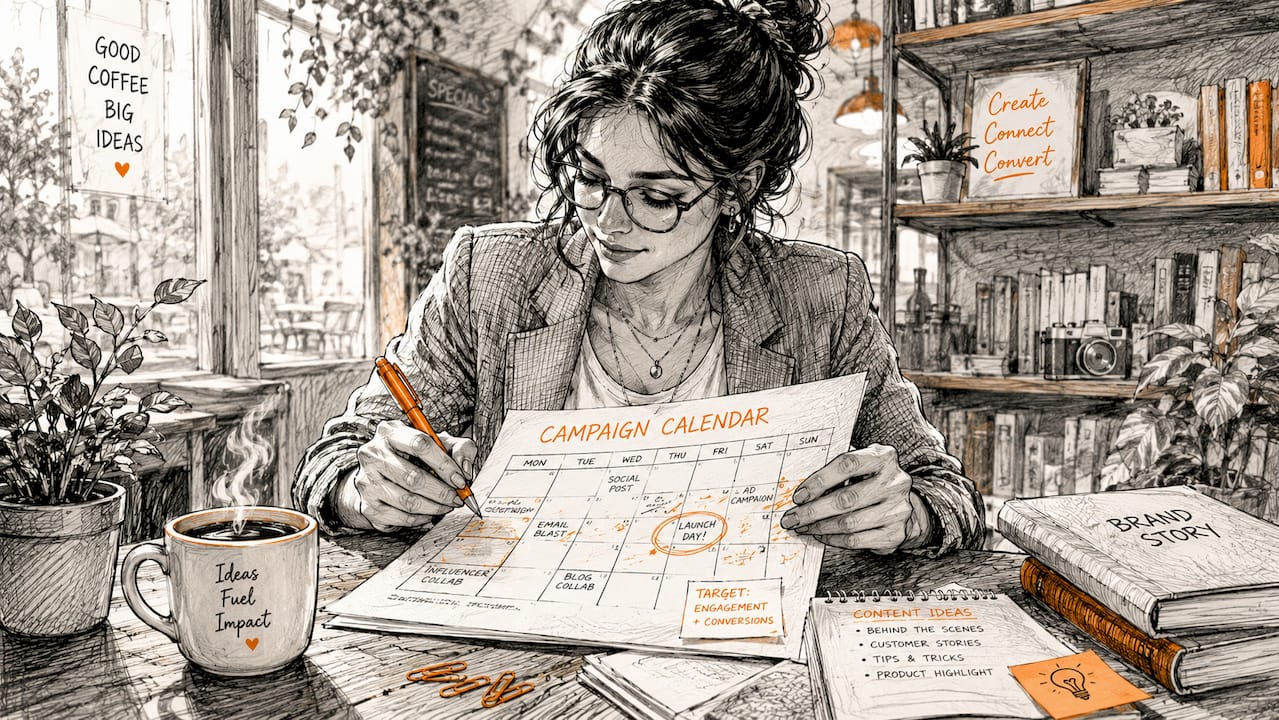
The seasonal marketing campaign process starts with a one-page annual blueprint, not a spreadsheet full of every holiday on the calendar. The goal is to map campaigns to revenue potential and buyer intent, then build backward from each launch date.
Start with revenue-weighted prioritization. Not every holiday deserves a full multi-email sequence. Black Friday and Cyber Monday typically warrant a four-to-six week campaign. A smaller event like Valentine’s Day may need only two or three emails. Planning around real buying cycles and buyer questions outperforms simply targeting holidays on a calendar.
Build your annual blueprint in four steps:
- List your top 8–10 seasonal moments by revenue potential for your specific product category. A home goods brand prioritizes spring cleaning season and gifting holidays. A fitness brand prioritizes january and back-to-school.
- Assign a campaign goal to each moment. Goals fall into four categories: new customer acquisition, reactivation of lapsed buyers, upsell to existing customers, or clearance of aging inventory.
- Define the emotional context. Gifting holidays carry warmth and urgency. Post-holiday clearance carries relief and value. Your subject lines, imagery, and offer mechanics must match that emotional register.
- Map channels and segments. Decide which audience segments receive each campaign and whether SMS, paid social, or on-site banners will run alongside email.
Pro Tip: Add a monthly review block to your calendar. Pull open rates, click rates, and revenue per recipient for the previous month’s campaigns, then adjust the next campaign’s timing or offer before you brief the creative team.
The seasonal campaign planning checklist for each event should include: campaign goal, target segment, offer mechanic, email sequence length, send dates, and success metrics. Without that checklist, campaigns drift and teams repeat the same mistakes every year.
What are best practices for designing seasonal email sequences?
The most effective seasonal email sequences follow a four-stage structure: education, proof, offer, and urgency. Design campaigns as a multi-email miniseries with staged messaging over approximately four weeks, aligned with the buyer journey.
A standard four-week sequence looks like this:
- Week 1: Education. Introduce the seasonal theme and your brand’s angle. A skincare brand running a winter campaign might lead with a “cold weather skin guide” rather than a discount. This builds relevance before the ask.
- Week 2: Social proof. Feature customer reviews, user-generated content, or bestseller callouts tied to the seasonal theme. Proof emails reduce purchase hesitation before the offer lands.
- Week 3: Offer. Launch the primary promotion. Match the offer mechanic to the holiday intent: gifting holidays use bundles and gift guides; clearance periods use markdowns; awareness moments use curated collections; peak shopping events use discounts with countdown timers.
- Week 4: Urgency. Send a deadline reminder and a last-chance email. These two emails consistently drive a disproportionate share of campaign revenue because they capture procrastinators.
Segmentation is what separates good campaigns from great ones. Segment by audience type including VIPs, lapsed buyers, category shoppers, and high-intent clickers. VIPs get early access and exclusive offers. Lapsed buyers get a reactivation angle tied to the season. Category shoppers get product-specific recommendations, not a generic catalog.
| Segment | Offer Approach | Timing |
|---|---|---|
| VIP customers | Early access, exclusive bundle | 1 week before general launch |
| Lapsed buyers (90+ days) | Reactivation discount, “we miss you” angle | Same as general launch |
| Category shoppers | Product-specific recommendations | Same as general launch |
| High-intent clickers | Urgency reminder, cart-abandon follow-up | Final 48 hours |
Modular email templates let you swap offers, images, and CTAs across the sequence without rebuilding each email from scratch. That design approach reduces review cycles and keeps messaging consistent across a four-to-six email series.
Pro Tip: Avoid discounting every segment equally. Personalization protects margin by replacing blanket discounts with relevant product recommendations and dynamic content blocks tailored to purchase history.
How to optimize deliverability and maintain list health for seasonal campaigns?
Deliverability is the most overlooked part of the seasonal campaign planning checklist. You can have perfect creative and a strong offer, but if your emails land in spam, none of it matters.
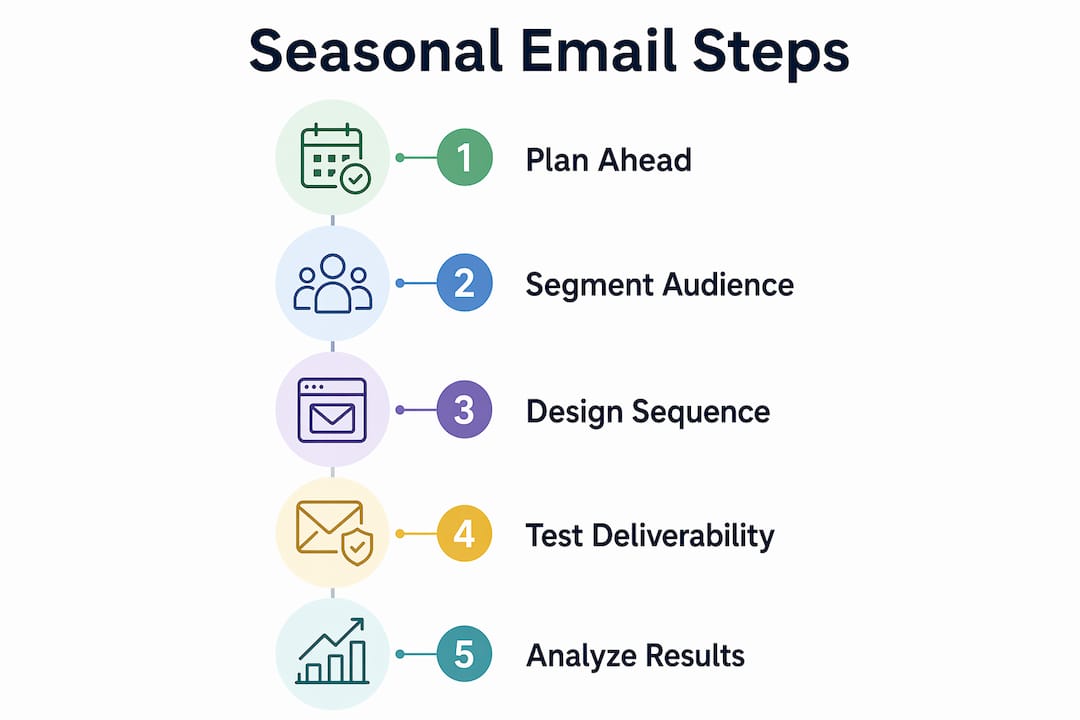
Run suppression and sunset flows at least three months before peak shopping seasons. Klaviyo recommends completing this audit in summer before Q4, so your sender reputation is clean when send volume spikes. Unengaged contacts dragging down your engagement rate will hurt deliverability for your entire list, not just the inactive segment.
Core deliverability actions before any major seasonal campaign:
- Verify SPF, DKIM, and DMARC records are correctly configured for your sending domain.
- Run a sunset flow to suppress contacts who have not opened or clicked in 90–180 days.
- Monitor spam complaint rates. A complaint rate above 0.08% signals a list health problem that needs immediate attention.
- Warm up sending volume gradually if you are increasing list size or send frequency ahead of a peak season.
- Use Klaviyo’s engagement segments to send high-volume campaigns only to your most active contacts first, then expand to broader segments.
The biggest seasonal advantage is protecting list health before peak seasons rather than pushing bigger promotions. A smaller, engaged list consistently outperforms a large, unengaged one during high-competition sending windows like Black Friday.
Advanced segmentation beyond simple engagement windows includes behavioral signals, purchase categories, and zero-party data collected directly from subscribers. That depth of targeting reduces unsubscribe rates and complaint rates because subscribers receive emails that are actually relevant to them. Better relevance protects your sender reputation over the long term, which is the real competitive advantage in email marketing.
Key takeaways
Seasonal email campaigns succeed when list health, segmentation, and sequenced messaging are built before the first email sends, not after.
| Point | Details |
|---|---|
| Plan 60–90 days ahead | Start campaign planning well before the season to allow time for list hygiene, segmentation, and creative production. |
| Use a four-stage sequence | Structure each campaign as education, proof, offer, and urgency emails to guide buyers from awareness to purchase. |
| Match offers to intent | Gifting holidays need bundles; clearance periods need markdowns; peak events need urgency-driven discounts. |
| Protect list health early | Run sunset and suppression flows at least three months before peak seasons to preserve sender reputation. |
| Segment beyond engagement | Layer behavioral data, purchase history, and zero-party data to personalize beyond basic open-rate filters. |
What I have learned from running seasonal campaigns at scale
The hardest lesson in seasonal email marketing is that most teams underestimate production time and overestimate how much a bigger discount will fix a weak campaign. I have seen brands spend weeks perfecting their Black Friday creative while their list sits full of unengaged contacts who will tank their deliverability the moment send volume spikes. Creative readiness and list readiness are two separate workstreams. Treating them as one is the most common and most expensive mistake in the seasonal marketing campaign process.
The second thing I have learned is that modular design is not a shortcut. It is a discipline. When you build reusable content blocks for teasers, offer reveals, and urgency reminders, you reduce the chance of a last-minute error slipping through a rushed review. You also give your team the flexibility to swap an offer mechanic without rebuilding the entire email. That flexibility matters when a competitor drops a bigger discount two days before your launch.
Personalization is where most brands leave money on the table. Blanket discounts train your best customers to wait for sales, which damages both margin and long-term engagement. Sending a VIP customer a curated bundle based on their purchase history, rather than a 20% off code sent to your entire list, is a better outcome for everyone. The email segmentation tutorial approach Swyftinteractive uses with Klaviyo makes this level of targeting practical, not theoretical.
Finally, adapt monthly. The brands that win peak seasons are not the ones with the most elaborate plans. They are the ones who review last month’s data, adjust their next campaign’s timing or offer, and ship. Rigidity is the enemy of seasonal relevance.
— Leon
How Swyftinteractive helps eCommerce brands build seasonal campaigns
Seasonal campaigns require more than a good idea and a send button. They require Klaviyo automation configured to your product catalog, segments built on real behavioral data, and a production process that does not break down under Q4 pressure.
Swyftinteractive builds and manages the full seasonal email marketing system for eCommerce brands, from Klaviyo campaign planning and segmentation setup to deliverability audits and multi-email sequence execution. The agency’s email marketing automation guide covers the exact workflows used to drive measurable revenue lifts for eCommerce clients. If your seasonal campaigns are underperforming or your team is starting from scratch, Swyftinteractive offers a direct path from strategy to execution without the guesswork of building it alone.
FAQ
How far in advance should I plan seasonal email campaigns?
Plan seasonal campaigns 60–90 days before the target send date, then review monthly to adjust offers and timing based on updated buyer behavior and performance data.
What is the best structure for a seasonal email sequence?
The most effective structure follows four stages: education, social proof, offer, and urgency, spread across approximately four weeks to guide subscribers from awareness to purchase.
How does segmentation improve seasonal email results?
Segmenting by VIP status, purchase history, category interest, and engagement level lets you tailor offers and timing to each group, which increases relevance and reduces unsubscribe rates.
Why does list hygiene matter before peak seasons?
Unengaged contacts lower your overall engagement rate and damage sender reputation, which reduces inbox placement for your entire list during high-competition sending windows like Black Friday.
What authentication protocols are required for seasonal email campaigns?
SPF, DKIM, and DMARC records must be correctly configured for your sending domain. Failing any of these protocols can result in emails being fully blocked rather than simply filtered to spam.