
More than 60 percent of American consumers expect brands to anticipate their needs and deliver personalized content. For ecommerce marketing managers, this expectation makes targeted email campaigns using tools like Klaviyo a powerful path to deeper engagement and increased revenue. If your retail brand wants to surpass competitors and build lasting customer loyalty, learning to segment audiences and automate messaging will transform your email marketing results.
Table of Contents
- Step 1: Define Target Audiences And Set Campaign Goals
- Step 2: Build Segmented Email Lists In Klaviyo
- Step 3: Design Automated Email Workflows For Key Touchpoints
- Step 4: Craft Compelling Messages And Dynamic Content
- Step 5: Test Campaigns And Analyze Engagement Metrics
- Step 6: Optimize Email Strategies For Ongoing Growth
Quick Summary
| Key Point | Explanation |
|---|---|
| 1. Define precise audience segments | Break down customers into targeted groups to tailor messaging and improve engagement. |
| 2. Set SMART campaign goals | Establish specific, measurable, achievable, relevant, and time-bound objectives for tracking success. |
| 3. Build segmented email lists in Klaviyo | Use Klaviyo to create detailed customer segments based on behavior for personalized marketing. |
| 4. Design automated email workflows | Map out key customer touchpoints and automate communication for timely engagement. |
| 5. Test and analyze campaign performance | Regularly evaluate metrics like open and conversion rates to refine strategies and improve outcomes. |
Step 1: Define target audiences and set campaign goals
Successful email marketing starts with understanding exactly who you want to reach and what you hope to achieve. By defining precise audience segments and establishing clear campaign goals, you create a strategic roadmap for your email efforts.
Begin by breaking down your potential customers into detailed segments. Look beyond basic demographics like age and gender to understand deeper characteristics such as purchasing behaviors, past interactions with your brand, browsing history, and specific needs or pain points. For an eCommerce brand, this might mean creating groups like first-time buyers, repeat customers, cart abandoners, or customers who have purchased specific product categories. Use your existing customer data from platforms like Klaviyo to analyze purchase patterns and engagement metrics. These insights will help you craft highly targeted messages that resonate with each specific audience segment.
Next, set SMART campaign goals that align with your overall business objectives. These goals should be specific (increase revenue from email campaigns), measurable (track a 15% conversion rate), achievable (based on historical data), relevant (directly impacting business growth), and time-bound (within the next quarter). Strategic communication goals transform vague intentions into actionable targets that can be systematically tracked and optimized.
Pro Tip: Create a simple spreadsheet tracking each audience segment’s unique characteristics, potential messaging approach, and specific campaign goals to maintain clarity and focus throughout your email marketing strategy.
Here’s a quick summary of common eCommerce audience segments and tailored campaign objectives:
| Audience Segment | Key Characteristics | Targeted Campaign Goal |
|---|---|---|
| First-time Buyers | New customers, no purchase history | Increase first purchase conversions |
| Repeat Customers | Purchased 2+ times, moderate engagement | Boost order frequency |
| Cart Abandoners | Added items to cart but did not purchase | Recover lost sales |
| High Value Customers | High lifetime value, frequent buyers | Reward loyalty, upsell premium |
| Inactive Customers | No activity in 6+ months | Reactivate and re-engage |
Step 2: Build segmented email lists in Klaviyo
Now that you understand your target audiences, it is time to create precise email segments in Klaviyo that will drive your marketing strategy forward. Marketing automation platforms like Klaviyo offer powerful tools to transform raw customer data into strategic communication channels.

Start by connecting your eCommerce platform directly to Klaviyo. This integration allows automatic data collection about customer behaviors such as purchase history, browsing patterns, and engagement levels. You can create segments based on multiple dynamic criteria: total customer lifetime value, recent purchase frequency, product category preferences, average order value, or even specific interactions like abandoned cart events. For instance, you might create segments like high value customers who have purchased premium products in the last 90 days, or first time buyers who need nurturing toward their second purchase.
Use Klaviyo’s segmentation tools to build granular lists that go beyond basic demographics. Combine multiple conditions to create hyper targeted groups. For example, a segment could include customers who purchased winter jackets in the past year, have spent over $500, and have not made a purchase in the last 60 days. These precise customer data segments enable you to craft personalized email campaigns that feel individually tailored.
Pro Tip: Review and refresh your email segments quarterly to ensure they remain relevant and reflect your current customer base and business objectives.
Step 3: Design automated email workflows for key touchpoints
Automated email workflows are the secret weapon of successful eCommerce marketing strategies. Automated email systems allow you to create targeted communication sequences that engage customers precisely when they need attention.
Start by mapping out critical customer touchpoints in your buying journey. These typically include welcome series for new subscribers, abandoned cart recovery sequences, post-purchase follow-ups, and re-engagement campaigns for inactive customers. Each workflow should have a clear purpose and progression. For instance, an abandoned cart workflow might include an initial reminder email sent within 2 hours, a second more persuasive email with a limited time discount 24 hours later, and a final urgency-driven message 48 hours after cart abandonment.
Klaviyo provides robust tools to build these complex workflows with dynamic triggers and personalized content. Use conditional splits to create branching logic that responds to specific customer behaviors. For example, customers who click but do not purchase could receive a different message than those who simply view a product. Ecommerce email workflows should feel personalized, creating a sense of individual attention while systematically guiding customers toward conversion.
Pro Tip: Always include an easy unsubscribe option in your automated workflows and regularly test different email content to optimize engagement rates.
This table compares key email workflow automations and their optimal triggers:
| Workflow Type | Trigger Event | Primary Objective |
|---|---|---|
| Welcome Series | Newsletter signup or account creation | Build trust, introduce brand |
| Abandoned Cart | Cart left with items | Encourage purchase completion |
| Post-purchase Follow-up | Completed order | Upsell, collect feedback |
| Re-engagement | Inactivity for set period | Renew interest, regain buyers |
Step 4: Craft compelling messages and dynamic content
Crafting email content that truly resonates requires more than just good writing skills. Effective digital content demands a strategic approach that speaks directly to your customers psychology and needs.
Start by developing a deep understanding of your audience segments. Each email should feel like a personalized conversation that addresses specific customer pain points and desires. Use dynamic content blocks in Klaviyo that automatically adjust based on customer data such as previous purchases, browsing history, or segment characteristics. For example, a high value customer might receive a different tone and offer compared to a first time buyer. Your messaging should create an immediate connection by using conversational language that mirrors how your target audience actually speaks.
Personalization goes beyond just inserting a first name. Content marketing strategies thrive when they deliver genuine value through relevant, timely information. Leverage behavioral triggers to create content that feels intuitive and helpful. A customer who abandoned winter boots might receive an email highlighting product features, styling tips, or limited time discounts that directly address their specific interest. Experiment with different content formats like product recommendations, user generated content, or storytelling approaches that transform standard promotional messages into engaging narratives.
Pro Tip: Create a content library with pre written message templates for different scenarios, allowing quick customization while maintaining a consistent brand voice.
Step 5: Test campaigns and analyze engagement metrics
Successful email marketing requires more than sending messages it demands rigorous testing and strategic analysis. Marketing effectiveness measurement enables you to transform raw data into actionable insights that continuously improve your email performance.
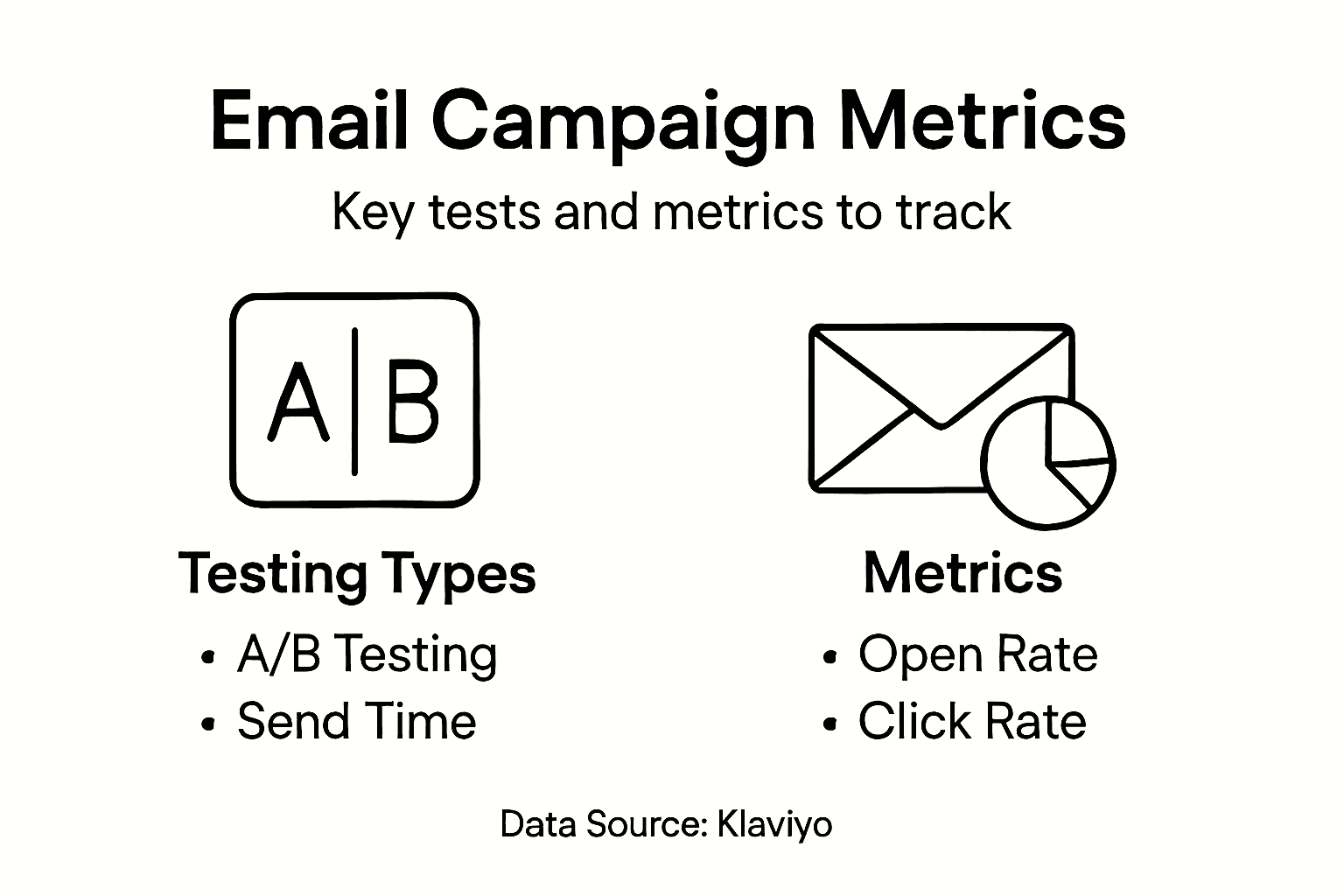
Start by establishing clear key performance indicators that align with your specific campaign goals. In Klaviyo, focus on critical metrics like open rates, click through rates, conversion rates, and revenue per recipient. Create A/B testing experiments that systematically evaluate different elements such as subject lines, send times, content variations, and call to action designs. For instance, you might test whether personalized subject lines increase open rates or if product recommendation blocks improve click through percentages. Use Klaviyos built in split testing tools to automatically segment your audience and generate statistically significant results.
Transform your testing data into a continuous improvement cycle. Campaign evaluation techniques involve more than just collecting numbers they require deep analysis of performance trends. Look beyond surface level metrics to understand underlying customer behaviors. Examine how different segments respond to specific messaging, track customer lifetime value changes, and identify which content types drive the most meaningful engagement. Create visual dashboards that help your team quickly interpret complex performance data and make informed strategic decisions.
Pro Tip: Schedule quarterly comprehensive email performance reviews where you analyze year over year trends and reset your testing hypotheses based on the most recent customer interaction data.
Step 6: Optimize email strategies for ongoing growth
Sustainable email marketing success requires a dynamic approach that constantly adapts to changing customer behaviors and market trends. Email marketing optimization is not a one time task but an ongoing process of refinement and strategic evolution.
Develop a systematic approach to continuous improvement by establishing a regular review cycle for your email performance. Analyze key metrics beyond surface level statistics look deeper into customer engagement patterns. Track metrics like customer lifetime value, segment performance, and conversion rate variations across different audience groups. Use Klaviyo advanced segmentation and reporting tools to create granular insights that reveal nuanced customer interaction patterns. For example, compare engagement rates across different product categories, identify which messaging styles generate the most revenue, and understand how external factors like seasonality impact your email performance.
Implement an adaptive testing framework that goes beyond simple A/B experiments. Health communication strategies emphasize the importance of continuously evolving your approach based on evidence. Create a quarterly optimization roadmap that includes experimenting with emerging personalization techniques, testing new content formats, and refining segmentation strategies. Develop a culture of data driven decision making where every email campaign becomes an opportunity to learn and improve your overall marketing approach.
Pro Tip: Create a living document that tracks all email marketing experiments, their hypotheses, results, and insights to build an institutional knowledge base for future strategy refinement.
Unlock eCommerce Growth With Expert Email Campaign Strategies
Struggling to turn your email campaigns into reliable revenue drivers? This guide highlights key challenges like audience segmentation, automated workflows, and personalized content that many eCommerce brands face. If optimizing these critical elements sounds familiar, you are not alone. The pain points of recovering lost sales, increasing order frequency, and crafting dynamic emails require more than guesswork — they demand strategic expertise and tools designed for scalable growth.
At Swyft Interactive, we specialize in transforming these exact hurdles into measurable success by combining high-converting eCommerce website development with sophisticated Klaviyo email marketing automation. Our Email Marketing Archives – Swyft Interactive offers deep insights while our hands-on services ensure your brand leverages targeted audience segments and automated workflows that drive real engagement.
Ready to build a full-funnel email strategy that delivers results? Visit https://swyftinteractive.com today and explore how our data-driven solutions integrate website design, email automation, and customer journey mapping for sustainable growth. Don’t let your email campaigns plateau. Take action now and elevate your eCommerce brand with proven strategies from experts familiar with your obstacles. Learn more from our Digital Strategy Archives – Swyft Interactive and gain the competitive edge you deserve.
Frequently Asked Questions
How can I define my target audiences for email campaigns?
To define your target audiences, analyze customer data such as purchasing behaviors, past interactions, and specific pain points. Break down your customers into segments like first-time buyers or repeat customers to tailor your messaging effectively.
What are SMART campaign goals, and how can I set them?
SMART campaign goals are Specific, Measurable, Achievable, Relevant, and Time-bound objectives that guide your email marketing efforts. For example, you might aim to increase revenue from email campaigns by 15% within the next quarter.
How do I build segmented email lists in Klaviyo?
To build segmented email lists in Klaviyo, connect your eCommerce platform to automatically collect customer data. Create segments based on factors like purchase history or customer engagement levels to design highly targeted campaigns.
What types of automated email workflows should I create?
Create automated email workflows for key touchpoints like welcome series, abandoned cart recovery, and post-purchase follow-ups. For instance, an abandoned cart workflow might include a reminder email sent within 2 hours of cart abandonment.
How can I test my email campaigns effectively?
Test your email campaigns by establishing key performance indicators and running A/B tests on different elements such as subject lines and content variations. Analyze metrics like open rates and conversion rates to identify what works best for engaging your audience.
What strategies can I use to optimize my email marketing?
To optimize your email marketing, review performance metrics regularly and adapt your strategies based on customer engagement patterns. Implement continuous testing and create a quarterly roadmap to refine your approach and enhance overall campaign effectiveness.