

Shoppers expect more than generic messages in their inbox. For Ecommerce marketing managers using Klaviyo, true email personalization means creating digital interactions that feel genuinely tailored to every American customer’s preferences and purchasing journey. As data-driven brands look to drive measurable growth, understanding how to apply behavioral segmentation, dynamic content, and AI-powered recommendations can turn routine campaigns into meaningful, individualized experiences that spark real engagement.
Table of Contents
- Defining Email Personalization In eCommerce
- Key Methods For Personalizing Campaigns
- How Personalization Drives Revenue And Engagement
- Common Challenges And How To Overcome Them
- Best Practices For ECommerce Email Automation
Key Takeaways
| Point | Details |
|---|---|
| Email Personalization | True personalization involves using customer data to create targeted and relevant messaging. |
| Advanced Methods | Employ techniques like behavioral tracking and AI-driven recommendations to enhance communication relevance. |
| Revenue Impact | Personalized emails can significantly boost conversion rates and customer loyalty. |
| Challenges | Key challenges include data accuracy and privacy compliance; overcoming these requires a strategic approach. |
Defining Email Personalization in eCommerce
Email personalization in eCommerce represents a strategic approach to crafting digital communications that resonate deeply with individual customer preferences and behaviors. More than just inserting a recipient’s name, true personalization involves creating targeted, relevant messaging that feels uniquely crafted for each customer.
At its core, email personalization leverages customer data to develop highly targeted communications. This involves analyzing consumer-specific information to design messages that speak directly to individual interests, purchase history, and potential future needs. The goal is transforming generic email blasts into meaningful, individualized experiences that drive engagement and conversions.
Key elements of effective email personalization include:
- Behavioral Segmentation: Grouping customers based on specific actions, browsing history, and purchase patterns
- Dynamic Content: Automatically adjusting email content based on individual customer attributes
- Predictive Recommendations: Using AI to suggest products aligned with customer preferences
- Contextual Timing: Sending emails at optimal moments in the customer journey
Successful personalization goes far beyond surface-level tactics. Advanced personalization strategies can dramatically improve key performance metrics, with some studies showing potential increases in open rates, click-through rates, and overall revenue.
Pro tip: Start small by segmenting your email list into 3-5 distinct customer groups and create targeted content for each segment to immediately improve engagement.
Key Methods for Personalizing Campaigns
Personalizing email campaigns for eCommerce requires a strategic approach that goes beyond basic demographic segmentation. Advanced machine learning techniques enable marketers to create highly targeted communications that resonate with individual customer preferences and behaviors.
The most effective personalization strategies leverage multiple data points to create comprehensive customer profiles. These methods include:
- Behavioral Tracking: Analyzing customer interactions, browsing history, and purchase patterns
- Predictive Recommendations: Using AI to suggest products based on individual preferences
- Dynamic Content Optimization: Automatically adjusting email content based on customer attributes
- Contextual Segmentation: Grouping customers by specific characteristics and engagement levels
Data collection and management are critical foundations for successful personalization. Personalization strategies involve carefully analyzing customer data while maintaining strict privacy compliance. This approach allows marketers to create nuanced, targeted communications that feel individually crafted rather than generic mass messages.
Successful email personalization requires a holistic approach that combines technological capabilities with deep customer understanding. By integrating advanced analytics, machine learning, and strategic data management, eCommerce brands can create email campaigns that truly speak to individual customer needs and preferences.
Here’s a summary of major personalization technologies and their eCommerce impact:
| Technology Used | Primary Benefit | Example Application |
|---|---|---|
| AI & Machine Learning | Predictive product suggestions | Recommend tailored offers |
| Dynamic Content Engines | Real-time message adaptation | Custom subject lines |
| Behavioral Analytics | Deeper customer insight | Map shopper journeys |
| Data Integration Tools | Unified customer profiles | Sync purchase histories |
Pro tip: Implement a progressive profiling strategy that gradually collects customer information through interactions, allowing you to build more sophisticated personalization over time.
How Personalization Drives Revenue and Engagement
Advanced personalization strategies have transformed how eCommerce brands connect with customers, turning generic interactions into powerful revenue-generating experiences. By leveraging predictive analytics and machine learning, companies can create highly targeted communications that speak directly to individual customer needs and preferences.
The impact of personalization on revenue and engagement is substantial and multifaceted:
- Increased Conversion Rates: Tailored product recommendations that match individual interests
- Enhanced Customer Loyalty: Creating deeper emotional connections through relevant interactions
- Reduced Decision Fatigue: Simplifying customer choices with curated content
- Higher Average Order Value: Recommending complementary products based on personal preferences
Customer satisfaction strategies demonstrate that personalization goes beyond simple data manipulation. It’s about creating meaningful experiences that make customers feel understood and valued. By analyzing behavioral patterns, purchase history, and real-time interactions, eCommerce brands can develop nuanced communication strategies that resonate on a personal level.

Successful personalization requires a delicate balance between technological capability and human insight. Brands must invest in sophisticated data analysis tools while maintaining a genuine, empathetic approach to customer engagement. The most effective personalization feels intuitive and helpful, not invasive or manipulative.
Pro tip: Implement a continuous learning approach by regularly analyzing personalization performance metrics and adjusting your strategies based on customer response and engagement levels.
Common Challenges and How to Overcome Them
Data privacy challenges represent the most significant obstacle for eCommerce brands implementing personalized email campaigns. Marketers must navigate a complex landscape of consumer expectations, technological capabilities, and regulatory requirements while maintaining customer trust and engagement.
Key challenges in email personalization include:
- Data Accuracy: Ensuring consistent and up-to-date customer information
- Privacy Compliance: Adhering to regulations like GDPR and CCPA
- Over-Personalization: Avoiding invasive or creepy communication strategies
- Technology Integration: Connecting multiple data sources seamlessly
Personalization strategy solutions demand a nuanced approach that balances technological capability with customer comfort. Successful brands implement transparent data collection practices, provide clear opt-out mechanisms, and use sophisticated segmentation techniques to deliver relevant content without feeling intrusive.
Overcoming personalization challenges requires a strategic, customer-centric approach. Brands must invest in robust data management systems, continuously update their personalization algorithms, and maintain an ethical framework that prioritizes customer privacy and consent. The most effective personalization feels helpful and intuitive, not manipulative or overwhelming.
This table compares email automation challenges with effective solutions:
| Challenge | Typical Problem | Strategic Solution |
|---|---|---|
| Data Accuracy | Outdated or incomplete info | Regular data cleansing |
| Privacy Compliance | Risk of regulatory violation | Automated consent management |
| Over-Personalization | Customer discomfort or distrust | Limit targeting depth |
| Tech Integration | Siloed systems and workflows | Use centralized data platforms |
Pro tip: Create a comprehensive privacy policy that clearly explains how customer data is collected, used, and protected to build trust and transparency.
Best Practices for eCommerce Email Automation
Email marketing strategies represent a critical component of successful eCommerce growth, requiring sophisticated automation techniques that balance technological precision with genuine customer connection. Effective automation goes beyond simple scheduling, transforming email communication into a dynamic, responsive tool for engaging potential and existing customers.
Key best practices for eCommerce email automation include:
- Behavioral Segmentation: Categorizing customers based on specific interactions and purchase history
- Trigger-Based Workflows: Creating automated email sequences responsive to customer actions
- Personalized Content Mapping: Developing dynamic email content that adapts to individual customer journeys
- Performance Tracking: Continuously monitoring key metrics to refine automation strategies
Marketing automation techniques demand a nuanced approach that leverages advanced data analytics and artificial intelligence. Successful brands design email workflows that anticipate customer needs, delivering timely and relevant communications that feel intuitive rather than intrusive. This requires sophisticated integration of customer data sources and intelligent segmentation algorithms.
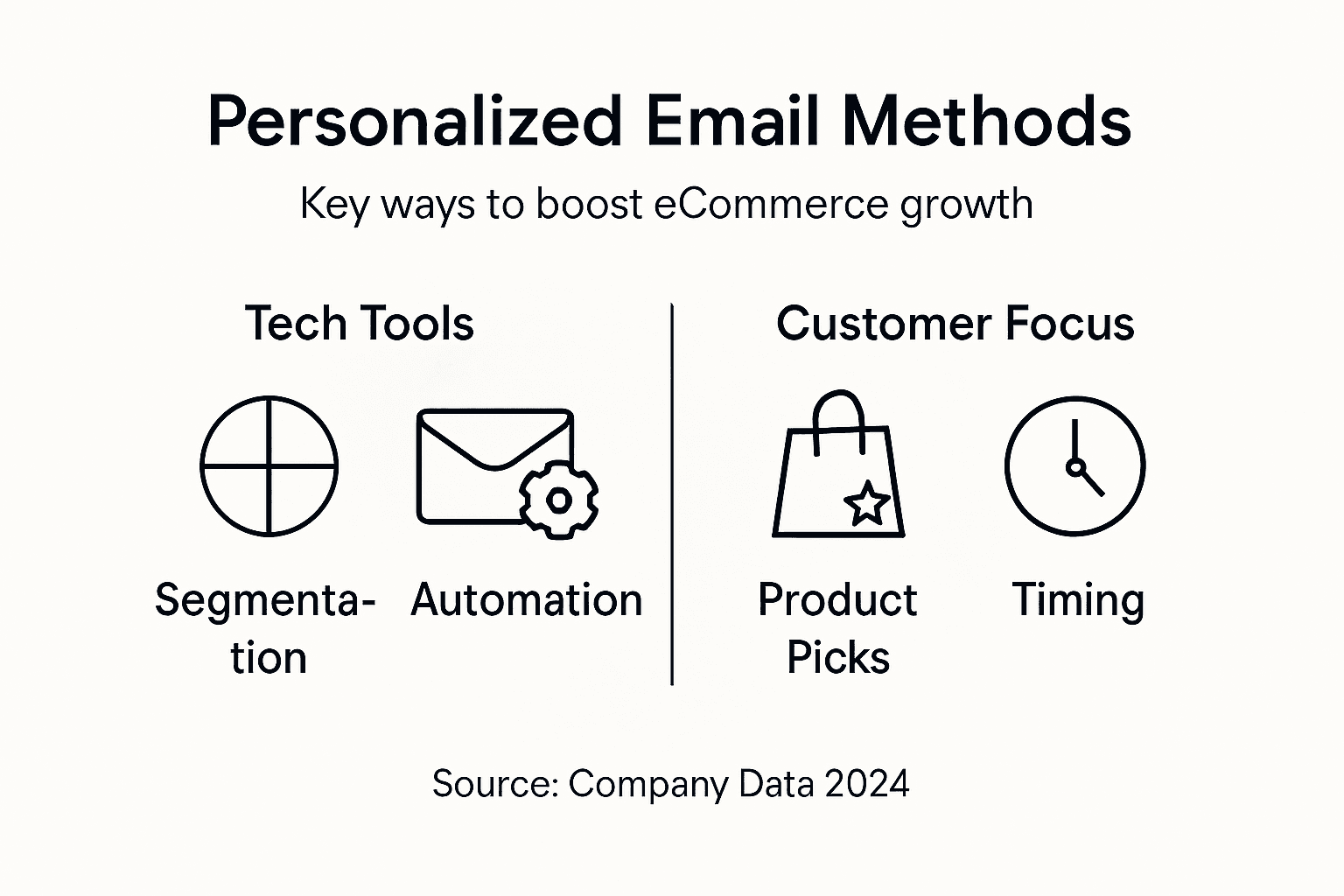
The most effective email automation strategies treat each communication as an opportunity to provide value. By understanding customer behavior, preferences, and potential future needs, eCommerce brands can create automated email experiences that feel personal, helpful, and genuinely responsive to individual customer contexts.
Pro tip: Implement a quarterly review of your email automation workflows to ensure they remain aligned with evolving customer expectations and technological capabilities.
Unlock the Power of Personalized Email Campaigns for Your eCommerce Growth
Personalization in email marketing is no longer a luxury but a necessity for eCommerce brands aiming to increase conversions and build lasting customer relationships. If you want to overcome challenges like data accuracy and privacy concerns while delivering engaging, behavior-driven content that resonates with your audience Swyft Interactive offers expert solutions designed to take your email campaigns to the next level. Our approach combines strategic segmentation and predictive recommendations using Klaviyo automation to create unique, conversion-focused experiences that drive measurable growth.
Ready to boost your revenue with tailored email marketing automation Start by exploring our Email Marketing Archives – Swyft Interactive where we share insights and tactics proven to elevate engagement. Discover how integrating automation with a full-funnel growth strategy through our Digital Strategy Archives – Swyft Interactive can help you deliver contextual and dynamic content that truly connects. Take control of your eCommerce future today by partnering with Swyft Interactive. Visit https://swyftinteractive.com/ and begin transforming your personalized campaigns into scalable growth engines now.
Frequently Asked Questions
What is email personalization in eCommerce?
Email personalization in eCommerce refers to tailoring email communications to individual customer preferences and behaviors, moving beyond simple tactics like inserting a customer’s name to create targeted, relevant messaging.
How does email personalization drive engagement and revenue?
Email personalization increases engagement by providing tailored product recommendations, enhancing customer loyalty, reducing decision fatigue, and potentially raising the average order value through curated content that resonates with individual needs.
What are some common challenges in implementing email personalization?
Common challenges include ensuring data accuracy, complying with privacy regulations like GDPR and CCPA, avoiding over-personalization that can alienate customers, and integrating multiple data sources effectively for seamless communication.
What best practices should be followed for email automation in eCommerce?
Best practices for email automation include behavioral segmentation, creating trigger-based workflows responsive to customer actions, personalizing content to adapt to individual journeys, and continuously tracking performance metrics to refine automation strategies.