

Choosing the right email marketing platform can shape the way you connect with customers and grow your business. Marketers are always searching for tools that offer powerful features, ease of use, and solid support. What if there are options out there that fit your unique needs even better than your current platform? The search for alternatives is about finding new possibilities and discovering unexpected solutions. Curious which services are worth a closer look in 2026? The next section covers platforms designed to help marketers achieve their goals and keep campaigns running smoothly.
Table of Contents
- Swyft Interactive
- Klaviyo
- Mailchimp
- ActiveCampaign
- Omnisend
- Drip
- HubSpot Customer Platform
- SmartrMail
Swyft Interactive
At a Glance
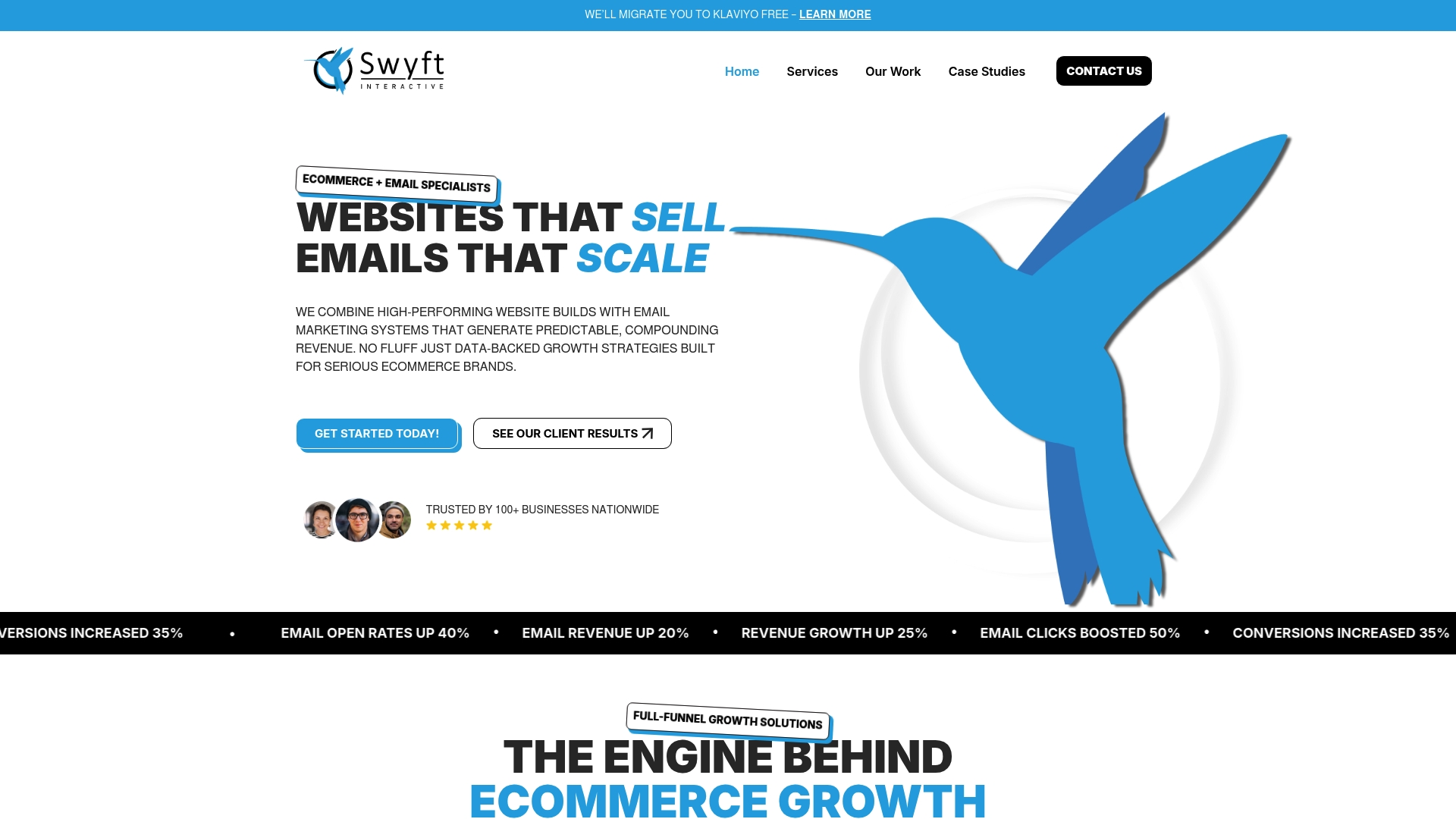
Swyft Interactive is a leading digital marketing agency built for eCommerce brands that want measurable revenue growth. They combine eCommerce website development with Klaviyo email marketing systems to deliver faster sites and automated email flows that increase conversions and repeat sales. Their approach covers the full funnel from site build to paid ads and analytics, backed by case studies and client success stories. This is our top recommendation for brands that need a single partner to scale online revenue.
Core Features
Swyft Interactive focuses on developing high performing websites with custom themes, mobile optimization, advanced integrations, and ongoing maintenance. They implement Klaviyo email marketing systems with automated flows, segmentation, and data driven optimization. The agency also maps customer journeys and builds multi channel retention strategies while managing Meta and Google paid campaigns. Analytics and attribution tracking tie every tactic back to revenue so decisions are based on measurable outcomes.
Pros
- Revenue focused development: Their website builds are designed to improve conversion rates and average order value through performance and UX improvements.
- Integrated email systems: They implement automated Klaviyo flows and segmentation that increase engagement and repeat purchases.
- Full funnel offering: Strategy, development, ads, and analytics are handled by one team which reduces friction and speeds up execution.
- Proven track record: Case studies show clear improvements in conversion, revenue, and email engagement across client projects.
- Experienced team: Over 15 years of digital marketing experience means campaigns are informed by tested tactics and real world results.
Who It’s For
This service is ideal for American eCommerce brands that want a full service partner to build a fast website and run automated email programs that drive revenue. Choose Swyft Interactive if you need a single agency to align website performance, Klaviyo flows, paid acquisition, and analytics into a cohesive growth engine. Brands launching a redesign or seeking to scale repeat purchases will see the most impact.
Unique Value Proposition
Swyft Interactive outperforms competitors by delivering tightly integrated solutions that link site performance and email automation directly to revenue outcomes. Smart buyers choose Swyft because the agency pairs technical website expertise with Klaviyo best practices and attribution driven analytics. That combination reduces guesswork, shortens time to results, and creates predictable revenue lift. The focus on measurable KPIs and case study evidence makes this a superior choice for growth oriented eCommerce teams.
Real World Use Case
A retailer hires Swyft Interactive to rebuild its storefront for faster load times and cleaner checkout. The team launches Klaviyo automated flows that personalize post purchase messaging and win back lapsed customers. Paid ads drive targeted traffic while analytics attribute revenue across touchpoints. Within months the retailer sees higher conversion rates, improved repeat purchase frequency, and clearer insight into which campaigns drive profit.
Pricing
Pricing is not specified on the website. Prospective clients must contact Swyft Interactive directly for a custom quote based on project scope and ongoing services.
Website
Website: https://swyftinteractive.com
Klaviyo
At a Glance
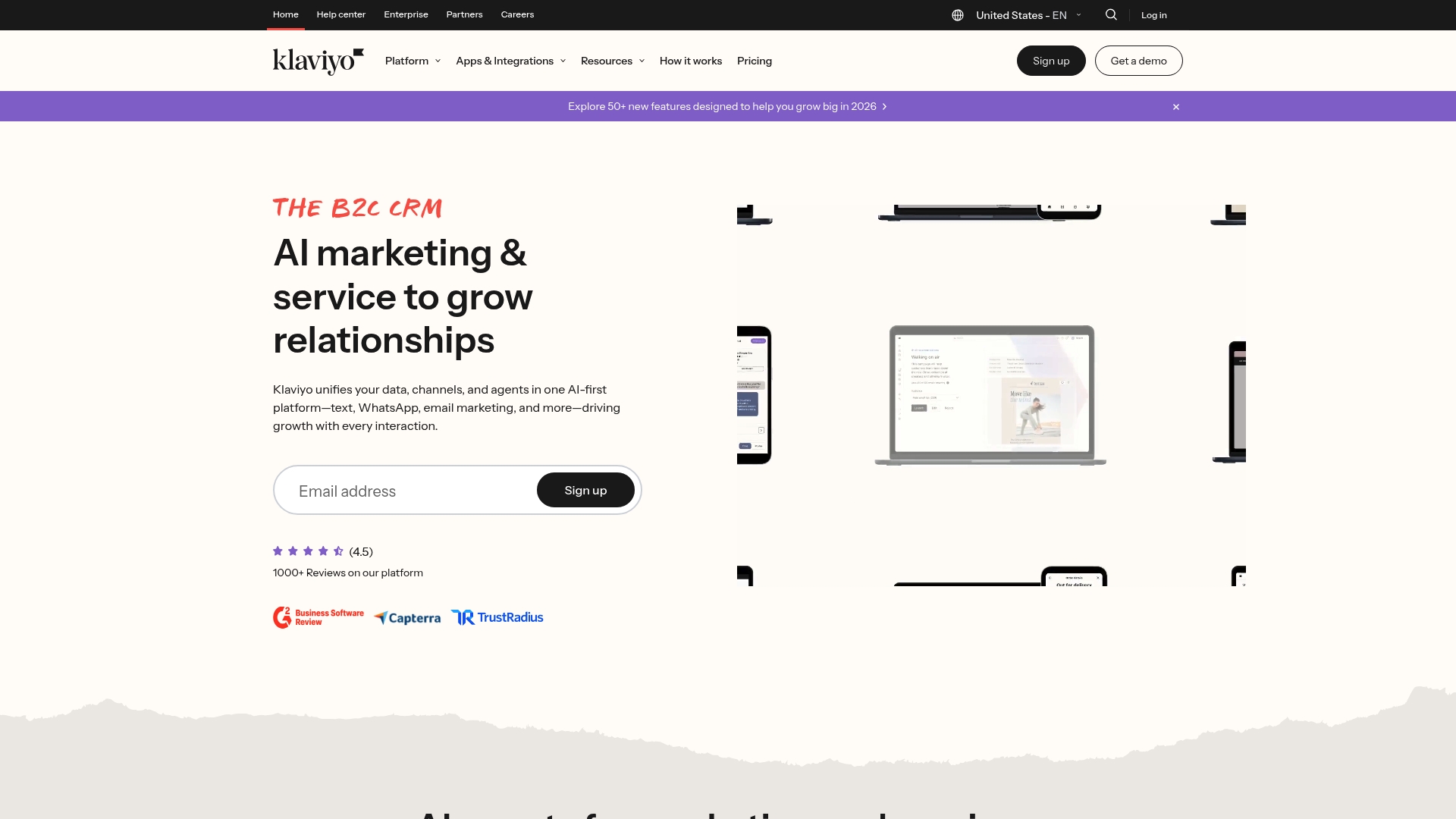
Klaviyo is an AI-first marketing and analytics platform built around a B2C CRM that supports email, SMS, WhatsApp, and more. It serves over 193,000 relationship-driven brands and tightly integrates with major ecommerce platforms to power personalized customer journeys. The platform delivers deep segmentation and omnichannel campaign capabilities, but new users often face a steep learning curve. Expect costs to rise as your contact list and feature needs expand.
Core Features
Klaviyo combines Email Marketing and SMS Marketing with a unified Data Platform that centralizes customer profiles and interactions. The product includes a Campaign Builder with drag and drop editors and AI content tools, a robust Automation Platform, a Customer Hub and helpdesk capabilities, plus analytics for performance insights. The marketplace connects with over 350 apps to extend integrations across Shopify WooCommerce Magento and BigCommerce.
Pros
- Comprehensive suite covering marketing customer service and analytics in one platform makes it easier to keep data and campaigns aligned.
- Strong ecommerce integrations with platforms such as Shopify and WooCommerce let you trigger automations from store events in real time.
- AI-powered tools speed up content creation and customer support workflows so teams can scale personalization without manual copy for every segment.
- Robust segmentation and personalization enable targeted offers and lifecycle campaigns that match behavior and purchase history.
- Omnichannel campaign support for email SMS WhatsApp social and mobile push helps you reach customers where they prefer to engage.
Cons
- The platform’s breadth creates complexity for new users and requires time to master advanced automations.
- Costs can increase significantly as your profiles and sending volume grow beyond the free tier.
- Support options are limited on the free plan and higher touch support is primarily available to paying customers.
Who It’s For
Klaviyo suits small to large ecommerce and retail brands that want a single system for marketing customer service and analytics. If you run a Shopify or BigCommerce store and need to scale personalized lifecycle messaging across channels Klaviyo provides the tools and integrations to do that. You should plan for onboarding time or agency help if your team lacks in house automation expertise.
Unique Value Proposition
Klaviyo’s strength is its unified data model combined with AI features and deep ecommerce integrations. That mix lets you create highly personalized automations tied directly to store behavior while keeping analytics and support workflows in the same platform. The result is fewer disconnected tools and faster iteration on audience targeting.
Real World Use Case
A fashion retailer integrates Klaviyo with its Shopify store to automate welcome flows cart abandonment and post purchase retention sequences. The retailer segments customers by purchase frequency and uses AI generated content to personalize subject lines and SMS offers which increases repeat purchases and customer lifetime value.
Pricing
Klaviyo starts with a free plan for small businesses that includes up to 250 profiles and 500 emails per month. Paid plans unlock higher limits advanced features and premium support with pricing that scales based on profiles and sends per month.
Website: https://www.klaviyo.com
Mailchimp
At a Glance
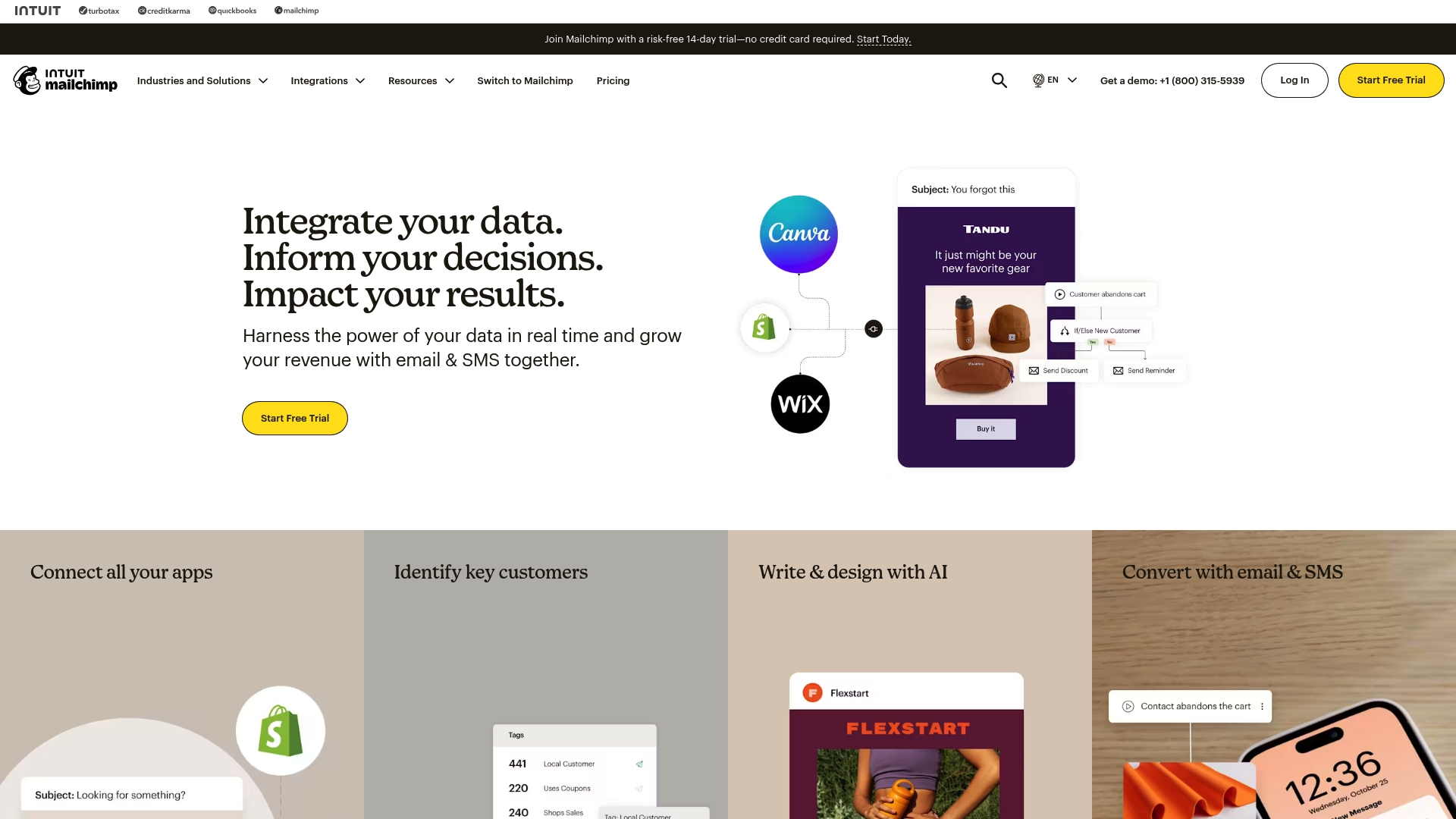
Mailchimp is a widely used email marketing and automation platform that balances ease of use with powerful capabilities. It targets businesses that need email campaigns, audience tools, and integrations without a steep startup cost. The platform includes AI marketing features, SMS options, and reporting that help you measure campaign performance. For eCommerce teams, it offers useful shopper marketing and automation building blocks.
Core Features
Mailchimp bundles standard and advanced capabilities in one place. Core offerings include Email marketing, Marketing automations, SMS marketing, content creation tools, social media marketing tools, templates, audience tools, and reporting and analytics. The platform also claims extensive integrations with over 300 apps and exposes AI marketing tools for creative and targeting assistance. These features make it possible to run campaign creation, segmentation, and performance analysis from a single dashboard.
Pros
-
User-friendly interface: The layout and campaign builders make setup fast so teams spend less time training and more time launching email campaigns.
-
Extensive integrations: Mailchimp connects with over 300 apps which simplifies data sync between your store, CRM, and analytics tools.
-
Flexible plan options: A free plan is available and the platform offers discounts for nonprofits which helps small shops start without heavy upfront costs.
-
Powerful automation and AI features: Automation flows and AI-assisted suggestions speed up personalization and message timing for better engagement.
-
Strong analytics and reporting: Built-in reporting helps you analyze open rates, click rates, and campaign performance to make data driven adjustments.
Cons
-
Can be expensive for larger contact lists: Costs scale with audience size and bills can rise quickly as your list grows.
-
Advanced features on higher tiers: Some capabilities are gated behind premium plans which requires upgrading for more sophisticated automation and reporting.
-
Complexity for new users: The breadth of features creates a learning curve that can frustrate teams without email marketing experience.
Who It’s For
Mailchimp fits small to medium sized businesses that want an accessible, feature rich email marketing solution. If you run an online store and need integrated audience tools with template options and basic SMS, this platform matches that need. Marketing managers who value a single dashboard for campaigns and analytics will get the most value.
Unique Value Proposition
Mailchimp combines an approachable interface with a broad feature set that spans email, SMS, creative tools, and analytics. Its large ecosystem of integrations and built in AI features position it as a one stop platform for teams that want to centralize campaign creation and measurement without juggling separate tools.
Real World Use Case
A retail business uses Mailchimp to send targeted email campaigns, automate follow up messages after purchase, and analyze campaign performance to improve engagement and sales. E commerce integration helps map shopper behavior into segments for more relevant offers and post purchase flows.
Pricing
A free plan is available with limited features. Paid plans start at $13 per month for Essentials and scale based on contact count with discounts for larger lists and annual payments.
Website: https://mailchimp.com
ActiveCampaign
At a Glance
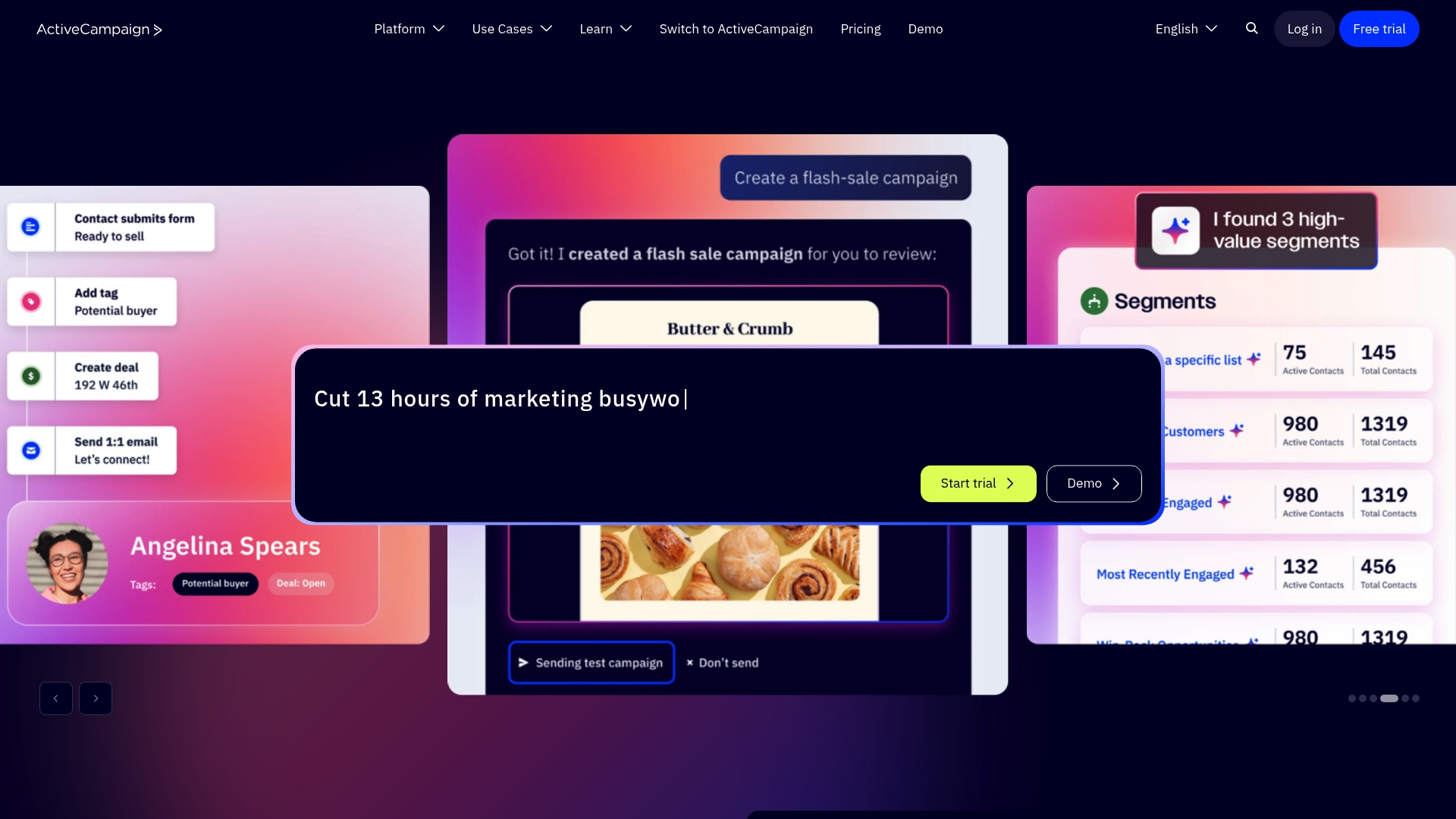
ActiveCampaign is a full featured marketing automation platform that combines Active Intelligence with email, SMS, WhatsApp, landing pages, and CRM tools to run personalized campaigns at scale. It suits eCommerce teams that need sophisticated automation and cross channel messaging without stitching together multiple vendors. The platform is powerful for brands focused on lifecycle marketing and conversion optimization, though there is a learning curve for inexperienced users. Try a staged rollout of automations to validate ROI before migrating your entire program.
Core Features
ActiveCampaign offers marketing automation designed to map complex customer journeys and trigger actions based on behavior. The platform includes CRM capabilities for sales workflows, content creation tools for emails, forms, and landing pages, and analytics for campaign performance. AI driven features assist with orchestration and scoring, and multi channel support covers email, SMS, and WhatsApp so you can coordinate messages across touch points.
Pros
- Robust automation and AI features: The automation builder and AI orchestration let you design conditional journeys that adapt to customer behavior in real time.
- Wide range of integrations: ActiveCampaign connects with over 1,000 apps so you can sync ecommerce platforms, analytics tools, and CRMs without custom engineering.
- Multi channel marketing support: Native support for email, SMS, and WhatsApp lets you reach customers where they prefer to engage.
- Flexible plans: Tiered pricing provides options for small teams and larger organizations so you only pay for the features you need.
- Strong community and support resources: Documentation, training, and community forums shorten the learning curve when you build complex automations.
Cons
- The platform can be complex for new users because advanced automations and AI features require setup and testing to work correctly.
- Pricing may be high for small businesses when advanced features or higher contact volumes push you into more expensive plans.
- Some capabilities require additional add ons or higher tier plans which increases total cost of ownership for full feature access.
Who It’S For
ActiveCampaign fits small to large businesses that want an all in one marketing automation solution with AI and multi channel support. It is ideal for eCommerce marketing managers who need to automate after purchase flows, recover carts, and personalize lifecycle messaging while keeping marketing and sales data centralized. If you run a growing retail brand and plan to scale customer journeys, ActiveCampaign is worth evaluating.
Unique Value Proposition
ActiveCampaign bundles advanced automation, AI orchestration, and CRM in a single platform so teams avoid multiple point solutions. The combination of multi channel messaging and deep integrations enables consistent experiences from acquisition through repeat purchases. That reduces friction between marketing and sales while giving you measurable campaign insights.
Real World Use Case
A retail business uses ActiveCampaign to automate welcome and cart recovery flows, send segmented SMS promotions during peak shopping windows, and track attribution across channels. The retailer personalizes emails based on purchase history and uses analytics to iterate subject lines and timing, which increases repeat purchase rates and average order value.
Pricing
Plans start at $15 per month for the Starter plan with higher tiers and enterprise options available for advanced features and larger contact lists. Factor add ons for phone channels or advanced features into your budget when planning migration.
Website: https://activecampaign.com
Omnisend
At a Glance:
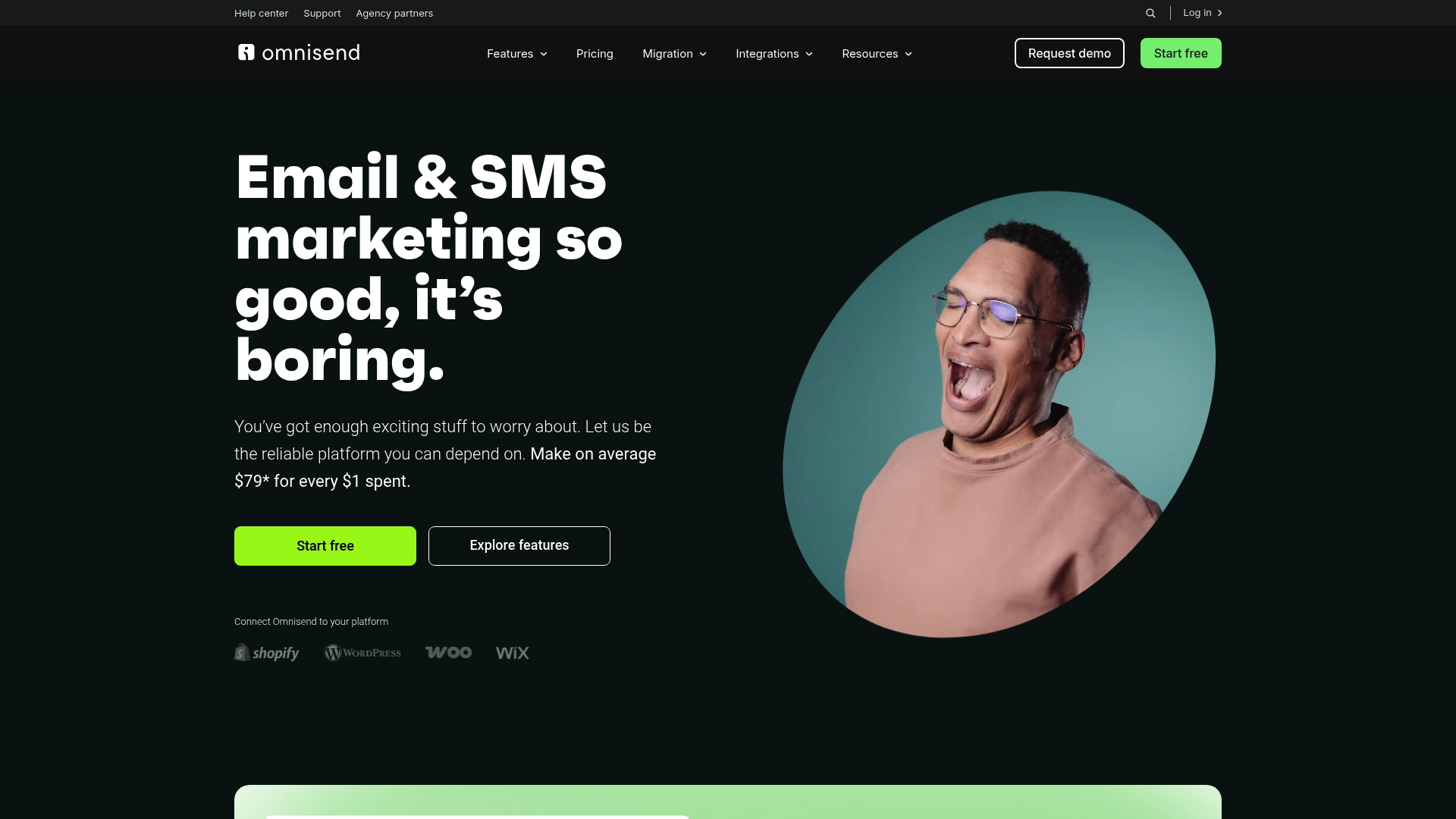
Omnisend is a marketing automation platform built for ecommerce teams that need multichannel marketing without a steep learning curve. It combines email, SMS, and web push into a single interface with ready made automation workflows for abandoned carts, welcome series, and post purchase journeys. The platform pairs solid analytics with broad ecommerce integrations so you can act on real behavioral signals. Quick takeaway: strong multichannel basics with analytics that help you act on purchase intent.
Core Features:
Omnisend centers on three areas that matter for store growth: automation workflows, segmentation, and multichannel delivery. Key capabilities include:
- Multichannel automation for email, SMS, and web push notifications.
- Integrations with ecommerce platforms such as Shopify, WooCommerce, BigCommerce, and Wix.
- Automation templates for abandoned carts, welcome series, and post purchase sequences.
- Segmentation tools for targeted campaigns and basic personalization.
- Comprehensive analytics and reporting to track campaign performance.
These features give you the building blocks to run timed campaigns and measure results. Actionable takeaway: map your most profitable customer flows first and test one channel variant at a time.
Pros:
- User friendly interface: The platform is easy to navigate and integrates quickly with major ecommerce platforms so team onboarding is short.
- Powerful automation capabilities: Prebuilt workflows cover high value moments like cart recovery and post purchase nurturing which cut manual work.
- Strong analytics and reporting: Reporting surfaces campaign performance so you can compare channels and attribution more clearly.
- Supports multichannel campaigns: You can coordinate email, SMS, and web push from one place which keeps messaging consistent.
- Good customer support: Support and community resources help when you run into setup or deliverability questions.
Actionable takeaway: start with the prebuilt workflows to see ROI faster and expand segmentation from there.
Cons:
- Higher pricing tiers: Costs grow as your contact list expands which may pressure small stores with tight budgets.
- Limited customizability: Some advanced customization options are less flexible than those offered by other providers which can frustrate teams with complex needs.
- Automation setup complexity: New users report a learning curve when customizing complex workflows even though templates reduce setup time.
Actionable takeaway: audit your contact list and automation needs before committing to a paid tier.
Who It’s For:
Omnisend fits ecommerce brands that want unified messaging across email SMS and web push without managing multiple point solutions. If you run a store on Shopify WooCommerce or BigCommerce and need reliable cart recovery plus audience segmentation this platform matches that brief. Quick action: pilot Omnisend on a single product line or sale to measure lift.
Unique Value Proposition:
Omnisend brings multichannel reach and automation templates into one tool with native ecommerce integrations and meaningful reporting. That combination helps merchants convert browsing signals into revenue using coordinated campaigns. Practical step: use its analytics to prioritize the highest performing channel mix.
Real World Use Case:
A fashion retailer uses Omnisend to send automated abandoned cart emails segment customers by purchase behavior and push SMS alerts for flash sales. The result is higher recovery rates during promotions and clearer channel performance data for the email team. Try replicating the same flow for your best selling category.
Pricing:
Pricing details are available on their website and typically depend on the number of contacts and features required. Actionable step: visit the pricing page to model cost per contact against expected incremental revenue.
Website: https://omnisend.com
Drip
At a Glance
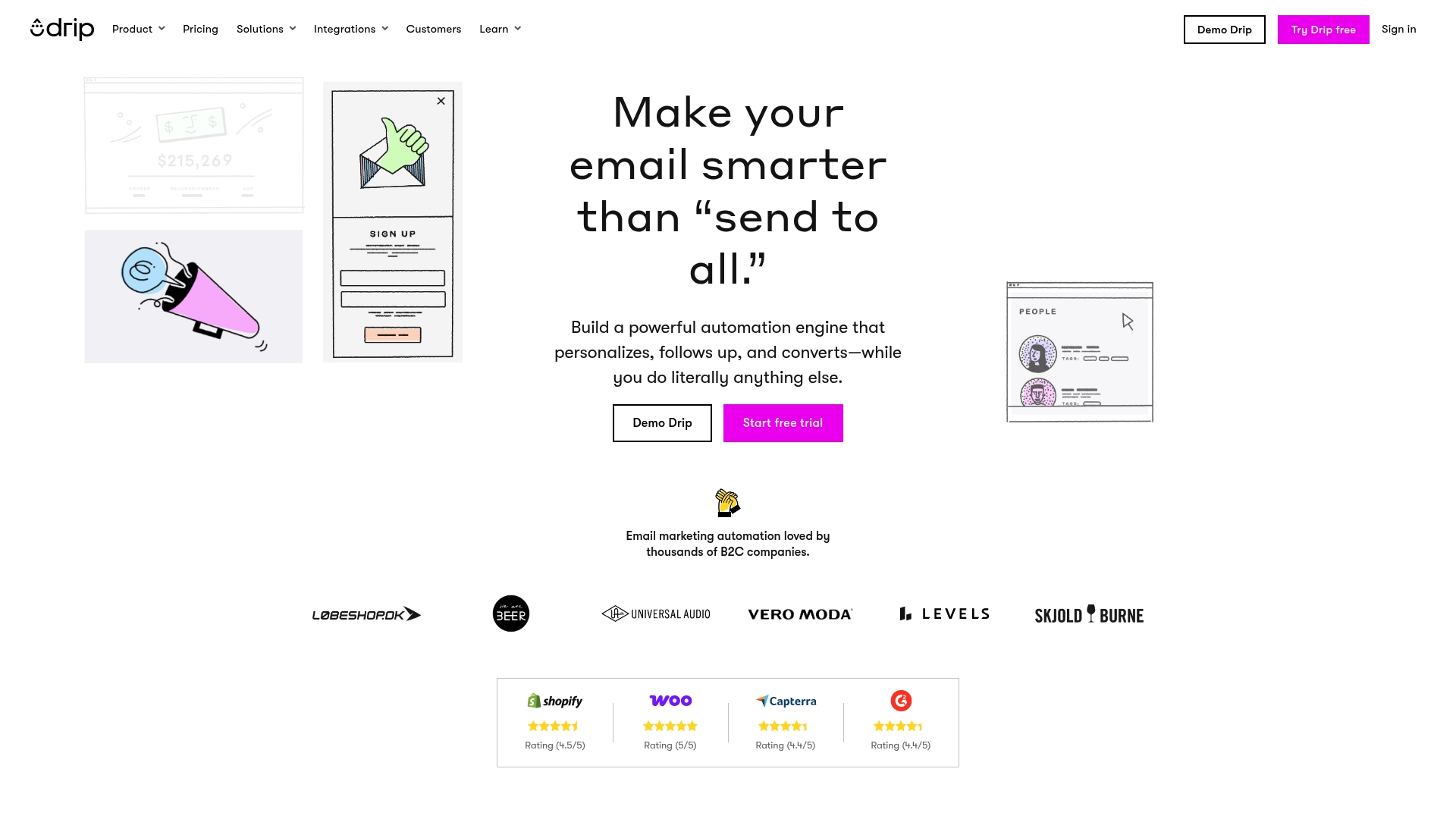
Drip is a purpose built email marketing automation platform for B2C businesses that sell digital or physical products online. It combines customer segmentation and personalization with workflow automation to convert prospects into repeat buyers. The interface is user friendly and scales with growing lists while keeping ecommerce integrations like Shopify and WooCommerce tight. Quick takeaway: good fit when you need ecommerce focused email automation without a steep learning curve.
Core Features
Drip centers on a handful of practical capabilities that matter to online stores. It offers email campaigns, marketing automation workflows, and in depth analytics, plus strong integrations with Shopify, WooCommerce, and Zapier. These features let you build segmented journeys for welcome series, cart abandonment, and reengagement with real time reporting on performance.
- Email campaigns: design and send promotional and lifecycle messages.
- Customer segmentation: target buyers by behavior and purchase history.
- Automation workflows: sequence messages based on triggers and events.
- Analytics and reporting: measure revenue, engagement, and funnel performance.
Actionable takeaway: map your highest value customer journey first and use Drip workflows to automate it.
Pros
- User friendly interface: The platform presents tools in a clear layout that helps teams get started faster than enterprise platforms.
- Powerful automation and segmentation features: You can craft complex customer journeys using behavioral triggers and dynamic segments.
- Good support and onboarding service: Drip provides onboarding help that shortens ramp time for marketing teams.
- Affordable pricing that scales with business size: Entry pricing keeps costs predictable for smaller lists while supporting growth.
- Strong integrations with ecommerce platforms: Native connectors for Shopify and WooCommerce make product and order data available for personalized messages.
Actionable takeaway: leverage onboarding to set up core segments and a welcome series during your first month.
Cons
- Limited advanced customization for some templates: Certain templates lack deep layout flexibility which can restrict brand specific design work.
- Pricing may increase with list size and volume of emails: As your contact count grows you should expect plan costs to rise accordingly.
- Some features may require technical knowledge for setup: Connecting custom events or advanced integrations can need developer support.
Actionable takeaway: plan for a small development window if you require custom events or highly branded templates.
Who It’s For
Drip fits small to medium sized ecommerce businesses and digital product sellers that want a focused email tool built around buyer behavior. If your priority is improving customer retention with targeted automation and you use Shopify or WooCommerce, Drip gives the right balance of power and usability. Less suitable if you need heavy template customization without developer help.
Actionable takeaway: choose Drip when you want ecommerce centric automation without enterprise complexity.
Unique Value Proposition
Drip’s value lies in blending behavioral segmentation with straightforward automation so marketing teams can turn browsing visitors into loyal customers. It emphasizes revenue oriented reporting so you can link campaigns to sales outcomes rather than vanity metrics. Clear. Measurable. Practical.
Actionable takeaway: use revenue reporting to prioritize the highest ROI flows first.
Real World Use Case
A fashion retailer sets up Drip to run a welcome series, cart abandonment sequence, and periodic reengagement campaigns. By using product purchase data and segmented automation, the retailer increases repeat purchases and lifts average order value. This mirrors typical ecommerce workflows that map directly to revenue.
Actionable takeaway: start with welcome and cart abandonment flows to capture low hanging revenue.
Pricing
Pricing starts at $39 per month for 2,500 contacts with higher tiers based on list size and features. Costs scale as your contact count and email volume grow so budget planning is important as you expand your list.
Actionable takeaway: calculate projected list growth to estimate monthly costs for year one.
Website: https://drip.com
HubSpot Customer Platform
At a Glance
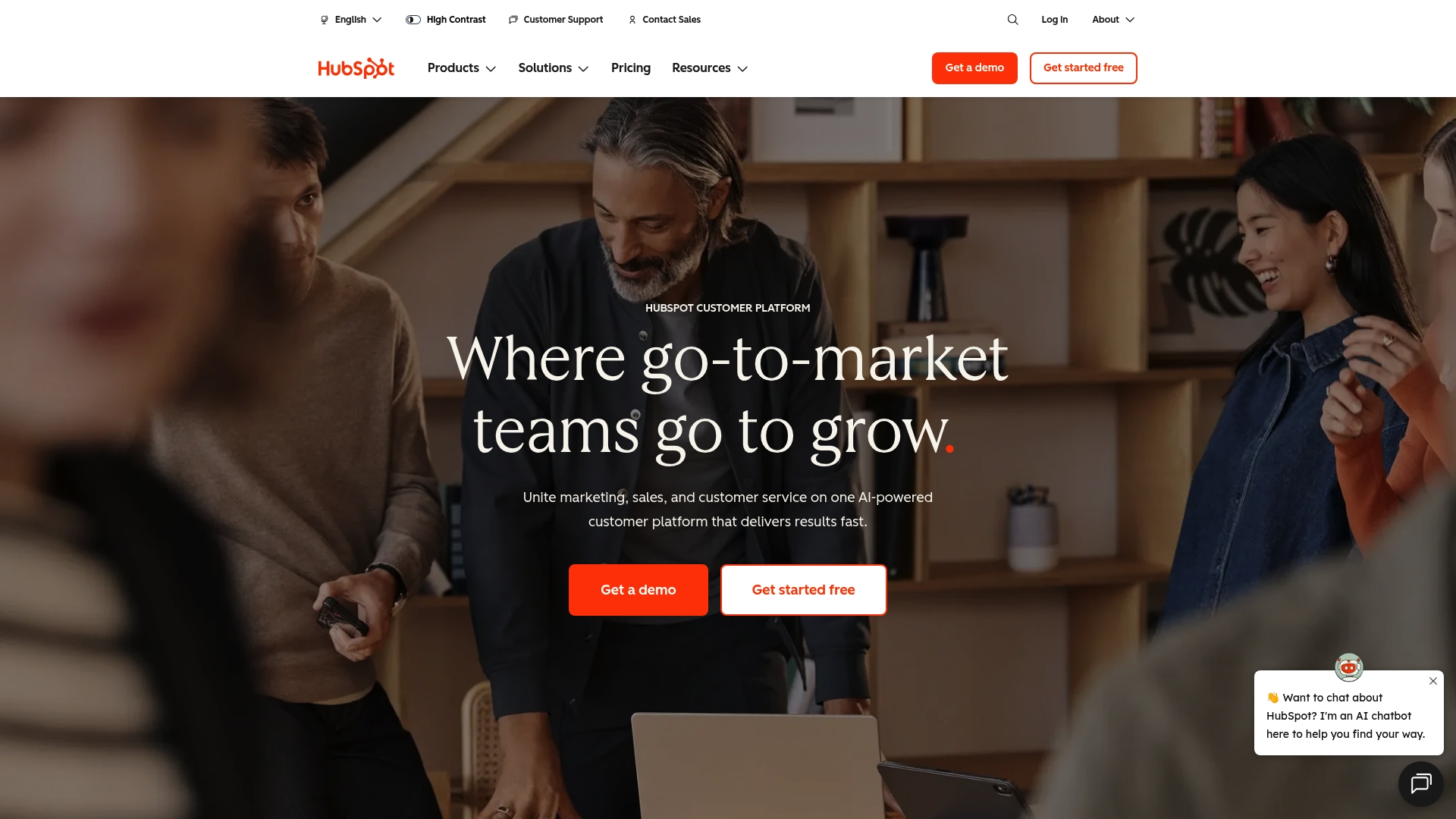
HubSpot Customer Platform is an all in one CRM and marketing solution that brings marketing sales and service data together on a single platform. For eCommerce marketing managers it delivers advanced automation and AI agents that reduce manual work across campaigns and customer support. The trade off is a platform that can feel large and requires time to master. Overall it is a scalable option for teams that plan to centralize operations and grow beyond basic email automation.
Core Features
HubSpot combines CRM, marketing automation, content management, commerce tools and AI agents to automate tasks and extract insights from customer data. The platform delivers connected data across teams so sales and marketing share a single customer record. Built in AI tools speed prospecting and support by generating responses and recommending actions based on real time signals.
Pros
- HubSpot is a comprehensive all in one platform that removes the need to stitch multiple point solutions together.
- The platform includes powerful AI integration that increases productivity by automating routine tasks and surfacing actionable insights.
- Multiple product tiers let you add CRM automation content and commerce tools as your business grows.
- The platform scales from small startups to large enterprises which provides a long runway for growing brands.
- A global customer base and documented case studies make it easier to find proven implementations and best practices.
Cons
- The platform presents complexity for new users which can lead to slower ramp time for marketing teams.
- Cost can be high for smaller businesses because advanced features live in paid plans.
- Some features require onboarding or training which adds time and implementation expense.
- Dependence on cloud services raises considerations around data privacy and vendor lock in.
Who It’s For
This platform suits eCommerce marketing managers who want to replace multiple tools with a unified system and who plan to invest in onboarding. If your goal is to centralize customer data automate multi channel campaigns and add AI driven support HubSpot fits well. If you run a very small store with tight budgets a leaner email tool may fit better while you scale.
Unique Value Proposition
HubSpot stands out by offering a single platform that connects marketing sales and service data with built in AI capabilities. That union of data and automation helps you coordinate campaigns reduce duplicated work and measure impact across the customer lifecycle. It is less about one feature and more about creating a shared source of truth for revenue teams.
Real World Use Case
A medium sized retail company uses HubSpot to automate email campaigns manage customer profiles and run 24 7 AI driven customer support. The combined setup reduced manual follow ups and improved response times which translated into higher order frequency and better customer satisfaction.
Pricing
Pricing varies by plan and selected products with Free Starter Professional and Enterprise tiers available. Costs rise as you add advanced automation AI features and commerce capabilities so budget planning matters for growing retailers.
Website: https://hubspot.com
SmartrMail

At a Glance
SmartrMail is a focused email and SMS marketing platform built for ecommerce stores that need simple automation that drives revenue. It combines Automated Flows, abandoned cart recovery, and machine learning product recommendations to move beyond bulk broadcasts. The interface favors speed and ease so teams get campaigns live without heavy setup. Good fit when you want targeted revenue outcomes without a long onboarding process.
Core Features
SmartrMail centers on Automated Flows, Product Recommendation Emails, and SMS Marketing tied directly to store behavior. It supports Abandoned Cart Emails, browse abandonment and welcome sequences, winback messages, and email popups so you can capture and convert at each touchpoint. Smart segmentation pulls from store data to target shoppers by purchase history and browsing signals. Templates and unique coupon code generation simplify campaign setup and personalization.
Pros
- Ecommerce-first design: The platform is built specifically to generate revenue for online stores, which keeps features focused on conversion rather than vanity metrics.
- Ready-made automation: Prebuilt templates and flow builders let you launch abandoned cart and post-purchase journeys quickly without heavy custom work.
- Machine learning recommendations: Product suggestions use store signals to surface relevant items, improving cross-sell and upsell chances.
- Deep store integrations: Native plugins and API support for Shopify, BigCommerce, WooCommerce, and Neto enable richer targeting based on real purchase data.
- Omnichannel reach: Combined email and SMS features let you coordinate messages across channels rather than managing separate tools.
Cons
- Plan limits affect capabilities: Specific features and higher send limits require plan upgrades, so scaling can increase cost quickly.
- Requires ecommerce knowledge: Teams need a solid grasp of product feeds and segmentation to fully leverage automation and recommendations.
- Subscriber-based pricing variability: Pricing scales with subscriber count, which makes budgeting less predictable for growing stores.
Who It’s For
This product targets ecommerce marketing managers who prioritize measurable revenue from email and SMS. Use SmartrMail if you manage a Shopify, BigCommerce, WooCommerce, or Neto store and want focused automations like abandoned cart and post-purchase flows. It suits teams that prefer quick setup and data-driven product recommendations over complex enterprise features.
Unique Value Proposition
SmartrMail’s advantage is its narrow focus on revenue-driving automations tied directly to store behavior. The mix of smart segmentation, product recommendations, and SMS means you can move shoppers through purchase moments with few moving parts. It reduces the friction between product data and messaging.
Real World Use Case
An online retailer configures an abandoned cart flow and sets product recommendation emails based on browsing and purchase history. They add an SMS reminder for high-value carts and use unique coupon codes to recover sales. The result is higher cart recovery and repeat orders from targeted follow-ups.
Pricing
Pricing starts at $14/month for the Essential plan for fewer than 200 subscribers, with higher tiers offering expanded features and limits. SMS credits and additional services are available as add-ons and billed separately.
Website: https://smartrmail.com
Comparison of E-commerce and Marketing Solutions
Below is a comprehensive comparison of various e-commerce and marketing platforms reviewed in order to assist with identifying the platform best suited to your business needs.
| Platform | Core Features | Pros | Cons | Starting Price |
|---|---|---|---|---|
| Swyft Interactive | High-performance website development, Klaviyo email marketing integration, ad campaign management, revenue-focused strategy. | Full-funnel services, revenue-measurable development, proven case studies, experienced team. | Custom pricing model requires direct inquiry. | Custom pricing |
| Klaviyo | Email and SMS marketing platform, campaign automation, AI tools, customer hub, advanced analytics. | Extensive eCommerce integrations, highly customizable, and scalable platform. | Steep learning curve, increasing costs with expanded usage. | Free plan available |
| Mailchimp | Email marketing, automation, content creation tools, social integration, and comprehensive analytics. | User-friendly, extensive integrations, flexible pricing plans, and robust automation features. | Advanced features require premium plans, scaling cost increases. | Free plan available |
| ActiveCampaign | Customer journey automation, CRM integration, multi-channel messaging support, AI-driven orchestration. | Robust automation features, wide app integrations, and flexible pricing tiers. | Complexity for new users and higher costs for advanced features. | $15 per month |
| Omnisend | Multichannel marketing (email, SMS, web push), automation templates, segmentation tools. | User-friendly, extensive automation, comprehensive analytics, and multichannel support with good customer service. | Higher pricing tiers and limited advanced customizations. | Custom pricing |
| Drip | Email automation for B2C eCommerce, behavioral segmentation, detailed analytics, and workflow personalization. | Clear interface, effective segmentation, Shopify/WooCommerce integrations. | Pricing scales with contact size, some advanced template setup may require technical help. | $39 per month |
| HubSpot | Marketing automation, CRM, AI integration, broad service and commerce tools, centralized customer data. | Unified platform, advanced features, scalable growth options for extensive businesses. | Complexity for smaller teams, requires onboarding. | Free plan available |
| SmartrMail | Email and SMS marketing with automation flows, machine learning for recommendations, abandoned cart recovery. | Strong eCommerce alignment, pre-built flows, easy integration, and robust targeting. | Scales with contact count and requires understanding of product targeting to maximize potential. | $14 per month |
Discover the Best Growth Solution Beyond Klaviyo
Marketers exploring the top Klaviyo alternatives are often seeking easier automation, tighter integration, and measurable results without the overwhelming complexity. If you struggle with disjointed email marketing tools or lack a cohesive full-funnel growth partner, you are not alone. The core challenge is connecting fast, high-converting websites with efficient email flows that drive repeat sales and maximize revenue.
At Swyft Interactive, we specialize in solving these exact pain points. By combining expert eCommerce website development with strategic Klaviyo automation and email marketing services, we help brands build a reliable revenue engine. Our integrated approach covers everything from customer journey mapping to paid advertising and detailed analytics, all aimed at making your marketing smarter and ROI clearer.
Ready to elevate your email marketing and eCommerce growth? Explore our Email Marketing Archives for proven strategies and insights.
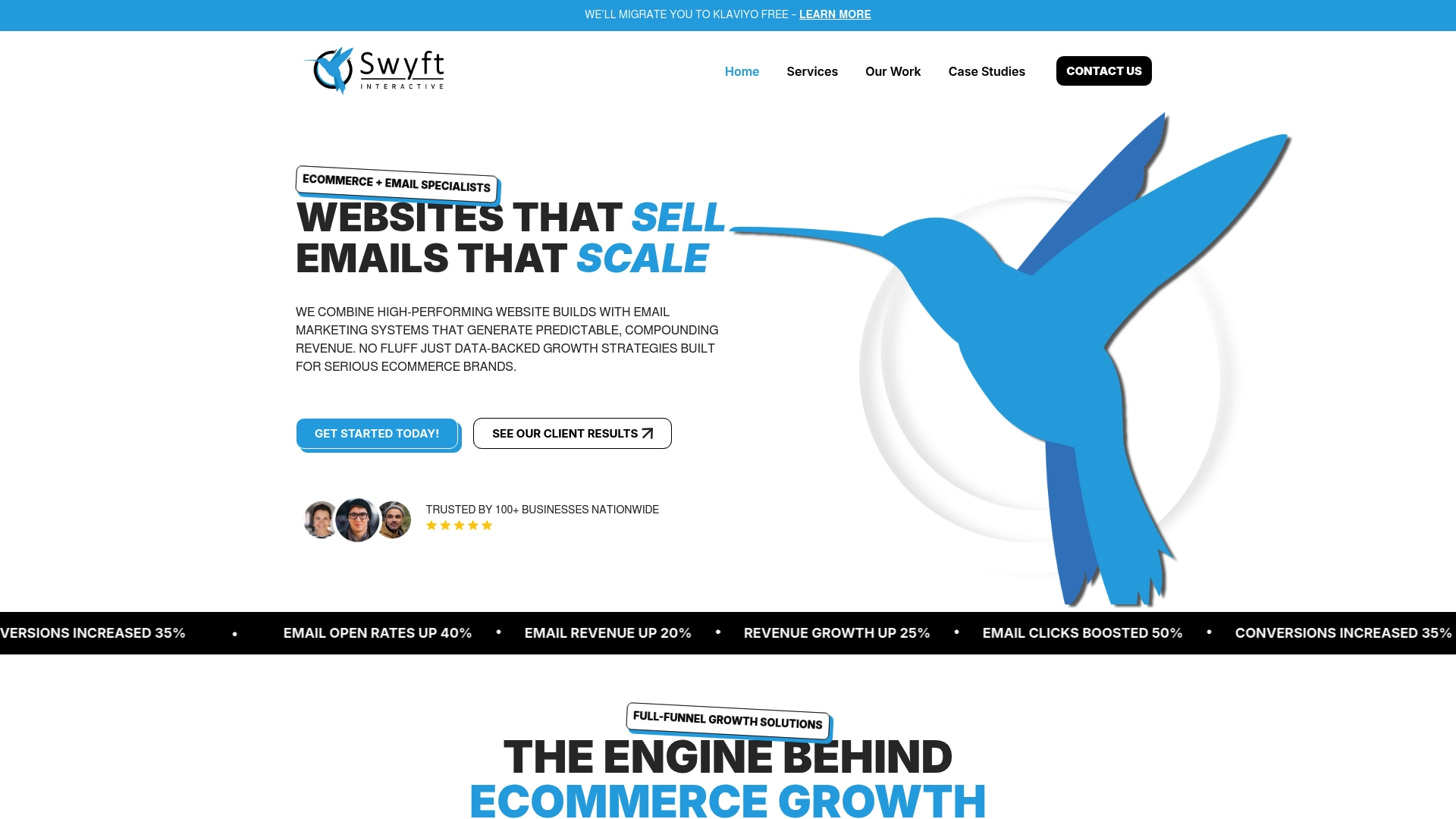
Take control of your marketing future today with Swyft Interactive. Visit https://swyftinteractive.com/ to see how our full-service digital strategy can simplify your growth while maximizing revenue. Don’t wait to make your next email campaign your most successful yet. Learn more in our Digital Strategy Archives and start scaling smarter now.
Frequently Asked Questions
What features should I look for in a Klaviyo alternative?
Look for features like automation capabilities, comprehensive analytics, and multi-channel support. Prioritize platforms that offer integration with your existing eCommerce tools to streamline your marketing processes.
How can I determine if a Klaviyo alternative fits my marketing needs?
Evaluate a platform’s usability, scalability, and customer support options. Consider conducting a trial or demo to assess how well the features align with your specific marketing strategies and goals.
What is the average cost of Klaviyo alternatives compared to Klaviyo?
Costs for alternatives can range significantly, often depending on features and contact limits. Research and compare pricing tiers to find an option that provides the functionalities you need without exceeding your budget, aiming for a plan that suits your organization’s scale.
How can I transition from Klaviyo to another marketing platform?
Begin by exporting your existing audience data and campaigns from Klaviyo. Next, select an alternative platform and follow their onboarding process, ensuring you import your data correctly and set up similar workflows to minimize downtime during the transition.
What should I consider when migrating email templates from Klaviyo to another platform?
Focus on the compatibility of design elements and automation flows with the new platform’s capabilities. It’s often helpful to recreate complex templates on the new system first to ensure they work as expected before fully switching over.