

Growing a business calls for smart tools that save time and keep customers engaged. With so many emails landing in inboxes each day, reaching the right people has become a puzzle many marketers want to solve. The right email automation tool promises to take care of your messages in ways that feel both simple and personal. Some options offer eye catching designs and others go heavy on analytics. There are platforms that are quick to set up and some packed with advanced features for hands on marketers. Which ones really stand out and why do they matter? The answers are coming up next.
Table of Contents
ActiveCampaign
At a Glance
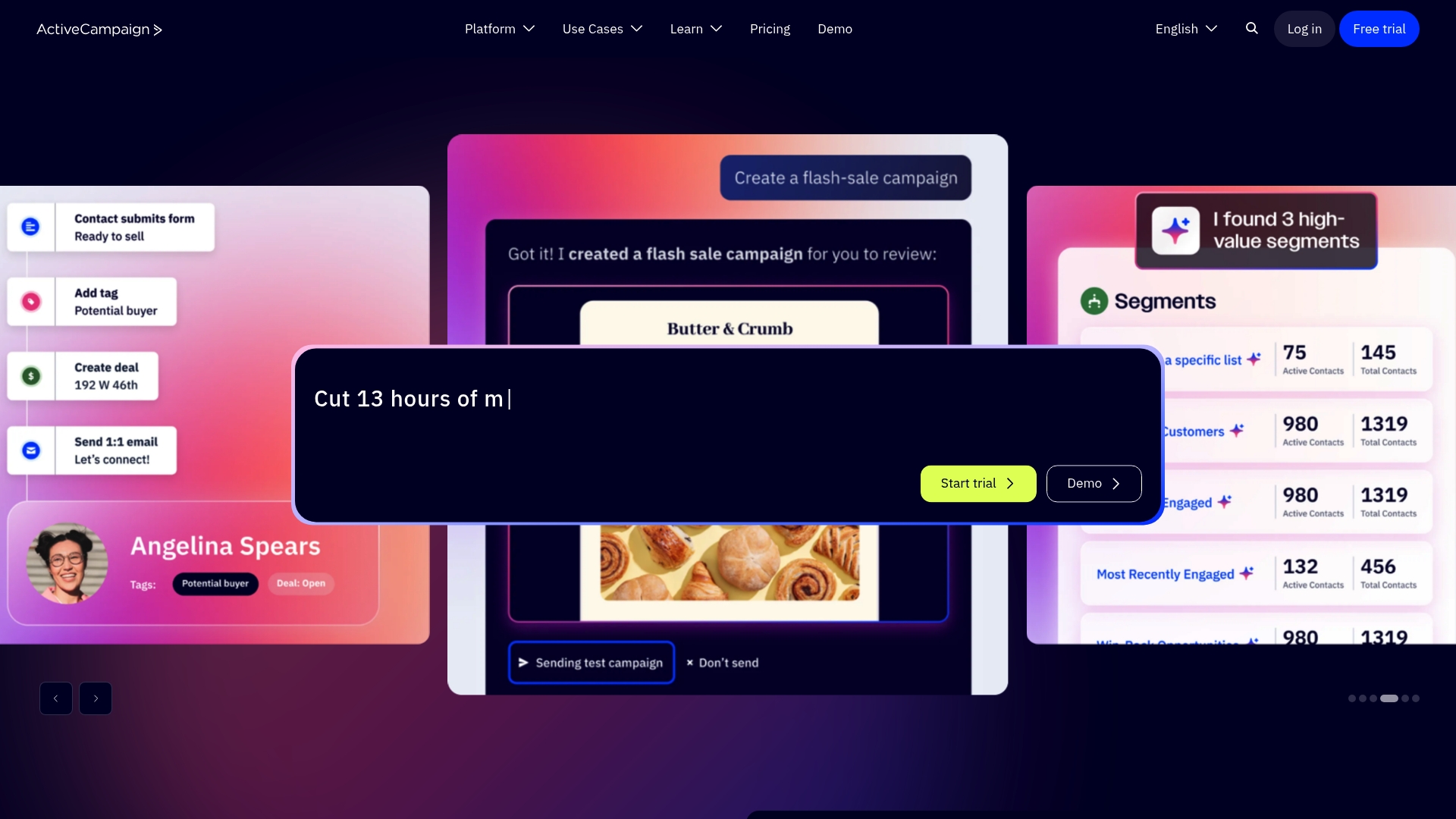
ActiveCampaign is an all-in-one marketing automation platform that combines email, SMS, WhatsApp, CRM, AI-powered orchestration, and analytics into a single system. For ecommerce marketing managers, it delivers the tools to automate customer journeys and personalize messaging at scale, which can quickly improve conversion rates and post-purchase revenue. The platform’s strength is depth: sophisticated automation and Active Intelligence support advanced segmentation and dynamic flows. That depth does mean a steeper learning curve and potentially higher costs for smaller teams.
Core Features
ActiveCampaign’s core capabilities center on automated customer journeys and AI orchestration. Active Intelligence helps orchestrate personalized messaging and predict outcomes, while Marketing Automation builds multi-step flows triggered by behavior, purchases, and lifecycle stage. The integrated CRM keeps customer profiles and order history in one place, and Content Creation tools produce emails, forms, and landing pages without stitching together separate platforms. Finally, Analytics & Reporting provide performance insights to iterate on campaigns and tie email activity back to revenue and ROI.
Pros
- Comprehensive feature set covering marketing, sales, analytics, and automation: You get email, SMS, WhatsApp, CRM, and reporting in one platform so your stack stays consolidated rather than fragmented.
- Strong AI and automation capabilities: Active Intelligence enables predictive orchestration and smarter segmentation that can increase personalization without manual labor.
- Wide range of integrations with over 1,000 apps: That makes it straightforward to sync order data, product catalogs, and ad platforms with your email flows.
- Flexible plans suitable for different business sizes and needs: From a Starter tier to enterprise options, the pricing tiers allow growth without migrating platforms immediately.
- Good support resources and community engagement: Documentation, community forums, and support channels help teams troubleshoot flows and share best practices.
Cons
- Pricing can be high for small businesses or startups: Even though a Starter tier exists, growing contact lists and added features can push costs up quickly.
- Complex platform with a steep learning curve for beginners: Building advanced automations and integrating CRM data requires time and trained staff to execute effectively.
- Some advanced features require additional add-ons or higher-tier plans: Expect to upgrade or pay extra to access certain AI features or enterprise-level functionality.
Who It’s For
ActiveCampaign suits ecommerce marketing managers at small to large US online retailers who need an integrated system to automate lifecycle marketing, sync sales and support data, and scale personalization. If you want to reduce platform sprawl and consolidate messaging channels while leveraging AI, ActiveCampaign is a strong candidate—provided you can allocate onboarding time and budget.
Unique Value Proposition
ActiveCampaign’s unique value is a unified marketing and CRM platform augmented by Active Intelligence, enabling data-driven customer journeys that stitch email, SMS, WhatsApp, and sales data into one scalable automation engine. That single-pane approach simplifies attribution and speeds iteration.
Real World Use Case
A retail brand uses ActiveCampaign to automate cart abandonment and post-purchase flows, manage customer profiles in the CRM, send personalized SMS and WhatsApp offers, and analyze campaign performance to boost repeat purchase rates and marketing ROI.
Pricing
Plans start at $15 per month for the Starter tier, with enterprise options available at custom pricing; note that some advanced capabilities may require higher-tier plans or add-ons.
Website: https://activecampaign.com
Omnisend
At a Glance
Omnisend is an all-in-one marketing automation platform built for ecommerce teams that need email, SMS, and web push in one place. It’s purpose-built to simplify multichannel campaigns, automation workflows, and customer segmentation while delivering strong customer satisfaction ratings. For ecommerce marketing managers, it balances ease of use with the depth to run cart recovery, lifecycle campaigns, and personalized messages across channels. It performs well for brands ready to invest in automation, though smaller stores should weigh cost versus feature needs.
Core Features
Omnisend offers email marketing, SMS campaigns, web push notifications, automation workflows, and segmentation and personalization tools. The platform focuses on connecting multiple channels into single workflows so you can, for example, follow an abandoned cart email with an SMS reminder and a push notification. Segmentation tools let you target customers by shopping behavior and lifecycle stage, while automation templates accelerate setup for common ecommerce plays like welcome series and post-purchase flows.
Pros
- User-friendly interface: The platform is designed so teams can build campaigns and workflows without heavy technical support, reducing setup time for busy marketing managers.
- Strong automation features: Omnisend’s workflow builder supports multichannel triggers and condition-based branching, enabling more sophisticated customer journeys than simple broadcast tools.
- Good integration with ecommerce platforms: Native integrations streamline data syncs for orders, carts, and customer attributes, which simplifies segmentation and reporting.
- High customer satisfaction and reviews: Reported positive reviews indicate a reliable product experience and responsive support for ecommerce use cases.
- Wide range of marketing channels: Email, SMS, and web push in one product reduce the need for multiple vendors and help keep messaging consistent across touchpoints.
Cons
- Pricing may be high for small businesses: The cost can escalate as you add contacts and SMS volume, which may be a barrier for early-stage stores with tight budgets.
- Some features might be complex for beginners: Advanced workflows and segmentation options require a learning curve that can slow initial adoption for teams without automation experience.
- Advanced features require paid plans: Core capabilities are accessible, but more powerful personalization and channel usage often sit behind higher-tier plans, limiting full access on entry-level pricing.
Who It’s For
Omnisend is ideal for ecommerce businesses and marketing managers who want a consolidated platform for email, SMS, and push without stitching together multiple tools. If you manage acquisition and retention campaigns, run cart recovery, and need segmentation tied to purchase behavior, Omnisend fits well—especially if you plan to scale automation over time.
Unique Value Proposition
Omnisend’s strength is its multichannel automation that lets ecommerce teams orchestrate email, SMS, and push in a single workflow, reducing friction between channels and improving message sequencing across the purchase lifecycle.
Real World Use Case
A small online store uses Omnisend to automate a welcome series, send SMS cart reminders, and segment customers by purchase frequency. The combined flows recover abandoned carts and re-engage buyers with targeted offers, streamlining repeat purchase campaigns without manual intervention.
Pricing
See their website for detailed pricing plans, as prices vary based on features and usage.
Website: https://omnisend.com
Features Comparison of ActiveCampaign and Omnisend
This table delivers a comprehensive overview of key attributes, features, and differentiators for two prominent marketing automation tools, ActiveCampaign and Omnisend. Compare these options to identify the best fit for your needs.
| Feature/Aspect | ActiveCampaign | Omnisend |
|---|---|---|
| Focus Audience | Ecommerce marketing managers at small to large US online retailers requiring integrated lifecycle marketing and advanced automation with AI capabilities | Ecommerce businesses and marketing managers seeking a consolidated platform for multichannel campaigns including email, SMS, and push notifications |
| Core Features | AI-driven customer journey orchestration, integrated CRM, marketing automation tools, and analytics & reporting | Multichannel automation workflows (email, SMS, push), segmentation by shopping behavior, and ecommerce platform integrations |
| Key Advantages | Comprehensive feature set, strong AI capabilities, wide range of integrations, flexible plans, and robust community support | User-friendly interface, strong automation features, good native integrations, positive reviews, and consolidated multichannel functionalities |
| Potential Disadvantages | High pricing for small businesses, complexity for beginners, and some advanced features behind higher-tier plans | High pricing for scaling businesses, complexity of advanced features for beginners, and key features requiring premium plans |
| Unique Value | Utilizes AI-powered orchestration to unify email, SMS, WhatsApp, and more into scalable automation engines, simplifying attribution and improving ROI | Simplifies multichannel campaign management by effectively coordinating across email, SMS, and push notifications for improved customer interactions |
| Pricing | Starting at $15/month for Starter tier, with variable pricing for enterprise-level plans | Pricing details available on the website; costs vary based on usage and feature requirements |
| Website | activecampaign.com | omnisend.com |
Elevate Your Email Automation Strategy with Proven eCommerce Expertise
Struggling to choose the right email automation tool that truly drives revenue in a competitive ecommerce landscape can be overwhelming. Whether you face challenges with complex platform learning curves, high costs, or disconnected multichannel messaging, mastering automation is critical to scaling your brand. This article highlights tools like ActiveCampaign and Omnisend that offer powerful, integrated solutions—but unlocking their full potential demands strategic execution and expert guidance.
At Swyft Interactive, we specialize in turning these tools into scalable growth engines by combining cutting-edge email marketing automation with high-converting website development. Our approach centers on building seamless customer journeys that increase conversions, maximize repeat purchases, and boost long-term value. If you want to go beyond just picking a tool and actually convert your automation investment into measurable growth, explore our insights in the Email Marketing Archives and sharpen your strategy with proven techniques from You Suck At Klaviyo Archives.
Ready to level up your ecommerce email automation and unlock powerful results? Visit Swyft Interactive today to discover tailored solutions that integrate website design and email marketing with data-driven strategies that work. Take action now and transform your customer engagement into increased revenue streams.
Frequently Asked Questions
What features should I look for in an email automation tool?
Look for features like workflow automation, audience segmentation, A/B testing, analytics, and integration capabilities. Prioritize tools that offer a user-friendly interface and flexible pricing options, so you can get started quickly and scale as your needs grow.
How can I improve my email open rates using automation tools?
To improve your email open rates, segment your audience based on behavior and preferences, and utilize personalized subject lines. Test different sending times and monitor engagement metrics to refine your strategy and increase open rates by up to 30% within a few months.
What is the typical learning curve for implementing email automation tools?
The learning curve for email automation tools can vary significantly between platforms, but many tools are designed to be user-friendly. Expect to spend a few days to a couple of weeks learning the basics, especially if you plan to utilize complex automation features.
How can email automation tools help with customer retention?
Email automation tools can enhance customer retention by allowing you to set up automated follow-up emails, special offers for repeat customers, and personalized content based on customer behavior. Implement these strategies to see an increase in repeat purchases up to 20% over the next quarter.
Are email automation tools compatible with ecommerce platforms?
Yes, most email automation tools offer integrations with popular ecommerce platforms, streamlining data synchronization for better segmentation and targeted campaigns. Check the tool’s integration capabilities to ensure seamless functionality with your existing ecommerce system.
How can I measure the success of my email campaigns?
You can measure the success of your email campaigns by tracking key metrics such as open rates, click-through rates, conversion rates, and revenue generated. Use analytics provided by your email automation tool to monitor these metrics regularly and make data-driven adjustments to improve performance.