

Nearly 68 percent of American consumers abandon their carts due to poor website design and confusing navigation. For brands aiming to thrive online, creating a frictionless shopping experience is more than a visual upgrade. Thoughtfully designed ecommerce sites combined with automation tools like Klaviyo increase conversion rates and drive deeper customer engagement. Discover how practical design choices and strategic automation instantly shape stronger connections and long-term loyalty for your American storefront.
Table of Contents
- Defining Ecommerce Design and Its Impact
- Core Elements of Conversion-Focused Design
- Personalization, UX, and Mobile Responsiveness
- Website Design’s Influence on Trust and Loyalty
- Emerging Trends Shaping Ecommerce Design
Key Takeaways
| Point | Details |
|---|---|
| Ecommerce Design Drives Conversions | Effective design transforms visitor engagement into sales through intuitive navigation and streamlined processes. |
| Mobile Optimization is Essential | A responsive layout and fast loading speeds are critical for meeting modern consumer expectations. |
| Trust Building Elements Enhance Loyalty | Incorporating security features and authentic testimonials builds customer confidence and encourages repeat purchases. |
| Personalization Improves User Experience | Leveraging data analytics for tailored shopping experiences significantly increases customer satisfaction and engagement. |
Defining Ecommerce Design and Its Impact
Ecommerce design represents far more than aesthetic visual elements – it’s a strategic framework for converting website visitors into committed customers. At its core, design transforms digital spaces into compelling shopping experiences that seamlessly guide users from initial interest to final purchase. Academic research on e-commerce website development reveals how user-friendly interfaces directly correlate with higher customer engagement and retention rates.
The fundamental components of effective ecommerce design extend beyond mere visual appeal. They include intuitive navigation, clear product presentations, responsive layouts, and streamlined checkout processes. These elements work together to create a frictionless online shopping journey that reduces customer frustration and increases conversion potential. By understanding user psychology and interaction patterns, designers can craft digital environments that feel natural and trustworthy.
Moreover, modern ecommerce design must account for diverse user experiences across multiple devices. Consumer research demonstrates how expanded online variety creates substantial market opportunities, making responsive and adaptive design more critical than ever. Mobile optimization, fast loading speeds, and consistent brand messaging are no longer optional – they are essential expectations for today’s digital consumers.
Pro tip: Conduct regular user experience audits to identify and eliminate potential friction points in your online shopping journey, focusing on mobile responsiveness and intuitive navigation pathways.
Here’s how core ecommerce design elements influence business outcomes:
| Design Element | Primary Function | Business Impact |
|---|---|---|
| Intuitive Navigation | Guides users with clear paths | Increases conversions |
| Responsive Layout | Adapts to all device screens | Boosts mobile sales |
| Streamlined Checkout | Reduces steps in payment process | Lowers abandonment rates |
| Compelling Imagery | Builds product confidence | Raises customer trust |
Core Elements of Conversion-Focused Design
Successful ecommerce design requires strategic attention to conversion-focused elements that transform casual browsers into committed buyers. User interface design research reveals critical factors that directly influence purchasing decisions, emphasizing the importance of visual quality, layout clarity, and trust-building features.
Key conversion design components include intuitive navigation, compelling product imagery, and transparent pricing structures. High-quality visuals aren’t just aesthetic choices – they’re psychological triggers that build consumer confidence. Product images should be crisp, professional, and showcase items from multiple angles. Clear, concise descriptions paired with zoom functionality and contextual sizing information help potential buyers make informed decisions, reducing purchase hesitation.

Trust signals represent another crucial design element that drives conversions. Comprehensive web design studies highlight the significance of security indicators, customer reviews, and payment gateway trust seals. These visual cues communicate reliability and reduce perceived risk. Strategic placement of security badges, clear return policies, and authentic customer testimonials can dramatically improve user comfort and willingness to complete transactions.
Pro tip: Implement A/B testing on critical conversion elements like checkout buttons, product imagery, and trust signals to systematically optimize your design’s performance and identify what resonates most with your specific audience.
Personalization, UX, and Mobile Responsiveness
The convergence of personalization, user experience (UX), and mobile responsiveness has become the cornerstone of modern digital commerce strategies. AI-powered personalization techniques are revolutionizing how online brands engage with individual customers, transforming generic browsing experiences into highly tailored interactions that anticipate and meet specific user needs.
Mobile responsiveness goes beyond simple screen adaptation. It represents a comprehensive approach to designing digital experiences that seamlessly transition across multiple devices while maintaining optimal functionality. E-commerce web application research underscores the critical importance of creating interfaces that are not just visually appealing, but intuitively navigable on smartphones, tablets, and desktops. This means implementing responsive design principles that automatically adjust layout, image sizes, and interactive elements to provide consistent user experiences regardless of screen dimensions.
Advanced personalization strategies leverage data analytics and machine learning to create dynamic, individualized experiences. By analyzing user behavior, purchase history, and browsing patterns, ecommerce platforms can deliver targeted product recommendations, customized content, and personalized shopping journeys. These intelligent systems can predict user preferences, suggest relevant products, and create a sense of individual attention that significantly enhances customer engagement and loyalty.
Pro tip: Implement progressive profiling techniques that gradually collect user preferences through subtle, non-intrusive interactions, allowing you to build rich, personalized experiences without overwhelming customers with extensive initial surveys.
Website Design’s Influence on Trust and Loyalty
Trust represents the fundamental currency of online commerce, with website design serving as the primary mechanism for building and maintaining customer confidence. Website design research reveals that interface quality directly correlates with user perception of reliability, demonstrating how visual elements and functional design can transform digital interactions from transactional exchanges to meaningful relationships.
The psychological components of trust in digital environments extend far beyond aesthetic considerations. Visual consistency, intuitive navigation, and transparent communication channels signal professionalism and competence. Customers unconsciously evaluate websites through micro-interactions: load speeds, button responsiveness, clarity of information, and seamless checkout processes. Each design element either reinforces or undermines the potential customer’s willingness to engage and ultimately purchase.
Advanced design strategies recognize trust as a multifaceted construct requiring holistic implementation. E-commerce trust mechanisms demonstrate that security features, clear pricing policies, authentic customer testimonials, and visible contact information collectively create a comprehensive trust ecosystem. Sophisticated websites integrate these elements strategically, using design to communicate reliability, expertise, and genuine commitment to customer satisfaction.
Pro tip: Conduct regular user experience audits focusing on trust signals, systematically testing and refining design elements that communicate transparency and credibility to your target audience.
Emerging Trends Shaping Ecommerce Design
The digital commerce landscape is experiencing unprecedented transformation, driven by technological innovations and shifting consumer expectations. Digital transformation in e-commerce reveals a complex ecosystem where design, technology, and user experience converge to create increasingly sophisticated online shopping environments.
Artificial intelligence and machine learning are revolutionizing how ecommerce platforms understand and anticipate customer needs. These technologies enable hyper-personalized experiences, predictive product recommendations, and intelligent design adaptations that respond dynamically to individual user behaviors. Advanced design strategies now incorporate real-time customization, where website layouts, product presentations, and navigation can instantaneously adjust based on user preferences, browsing history, and contextual data.
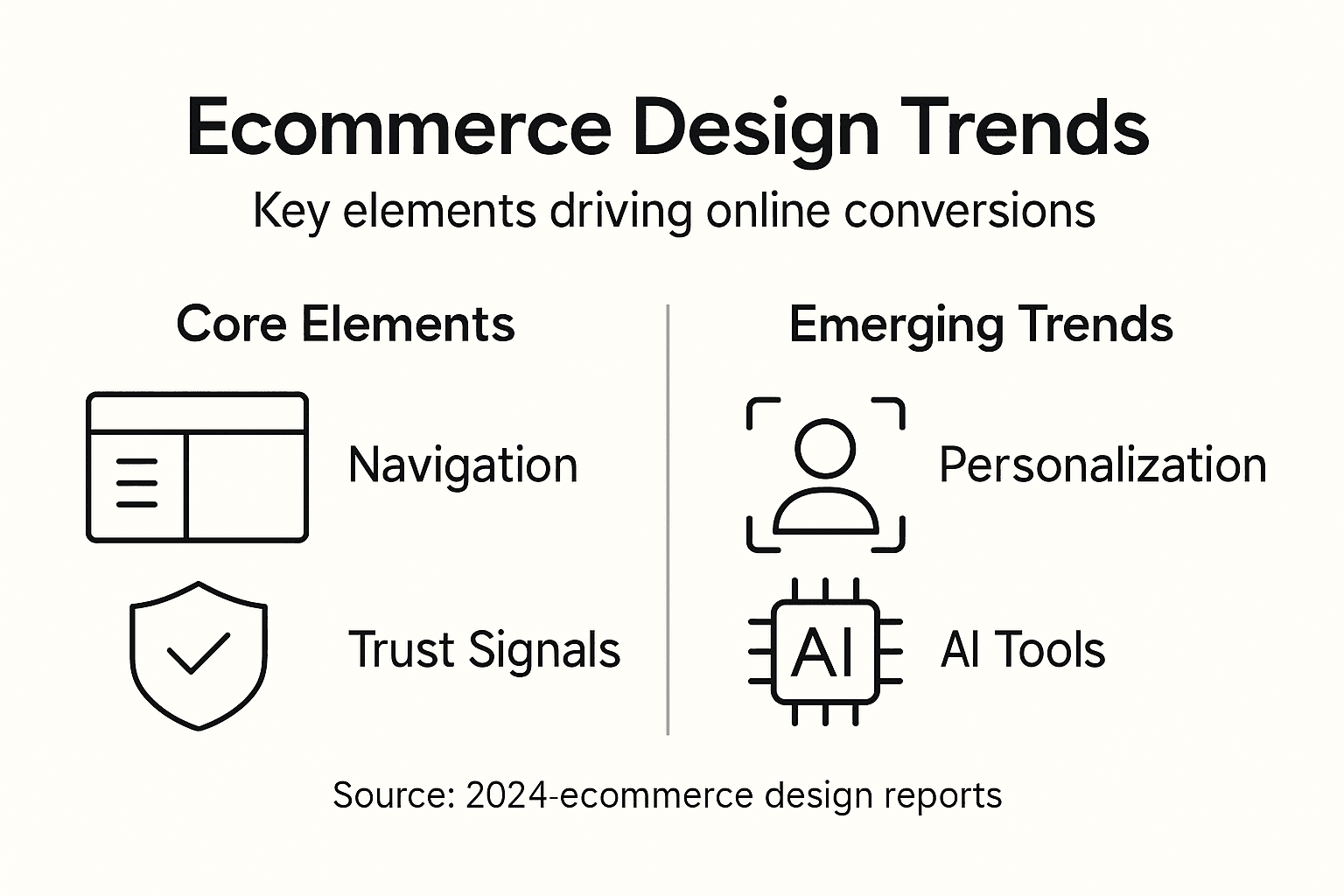
E-commerce future trends highlight the critical importance of privacy, security, and ethical design considerations. Modern ecommerce platforms must balance innovative technological integration with transparent data practices, creating design frameworks that prioritize user trust while delivering cutting-edge interactive experiences. This means implementing robust security features, clear data usage policies, and design elements that communicate authenticity and reliability.
Pro tip: Invest in modular design systems that allow rapid iteration and seamless integration of emerging technologies, ensuring your ecommerce platform remains adaptable to future innovation waves.
Emerging ecommerce trends and their strategic significance:
| Trend | Example Technology | Impact on Ecommerce |
|---|---|---|
| AI Personalization | Recommendation engines | Enhances user engagement |
| Modular Design | Drag-and-drop frameworks | Enables rapid feature updates |
| Privacy Emphasis | Data usage dashboards | Strengthens customer loyalty |
| Real-Time Customization | Dynamic web layouts | Creates tailored experiences |
Unlock Higher Conversions with Expert Ecommerce Design and Automated Marketing
The article highlights how crucial intuitive navigation, responsive layouts, and trust signals are in driving online sales. If you struggle with reducing checkout abandonment or creating a seamless mobile experience that converts visitors into loyal customers, addressing these pain points is essential. At Swyft Interactive, we specialize in building fast-loading, high-converting ecommerce websites that incorporate these fundamental design elements alongside powerful email marketing automation. By combining strategic website development with Klaviyo-driven campaigns, we help ecommerce brands deliver personalized, trustworthy shopping experiences that keep customers engaged and coming back.
Ready to transform your ecommerce store into a scalable sales engine? Explore our Digital Strategy Archives to learn how integrated design and marketing work together. Discover proven tactics through our Email Marketing Archives and start optimizing your customer journey today. Take the next step now by visiting Swyft Interactive and see measurable growth in conversions and revenue.
Frequently Asked Questions
What is ecommerce design and why is it important?
Ecommerce design encompasses the strategic framework that transforms websites into effective shopping experiences. It’s vital for guiding visitors towards purchases, enhancing user engagement, and improving retention rates.
How do design elements affect online conversions?
Key design elements like intuitive navigation, compelling imagery, and streamlined checkout processes significantly influence conversion rates by reducing friction and enhancing customer trust during the shopping experience.
Why is mobile responsiveness crucial for ecommerce websites?
Mobile responsiveness ensures that ecommerce sites function optimally across various devices, leading to improved user experience, faster loading times, and ultimately increased sales from mobile shoppers.
What are trust signals in ecommerce design?
Trust signals, such as security indicators, customer reviews, and payment trust badges, build consumer confidence by reassuring buyers of the website’s reliability, reducing perceived risk during transactions.